Neapolitan pizza oven temp: the complete guide
Neapolitan pizza oven temp: the complete guide

Authentic Neapolitan pizza is defined by a wood-fired oven floor temperature of 380–430°C and a dome temperature of around 485°C, producing a bake time of just 60–90 seconds. These figures are not suggestions. They are codified by the Associazione Verace Pizza Napoletana (AVPN) and enshrined in EU STG (Specialità Tradizionale Garantita) certification standards. The result is a crust that is simultaneously airy, soft, and charred at the edges. No other cooking method replicates this combination. Understanding the neapolitan pizza oven temp is the first step towards baking a pizza that genuinely earns the name.
What is the correct Neapolitan pizza oven temp?
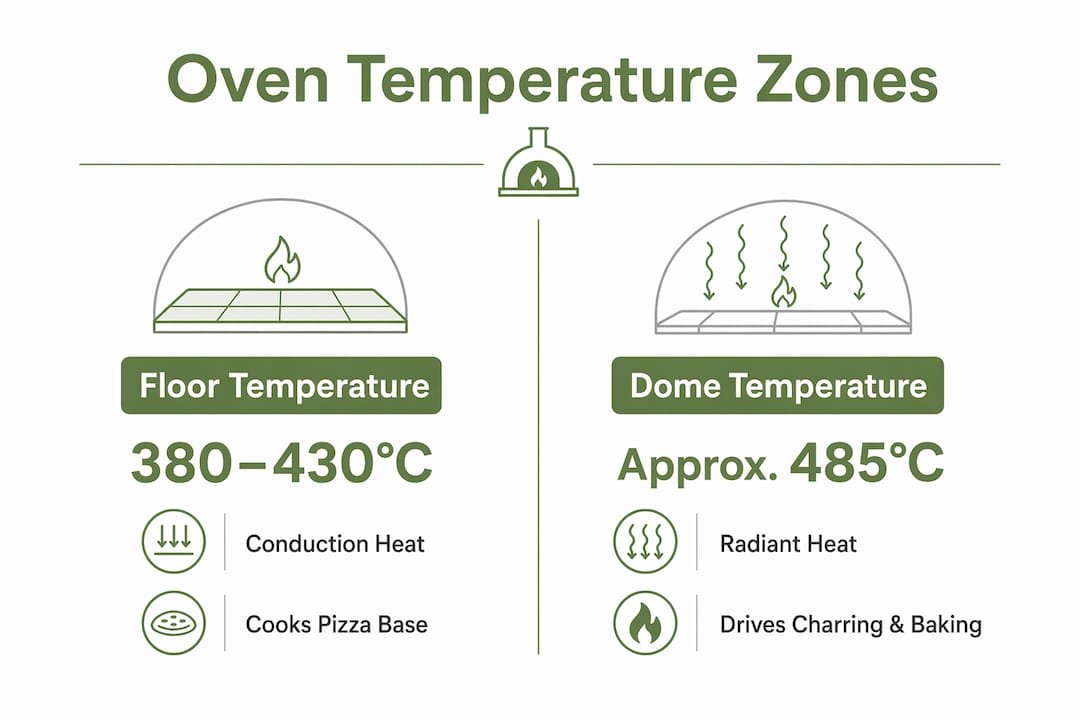
The floor and dome temperatures in a Neapolitan oven serve entirely different functions. The floor, typically made from refractory stone or terracotta, conducts heat directly into the base of the pizza. The dome radiates heat downward onto the toppings and crust edges. Both must be correct simultaneously for the bake to succeed.
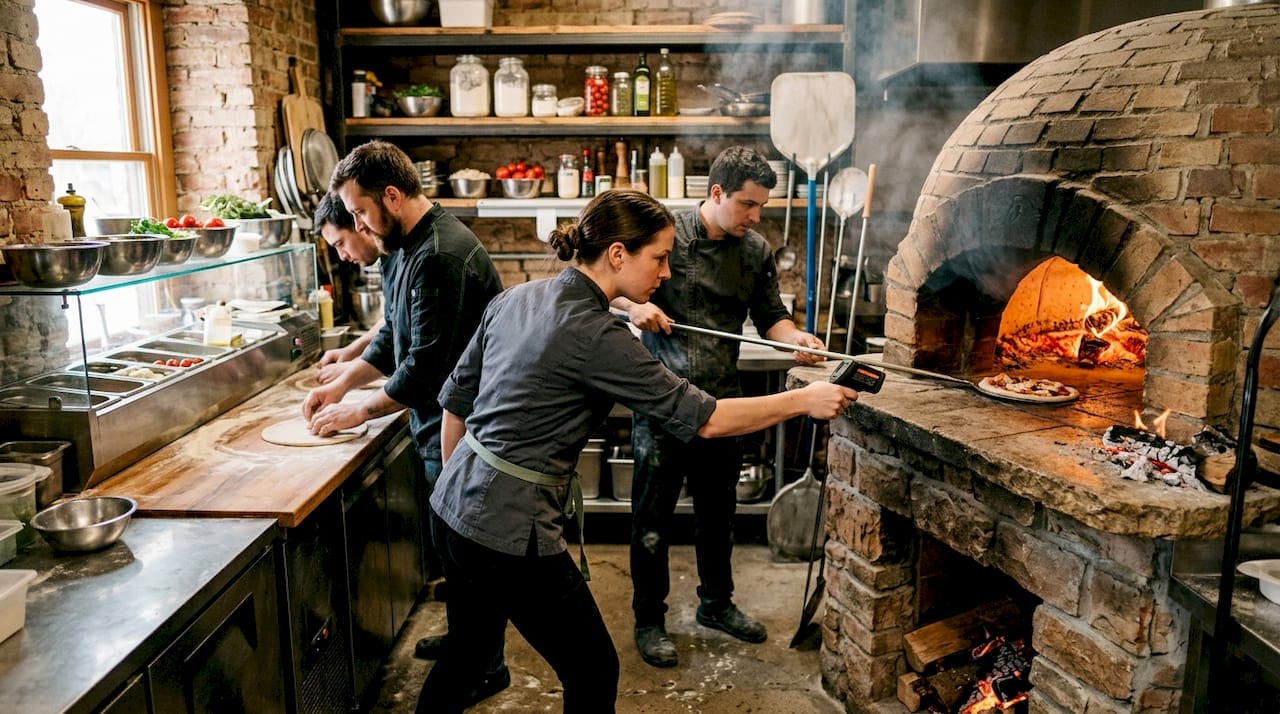
The AVPN temperature standard specifies a floor temperature of 380–430°C and a dome temperature of approximately 485°C. At these levels, the pizza base cooks through in under 90 seconds without burning, while the mozzarella melts and the crust edges blister into the characteristic “leopard spotting” pattern. Drop the floor below 380°C and the base turns pale and doughy. Push the dome above 500°C without matching floor heat and the toppings scorch before the base is cooked.
The 60–90 second bake time is not merely a tradition. It is a technical requirement. At lower temperatures, moisture escapes the dough more slowly, producing a chewier, denser crumb rather than the open, cloud-like structure that defines a true Neapolitan pizza.
Why does oven temperature affect Neapolitan pizza quality so much?
Heat reaches the pizza through three simultaneous mechanisms in a wood-fired oven: conduction from the floor, radiation from the dome, and convection from the moving hot air. Each mechanism does a distinct job, and the balance between them determines the final texture and flavour.
- Conduction from the refractory floor sets the base. A floor at 400°C transfers heat rapidly into the dough, creating a crisp underside without drying the crumb.
- Radiation from the dome is responsible for the leopard spotting. Dome temperature drives blistering on the crust edges through intense radiant heat, producing the charred, slightly bitter notes that balance the sweetness of the tomato.
- Convection from the rolling flame circulates heat across the entire pizza surface, ensuring the centre cooks as quickly as the edges.
When any one of these three mechanisms is absent or weak, the result is a pizza that looks wrong and tastes wrong. A pale base signals insufficient floor heat. Uncharred edges signal a weak dome. A raw centre signals poor convection.
Pro Tip: Rotate your pizza after 30–45 seconds using a turning peel. This single action corrects for uneven flame distribution and prevents one side from burning while the other remains undercooked.
The flavour chemistry also depends on high heat. The rapid bake triggers the Maillard reaction at the crust surface, producing complex, toasty flavours. A slow bake at lower temperatures produces a different, less complex flavour profile. The difference is not subtle.
Why can’t home ovens reach Neapolitan pizza baking temp?
Home ovens present a genuine technical barrier. Most domestic models max out at 260–290°C, which is well below the 400°C floor temperature required for authentic Neapolitan baking. The consequence is a bake time of 5–7 minutes rather than 60–90 seconds. That extended time changes everything about the crust.
Here is what happens at home oven temperatures, step by step:
- Moisture loss increases. The longer bake dries the dough more thoroughly, producing a crispy rather than airy crumb. The open, bubbly structure of a true Neapolitan crust never forms.
- Leopard spotting does not appear. Without dome temperatures near 485°C, the radiant heat is insufficient to blister the crust edges. The result is an evenly coloured, pale rim.
- Flour performance changes. Tipo 00 flour, the standard for Neapolitan dough, is engineered for rapid high-heat baking near 450°C. At home oven temperatures, it produces a pale, gummy crust that lacks the structure and chew of the authentic version.
- Baking stones help but have limits. A thick baking steel or stone improves floor heat transfer significantly. However, home oven stones often lack the thermal mass to maintain consistent temperatures across multiple consecutive pizzas, requiring extended reheating between bakes.
- Recovery time becomes a problem. After each pizza, the stone loses heat rapidly. Placing the next pizza too soon results in a softer, paler base than the first.
The gap between a domestic oven and a professional Neapolitan oven is not a matter of technique alone. It is a matter of physics. Accepting this honestly is the starting point for getting the best possible result at home.
How can you approximate authentic results at home?
Closing the gap between a home oven and a wood-fired oven requires adjustments to both equipment and dough. No single change is sufficient on its own. The best results come from combining several approaches.
- Use the thickest baking steel you can find. A 1cm steel retains more heat than a standard ceramic stone and recovers faster between bakes. Place it on the highest rack and preheat for at least 45–60 minutes.
- Set the oven to its maximum temperature. Every degree counts. If your oven has a grill or broiler function, activate it for the final 60 seconds to add radiant heat from above.
- Adjust your dough hydration. Neapolitan dough hydration of 65–70% and a flour strength of W280–320 are designed for high-heat baking. At lower temperatures, slightly reducing hydration to around 60–62% can prevent a gummy crumb.
- Allow full recovery time between pizzas. Wait at least 10 minutes after each bake before launching the next pizza. This allows the steel or stone to reabsorb heat from the oven elements.
- Rotate the pizza halfway through. Even in a domestic oven, hot spots exist. Rotating at the halfway point produces a more even bake.
Pro Tip: Consider a dedicated indoor electric pizza oven capable of reaching 400–450°C. Several models designed for home use now achieve temperatures close to professional standards, producing results that a standard domestic oven simply cannot match.
Managing expectations honestly matters here. A home bake at 280°C will produce a good pizza. It will not produce an authentic Neapolitan pizza. The texture, the char, and the crumb structure are fundamentally different. That is not a failure of technique. It is a reflection of physics.
How do dome and floor temperatures interact in a wood-fired oven?
Understanding the relationship between dome and floor heat is what separates a competent pizzaiolo from an expert one. The two temperatures are not interchangeable, and measuring only one gives an incomplete picture of oven readiness.
| Zone | Target temperature | Primary function |
|---|---|---|
| Oven floor | 380–430°C | Conducts heat into the pizza base |
| Dome interior | ~485°C | Radiates heat onto toppings and crust edges |
| Flame (rolling) | Above 500°C | Drives convection and maintains dome temperature |
Measuring both zones separately with an infrared thermometer is the standard professional practice. Confusing dome air temperature with floor temperature is one of the most common beginner errors, and it directly affects bake quality. The dome typically reads higher than the floor because the flame heats the dome first. The floor absorbs heat more slowly through the refractory mass.
The thermal mass of the oven floor is the key variable for batch baking. A thicker hearth stone takes longer to reach temperature but holds heat far more consistently across multiple pizzas. Thinner floors heat quickly but lose temperature rapidly after each bake, requiring the pizzaiolo to pause and allow the floor to recharge before the next pizza.
A rolling flame within the dome is not decorative. It actively maintains dome temperature and drives convection across the pizza surface. Without it, the dome cools and the bake time increases. Industry experts caution against fixating on a single temperature reading, arguing instead for a balanced thermal environment that accounts for hearth, dome, flame, and oven mass together. This holistic view is what professional pizzaiolos develop through experience, and it is the reason that reading an infrared thermometer alone does not guarantee a perfect bake.
Key takeaways
The correct Neapolitan pizza oven temp requires a floor at 380–430°C and a dome near 485°C, producing a 60–90 second bake that no domestic oven can fully replicate without significant adaptation.
| Point | Details |
|---|---|
| Floor temperature is critical | Maintain 380–430°C on the hearth for proper base cooking and crust structure. |
| Dome drives the char | A dome temperature near 485°C produces leopard spotting and melts toppings rapidly. |
| Home ovens have real limits | Domestic ovens max at 260–290°C, extending bake time to 5–7 minutes and changing crust texture. |
| Dough must match the heat | Use 65–70% hydration and W280–320 flour for high-heat baking; adjust downward for home ovens. |
| Thermal mass matters for batches | A thick hearth retains heat across multiple pizzas; allow recovery time between bakes. |
What I have learned from years of watching ovens
Temperature numbers are a starting point, not a destination. I have watched experienced pizzaiolos in Naples work ovens that had no thermometer at all. They read the colour of the dome, the behaviour of the flame, and the sound of the pizza on the floor. The numbers exist to give beginners a reference point. The craft exists to teach you when to trust your senses over the gauge.
The biggest mistake I see home cooks make is treating the floor and dome as a single environment. They check one reading, decide the oven is ready, and launch the pizza. The result is often a scorched top and a raw base, or a cooked base with no char on the crust. The two zones are genuinely independent, and managing them separately is the skill that takes time to develop.
My honest advice for home cooks is this: stop trying to replicate a Neapolitan pizza exactly and start trying to understand what makes it work. Once you understand why the floor temperature matters, you will naturally find ways to maximise it within your equipment’s limits. Once you understand why the dome produces the char, you will start using your grill function differently. The physics does not change. Your understanding of it does.
Experimentation is not a consolation prize for not having a professional oven. It is the actual process by which every great pizzaiolo learned their craft. Prioritise flavour and texture over perfection, and you will make something worth eating every time.
— Stanislao
Vesuvianoforni: ovens built for authentic Neapolitan temperatures

Reaching the floor and dome temperatures that define authentic Neapolitan pizza requires an oven built specifically for that purpose. Vesuvianoforni designs and manufactures handcrafted Neapolitan pizza ovens in Naples, combining refractory materials with thermal mass engineered to hold 380–430°C on the hearth consistently across full service. The range includes wood-fired commercial ovens for professional settings and electric models with a patented brick dome for environments where a live flame is not possible. Every oven leaves Naples built to meet AVPN temperature standards, with full technical support from first consultation through to installation.
FAQ
What temperature should a Neapolitan pizza oven reach?
The oven floor should reach 380–430°C and the dome should reach approximately 485°C. These temperatures, specified by AVPN and EU STG standards, produce the authentic 60–90 second bake.
How long does Neapolitan pizza take to cook at the correct temperature?
At the correct floor and dome temperatures, a Neapolitan pizza bakes in 60–90 seconds. Lower temperatures extend this to 5–7 minutes, which changes the crust texture significantly.
Can a home oven bake authentic Neapolitan pizza?
Standard home ovens max at 260–290°C and cannot fully replicate authentic Neapolitan results. A thick baking steel, maximum oven temperature, and adjusted dough hydration produce the closest approximation possible.
What is the difference between floor and dome temperature in a pizza oven?
The floor temperature governs base cooking through conduction, while the dome temperature drives charring and topping melting through radiant heat. Both must be measured separately with an infrared thermometer for accurate oven management.
Why does Tipo 00 flour perform poorly in home ovens?
Tipo 00 flour is formulated for rapid baking at temperatures close to 450°C. At home oven temperatures, it produces a pale, gummy crust. Reducing hydration slightly and using a stronger flour can improve results at lower temperatures.