Pizza Oven Consumption: Gas, Wood, Electric? Vesuviano Guide
In the restaurant world, choosing the right pizza oven is a strategic decision that affects not only the quality of the final product but also operational costs. When investing in a professional pizza oven, energy consumption is a crucial aspect. Vesuviano Forni, with its artisanal experience handed down through generations and rooted in the heart of Sant'Anastasia, at the foot of Mount Vesuvius, is here to guide you through an in-depth analysis of gas ovens, wood-fired ovens, and electric ovens, exploring their respective consumption levels and the factors influencing them.
Our mission at Vesuviano Forni is to provide not only excellent equipment, made with handcrafted refractory bricks and following the most authentic Neapolitan tradition, but also the knowledge necessary to make informed choices. This article will help you understand which oven best suits your needs, balancing efficiency, cost, and performance.
Consumption of Traditional Vesuviano Wood-Fired Ovens
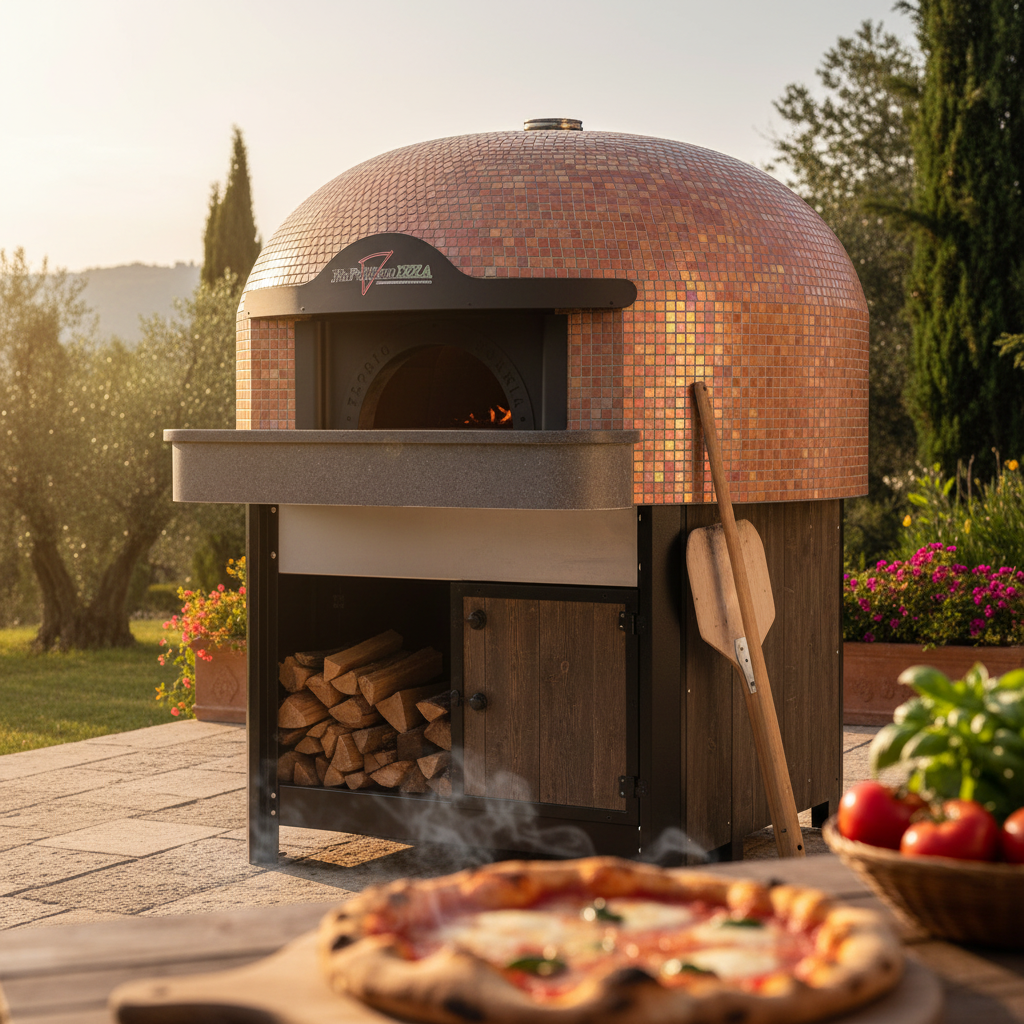
The wood-fired oven is the soul of Neapolitan pizza, a symbol of tradition and authenticity. Vesuviano Forni wood-fired ovens are built with the utmost artisanal care, ensuring superior thermal efficiency thanks to the use of high-quality refractory materials.
How Much Does a Wood-Fired Oven Consume?
The wood consumption of a professional oven varies based on several factors:
- Oven insulation: A well-insulated oven, like those from Vesuviano Forni, retains heat longer, reducing the need to add wood. Our ovens are designed to maximize thermal retention.
- Wood quality: Dry, well-seasoned wood (e.g., beech, oak) burns slower and releases more heat per unit of weight than green or damp wood.
- Oven size: Larger ovens naturally require more wood to reach and maintain optimal temperature.
- Frequency of use: An oven operating continuously or for many hours will consume more than one used sporadically.
- Desired temperature: For Neapolitan pizzas, temperatures around 450-500°C are reached, which requires more consumption than cooking at lower temperatures.
On average, a medium-sized professional wood-fired oven can consume between 7 and 15 kg of wood per work shift (6-8 hours) once the operating temperature is reached. This value can vary significantly. The cost of wood is a factor to consider carefully, as is the space needed for storage.
Pros and Cons of Wood-Fired Ovens
Pros:
- Authentic flavor: The wood smoke gives the pizza an unmistakable aroma and flavor, appreciated by purists.
- Cooking speed: High temperatures allow for very quick cooking, ideal for high traffic.
- Atmosphere: The live flame creates a warm, traditional atmosphere, a real spectacle for customers.
- Energy independence: Not subject to gas or electricity price fluctuations (except for wood purchase).
Cons:
- Wood consumption: Requires constant management, storage, and ash cleaning.
- Temperature control: Requires experience to maintain a constant and uniform temperature.
- Regulations: There may be restrictions on wood use in some urban areas.
- Labor: Requires dedicated staff for fire management.
Consumption of Professional Vesuviano Gas Ovens
Vesuviano Forni gas ovens offer an excellent balance between tradition and modernity, combining high cooking quality with the convenience and control of gas. Our range also includes rotating gas ovens, designed to maximize efficiency in high-volume environments.
How Much Does a Gas Oven Consume?
The consumption of a gas oven is measured in cubic meters (m³) for natural gas or kg for LPG, and is influenced by:
- Burner power: A more powerful burner (expressed in kW) will consume more but will bring the oven to temperature faster.
- Oven insulation: As with wood-fired ovens, good insulation reduces heat loss and, consequently, consumption.
- Oven size: Larger ovens require more energy to heat up and maintain temperature.
- Frequency of openings/closings: Each time the oven mouth is opened, there is heat loss that the burner must compensate for.
- Operating temperature: Maintaining the oven at 450°C will require more gas than at 300°C.
For a professional gas oven, hourly consumption can range from 2 to 5 m³/h of natural gas or 1.5 to 4 kg/h of LPG, depending on the model and use. It is important to consider that gas allows for much more precise temperature control, reducing waste and ensuring more uniform cooking. Our innovative VesuvioBuono system integrates the best technologies to optimize consumption and performance.
Pros and Cons of Gas Ovens
Pros:
- Precise control: Easily adjustable and constant temperature for uniform cooking.
- Cleanliness: No ash, less dirt, and maintenance.
- Ease of use: Less labor required compared to a wood-fired oven.
- Consistency: Replicable performance thanks to automatic temperature control.
- Compliance: Fewer regulatory issues in some areas.
Cons:
- Cost of gas: Subject to energy market fluctuations.
- Installation: Requires a connection to the gas network or LPG storage.
- Lack of wood aroma: The absence of wood deprives the pizza of that much-appreciated smoky note.
Consumption of Professional Vesuviano Electric Ovens
Vesuviano Forni electric ovens represent the most modern and versatile solution, ideal for those seeking precision, ease of use, and compliance in any environment. They are particularly valued for their ability to reach high temperatures with advanced digital controls.
How Much Does an Electric Oven Consume?
The consumption of an electric oven is measured in kilowatt-hours (kWh) and mainly depends on:
- Installed power: Professional electric ovens have high power, ranging from 10 kW to over 30 kW depending on the size.
- Insulation: Excellent insulation is crucial to minimize heat dissipation and, consequently, energy consumption. Vesuviano ovens are designed with the utmost attention to this aspect.
- Preheating time: The longer it takes to reach temperature, the more energy is consumed.
- Continuous use: Keeping the oven on and at temperature requires constant energy, although modern systems optimize consumption.
- Control technology: Precise thermostats and energy management systems can reduce waste.
A medium-sized professional electric oven can consume between 8 and 20 kWh/hour in full operation, but these values can decrease once the temperature is reached and the oven is in maintenance phase. The initial investment in an electric oven can be higher, but operational costs can be competitive, especially with current energy tariffs and the possibility of using energy from renewable sources.
Pros and Cons of Electric Ovens
Pros:
- Precision and uniformity: Digital temperature control for perfect, repeatable cooking.
- No fuel: Does not require wood or gas, simplifying logistics and storage.
- Ease of installation: Greater flexibility in placement, without complex flues or gas connections.
- Cleanliness: No smoke or ash emissions.
- Versatility: Suitable for almost any context, including urban areas with restrictions.
Cons:
- Energy costs: Dependent on electricity prices, which can be high.
- Installed power: Requires adequate available electrical power, sometimes with adaptation costs.
- Lack of smoky flavor: Does not offer the distinctive aroma of a wood-fired oven.
Common Factors Influencing Consumption
Regardless of the type, some factors universally influence the consumption of any professional oven:
- Thermal Insulation: Excellent insulation is key to reducing heat loss and, consequently, energy consumption. Vesuviano ovens excel in this, with their artisanal refractory brick construction.
- Maintenance: A well-maintained oven, with intact gaskets and clean burners (if gas), will operate with greater efficiency.
- Operator Experience: An experienced pizzaiolo knows how to best manage the oven, minimizing openings and maintaining a constant temperature with the least energy effort.
- Construction Materials: Vesuviano Forni's handcrafted refractory bricks not only guarantee superior cooking but contribute significantly to heat retention, optimizing consumption.
Vesuviano Forni: Our Proposal to Optimize Your Consumption
At Vesuviano Forni, we understand the importance of a sustainable investment over time. That's why each of our ovens, whether traditional wood-fired, modern gas, efficient electric, or innovative rotating, is designed to offer maximum performance with the lowest possible consumption. Our production in Sant'Anastasia, at the foot of Mount Vesuvius, is synonymous with artisanal quality and continuous innovation.
We invite you to explore our range of ovens, many of which are also available for ready to ship to speed up the launch of your business. For personalized advice and to discover which solution best suits your needs, taking into account operational costs and specific consumption, do not hesitate to contact us. Our team is at your complete disposal to help you choose the perfect oven for your pizzeria.
Make the right choice for the future of your business. Choose Vesuviano Forni, where tradition meets efficiency. Visit our website vesuvianoforni.com for more information and to request a personalized quote. You can also use our Architetto AI tool for design support.