Custom built outdoor pizza oven: your UK guide 2026
Custom built outdoor pizza oven: your UK guide 2026
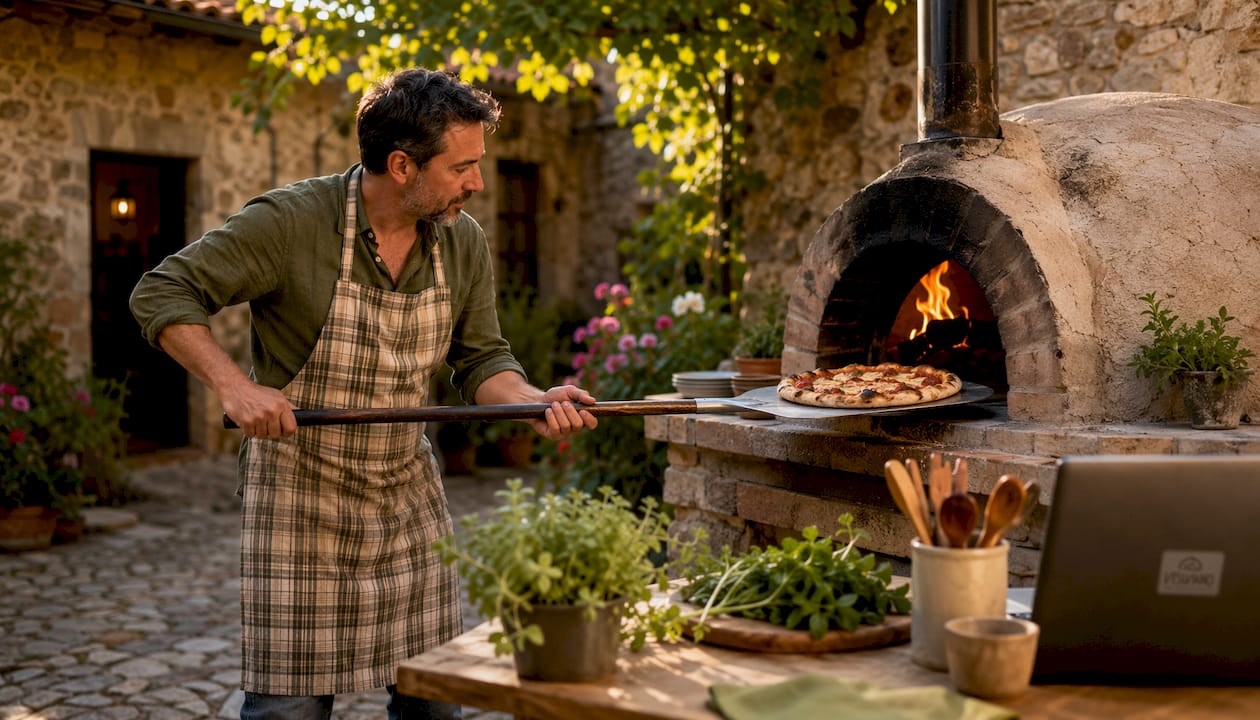
A custom built outdoor pizza oven gives you a wood-fired cooking appliance shaped entirely around your garden, your cooking style, and your aesthetic preferences. Two routes exist: commission an artisan-built oven or build one yourself. The right choice depends on your budget, your confidence with masonry, and how much you value handcrafted authenticity versus hands-on involvement.
Before you commit to either path, the key variables are worth understanding:
- Fuel type: Wood-fired ovens deliver the most authentic flavour and reach the highest temperatures, typically 370–480°C (700–900°F). Gas offers convenience and consistent heat. Hybrid wood/gas ovens give you flexibility across both.
- Materials: Performance-grade firebrick and refractory mortar are non-negotiable for the cooking chamber. The exterior can be finished in stone, render, or mosaic tile.
- Size: Internal diameter drives everything from cooking capacity to preheat time. A 36-inch (approximately 90cm) internal diameter suits most home gardens comfortably.
- Insulation: Refractory insulation beneath the oven floor and over the dome is what separates a high-performance oven from one that wastes fuel and struggles to hold temperature.
- Finishing: From traditional mosaic tile to smooth render or natural stone, the exterior finish defines how the oven sits within your outdoor space.
Three suppliers are particularly active in the UK market: Browning Ovens for handcrafted bespoke masonry, Vitcas for refractory materials and DIY kits, and Vesuviano Forni for professional-grade Neapolitan ovens built in Naples with full technical support.
What materials do you need for a DIY outdoor pizza oven?
The cooking chamber is where material quality matters most. Cut corners here and the oven will crack, lose heat rapidly, or simply fail to reach cooking temperature.
Core materials for the cooking chamber:
- Firebrick: Dense, heat-rated bricks for the dome and hearth floor. Standard dimensions are 220 x 110 x 60mm. You will typically need 47 or more depending on oven size.
- Refractory mortar: High-temperature mortar rated for sustained heat above 1,000°C. Standard cement will crack and fail.
- Refractory insulation board: Ceramic fibre board placed beneath the oven floor stops heat leaching downward into the base. This is the single most overlooked element in DIY builds.
- Perlite or vermiculite: Mixed with Portland cement to form an insulating concrete layer, or used loose beneath the hearth. Both are lightweight and have excellent thermal resistance.
- Cob: A mixture of clay-rich soil, sand, and straw. A traditional and affordable option for the dome on a budget build.
Foundation and base materials:
- Reinforced concrete pad or slab, capable of supporting 1,500–4,000 pounds depending on oven size
- Concrete blocks, engineering bricks, or stone for the stand walls
- Gravel sub-base for drainage and even settlement
Insulation and finishing:
- Slipstraw or ceramic fibre blanket for the dome exterior
- Exterior plaster in three coats: base, scratch, and finish
- Stone veneer, mosaic tile, or render for the final aesthetic layer
Pro Tip: Any DIY plan that omits refractory insulation beneath the oven floor will result in poor heat retention and excessive fuel use. This layer is not optional.
Vitcas, based in the UK, supplies firebricks, refractory mortars, insulation boards, and complete DIY oven kits, making it a practical one-stop source for builders sourcing materials domestically.
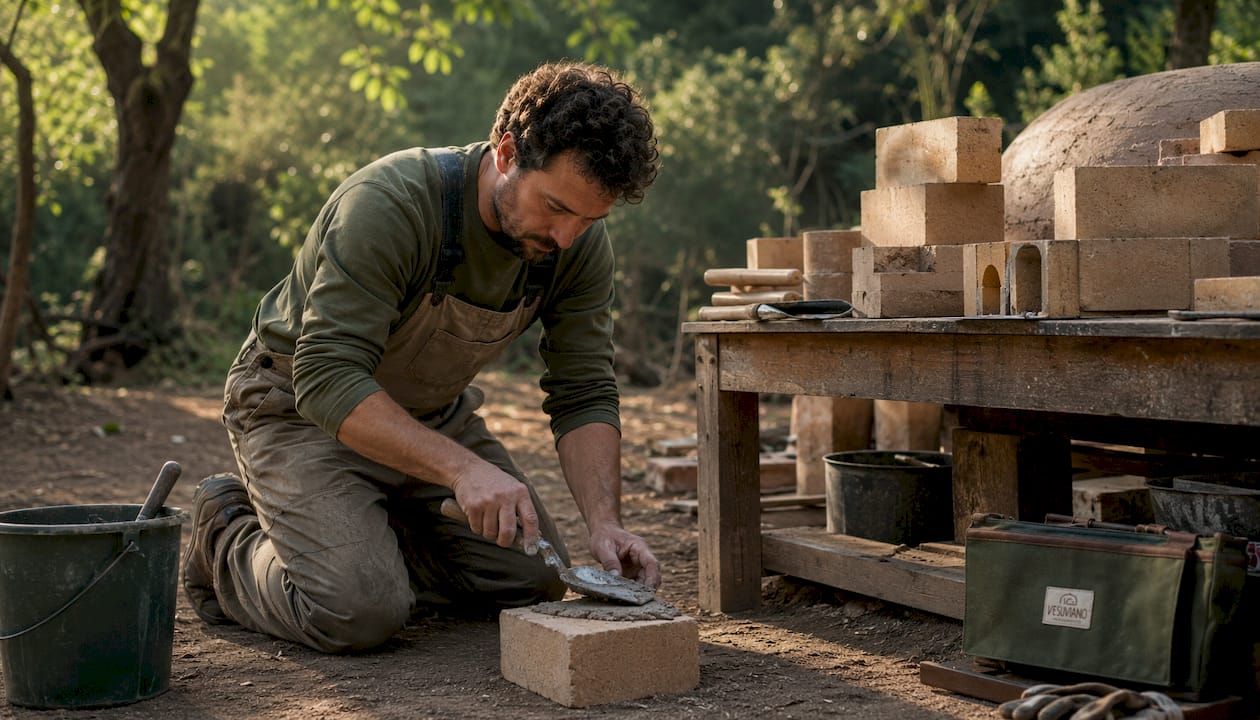
How do you build a wood-fired pizza oven step by step?
A well-built oven takes planning, patience, and the right sequence. Rushing the curing stage is a common mistake; it causes cracking that is difficult to repair.
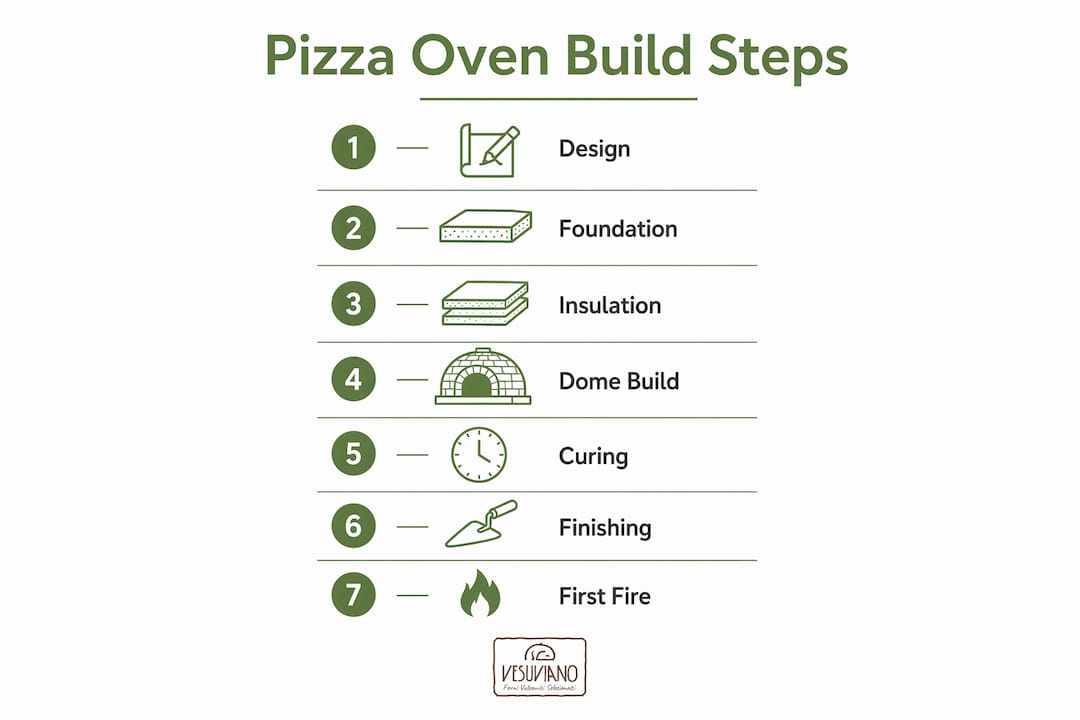
- Choose and prepare the site. Select a level, sheltered spot with good clearance from fences, overhanging trees, and combustible structures. Allow at least one metre of clearance on all sides.
- Build the base. Construct stand walls from concrete blocks or engineering bricks on a reinforced concrete foundation. A standard base is sized to provide a comfortable working height and a stable foundation for the oven. Fill the walls with concrete and rebar for structural integrity.
- Lay the insulation layer. Place a 75–100mm layer of perlite-concrete mix or ceramic fibre board on the base slab before laying any firebricks. This is the critical insulation step that prevents heat from escaping downward.
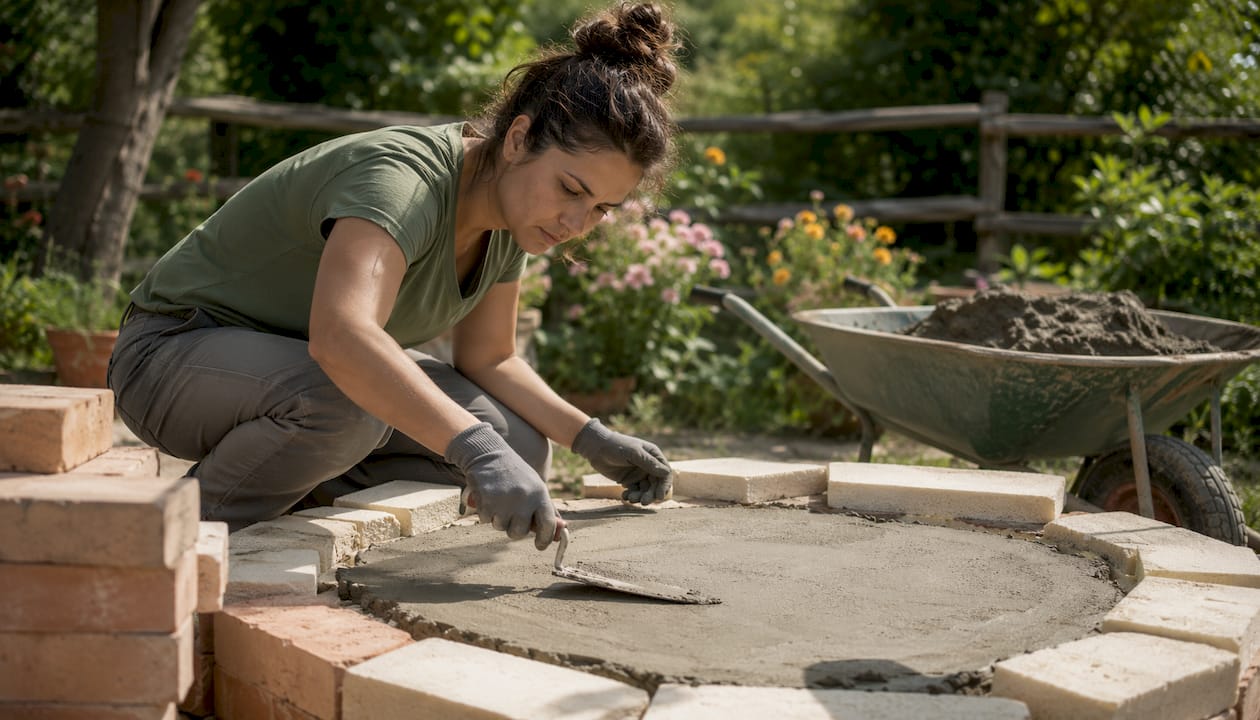
- Lay the hearth floor. Set firebricks in a herringbone or offset pattern directly on the insulation layer using refractory mortar. Keep joints tight and the surface as level as possible.
- Form the dome. Pile damp sand on the hearth floor in the shape of the oven interior. Use this sand mould as a former and build the dome over it using firebricks and refractory mortar, or cob if you are using natural materials. Aim for an interior height proportional to the internal diameter to optimize cooking performance.
- Apply insulation over the dome. Once the dome has cured for 24–48 hours, cover it with a 100–125mm layer of slipstraw, ceramic fibre blanket, or perlite-concrete mix. This layer is what allows the oven to hold heat for extended cooking sessions.
- Plaster and finish the exterior. Apply three successive plaster coats: a straw-reinforced base coat, a sand-and-clay scratch coat, and a fine finish plaster. Add stone, tile, or render as the final decorative layer.
- Install the door and chimney. A chimney flue routes smoke away from the cook and improves draw. A fitted door is useful for retained-heat baking after the fire dies down.
- Cure the oven. Light a series of progressively larger fires over 5–7 days, starting with small kindling fires of 30 minutes and building up to full-temperature fires. This drives moisture from the masonry gradually and prevents cracking.
Pro Tip: A cob pizza oven built over a couple of weekends with proper insulation and a firebrick hearth can be completed for under $300 in materials, making it one of the most cost-effective DIY outdoor cooking projects available.
From breaking ground to a fully operational oven, expect several weeks in total including construction, curing, and initial use before the oven reaches its full thermal potential.
Which artisan-built pizza ovens are available in the UK?
Three providers stand out for buyers commissioning or purchasing a bespoke outdoor pizza oven in the UK. Each takes a distinct approach to materials, customisation, and support.
| Provider | Materials used | Customisation options | Finishing effects | Pricing approach | Best for |
|---|---|---|---|---|---|
| Browning Ovens | Firebrick, refractory mortar, traditional masonry | Bespoke size, arch design, base style | Stone veneer, render, brick | Enquiry-based, bespoke quote | Homeowners wanting handcrafted UK masonry |
| Vitcas | Refractory firebrick, insulation board, high-temp mortar | Kit sizes, DIY or supplied-built options | Render, tile, natural finish | Kit pricing published; build costs vary | DIY builders and refractory material sourcing |
| Vesuviano Forni | Handmade firebrick dome, refractory materials, Neapolitan construction | Full bespoke design, mosaic or metal-slat finish, fuel type | Traditional mosaic, contemporary metal-slat, custom colour | Enquiry-based; technical consultancy included | Enthusiasts and professionals wanting authentic Neapolitan craftsmanship |
Browning Ovens specialises in handcrafted bespoke wood-fired ovens built using traditional masonry techniques. Each oven is constructed on-site in the UK, with the client choosing arch style, base design, and exterior finish. The result is a genuinely one-off piece of garden architecture, built by a craftsman who works in the same tradition as the great British kitchen garden builders.
Vitcas occupies a different position entirely. As a UK-based manufacturer of refractory materials, it supplies firebricks, high-temperature mortars, insulation boards, and complete pre-cut or pre-cast oven kits. For a builder who wants the satisfaction of constructing their own oven but prefers not to source materials piecemeal, Vitcas is the most practical domestic supplier.
Vesuviano Forni brings something neither of the above can offer: ovens built by Neapolitan artisans in Naples, using construction techniques passed down through generations in the Vesuvian area. The RealBosco range features traditional handcrafted mosaic domes available in wood-fired, gas, electric, and rotating versions. The Sebastian line offers a contemporary metal-slat finish for a more modern aesthetic. The VesuvioBuono range adds a low-emission system that eliminates black soot, making it particularly relevant for UK gardens where smoke management matters. Every commission includes technical consultancy, international logistics, installation, and after-sales support, which means the buyer is not left to manage a complex project alone.
What custom design and finishing options are available?
The exterior of a custom outdoor pizza oven is where personal taste takes over from technical specification. The structural and thermal requirements are fixed; the aesthetic is entirely yours.
Traditional mosaic tile is the most recognisable Neapolitan finish, using hand-cut ceramic or glass tesserae in patterns that range from simple geometric designs to elaborate pictorial scenes. It is weather-resistant, low-maintenance, and ages beautifully in a UK garden. Natural stone cladding, whether limestone, slate, or local sandstone, suits gardens with an existing stone aesthetic and blends the oven into the landscape rather than making it a focal point.
Smooth render, painted or pigmented, suits contemporary garden designs. It is the most affordable finishing option and can be refreshed easily if the colour fades. Stone veneer tiles offer a compromise: the look of natural stone at lower cost and weight. For a more industrial or modern aesthetic, the Sebastian line from Vesuviano Forni uses a metal-slat exterior that reads more like a professional kitchen appliance than a traditional garden feature.
Dome shape is also a design choice with real cooking consequences. The Neapolitan dome has a lower, more aggressive curve that concentrates heat and is optimised for high-temperature pizza cooking. The Tuscan dome is higher and better suited to versatile roasting and baking. If pizza is your primary goal, the Neapolitan profile is the right choice.
Oven opening size is a further variable. A larger opening makes it easier to load and manage food, but reduces heat retention. A smaller opening holds temperature better but limits the size of pans and tools you can use. Most bespoke builders will advise on the right balance for your intended use.
How much does a custom pizza oven cost, and how do you enquire?
Pricing for bespoke outdoor pizza ovens varies considerably depending on size, materials, fuel type, and whether installation is included. No single published price list covers the full range of options.
For a DIY cob oven built with locally sourced materials, total spend can sit below $300 for materials alone. A pre-cut firebrick kit from a supplier like Vitcas will cost more, with the kit price published on their website and installation costs added separately if you hire a builder.
Artisan-built bespoke ovens from UK craftsmen like Browning Ovens are priced on enquiry, reflecting the bespoke nature of each project. Expect to provide details on size, preferred materials, site access, and finishing preferences before receiving a quote. Lead times for handcrafted builds can run to several months.
For a professionally manufactured Neapolitan oven from Vesuviano Forni, the enquiry process begins with a technical consultation. The team works through size requirements, fuel type, finish preferences, and site logistics before producing a detailed proposal. Because the service includes international shipping, customs clearance, on-site installation, and after-sales support, the total cost reflects a complete project rather than just the oven itself.
The most useful first step for any buyer is to define three things: the internal diameter you need, your preferred fuel type, and your finishing aesthetic. With those three parameters clear, any of the providers above can give you a meaningful quote.
What are the common challenges when building or maintaining a custom pizza oven?
Most problems with custom outdoor pizza ovens trace back to one of three causes: inadequate insulation, poor curing, or moisture ingress.
Cracking during or after curing is the most common issue for DIY builders. It almost always results from firing the oven too aggressively before the masonry has fully dried. Small hairline cracks in the dome are normal and can be filled with refractory mortar. Large cracks that run through the dome structure indicate a curing problem or insufficient refractory mortar in the original build.
Poor heat retention points to missing or inadequate insulation, particularly beneath the oven floor. Neglecting this layer extends preheat times significantly and prevents the oven from reaching peak cooking temperatures. The fix requires rebuilding the hearth, which is a significant undertaking. Getting it right first time is far easier.
Moisture damage is a particular concern in the UK climate. Earthen and cob ovens are especially vulnerable to prolonged rain. A permanent roof structure over the oven, or at minimum a fitted weatherproof cover, is not optional in a British garden. Proper plaster selection and a weather-resistant exterior finish significantly extend the oven’s lifespan.
For ongoing maintenance, brush the hearth floor clean after each use, check the dome and arch for new cracks seasonally, and repoint any deteriorating mortar joints with refractory mortar before they widen. An oven that is used regularly and kept dry will last decades.
What safety rules apply to outdoor pizza ovens in the UK?
Outdoor pizza ovens in the UK are not subject to planning permission in most cases, but several practical and legal considerations apply.
Clearance distances are the most critical safety factor. A wood-fired oven should maintain safe clearance distances from combustible structures, including fencing, garden buildings, and overhanging trees. The chimney flue should direct smoke away from neighbouring properties and any openable windows.
Structural support is a legal and safety requirement. Custom ovens are heavy and require a reinforced concrete foundation capable of supporting the weight. Building on soft ground without adequate foundations risks subsidence and structural failure.
Smoke and nuisance: The Clean Air Act 1993 applies to smoke that causes a nuisance to neighbours. Wood-fired ovens in smoke control areas must use an exempt appliance or authorised fuel. Check your local authority’s smoke control zone status before installing a wood-fired oven. The VesuvioBuono low-emission system from Vesuviano Forni is worth considering for gardens in or near smoke control areas, as it eliminates black soot emissions.
Gas installations: Any gas connection to a pizza oven must be carried out by a Gas Safe registered engineer. This applies to both new gas ovens and hybrid wood/gas conversions.
For ovens installed as part of an outdoor kitchen structure, building regulations may apply depending on the size and attachment to the house. A quick check with your local planning authority before breaking ground avoids complications later. Pairing your oven with a well-designed outdoor kitchen space can also help you plan clearance distances and utility connections from the outset.
Why the dome and the floor insulation matter more than anything else
The two decisions that define a custom pizza oven’s long-term performance are the dome shape and the insulation beneath the hearth floor. Everything else is secondary.
A spherical dome distributes heat evenly across the cooking surface through its curvature. The Neapolitan profile, with its lower, more aggressive curve, concentrates radiant heat more intensely than a higher Tuscan dome, which is why Neapolitan-style ovens reach cooking temperature faster and hold it more efficiently for pizza. The Tuscan dome’s greater interior height suits roasting and bread baking, where you need room for larger vessels and a gentler, more even heat.
The floor insulation question is less glamorous but arguably more consequential. Without a proper insulating layer beneath the firebrick hearth, heat travels downward into the base rather than staying in the cooking chamber. The result is a floor that never reaches the temperature needed for a properly charred pizza base, no matter how long you fire the oven. Refractory insulation board or a perlite-concrete mix beneath the hearth solves this completely, and it costs relatively little to include at the build stage.
What I see repeatedly in underperfoming DIY ovens is the same pattern: a beautifully finished exterior sitting on a base with no sub-floor insulation. The builder invested in the visible elements and skimped on the invisible one. The oven looks right but cooks poorly. Authentic craftsmanship, whether from a Neapolitan artisan or a skilled UK mason, always prioritises the thermal engineering before the aesthetics.
Vesuviano Forni: professional Neapolitan ovens for serious outdoor cooking
For buyers who want the performance of a professional-grade oven without the complexity of managing a bespoke build from scratch, Vesuviano Forni offers a complete alternative. The ovens are handcrafted in Naples by artisans with over 50 years of generational expertise, using the same refractory materials and construction techniques found in professional pizzerias across Italy and beyond.
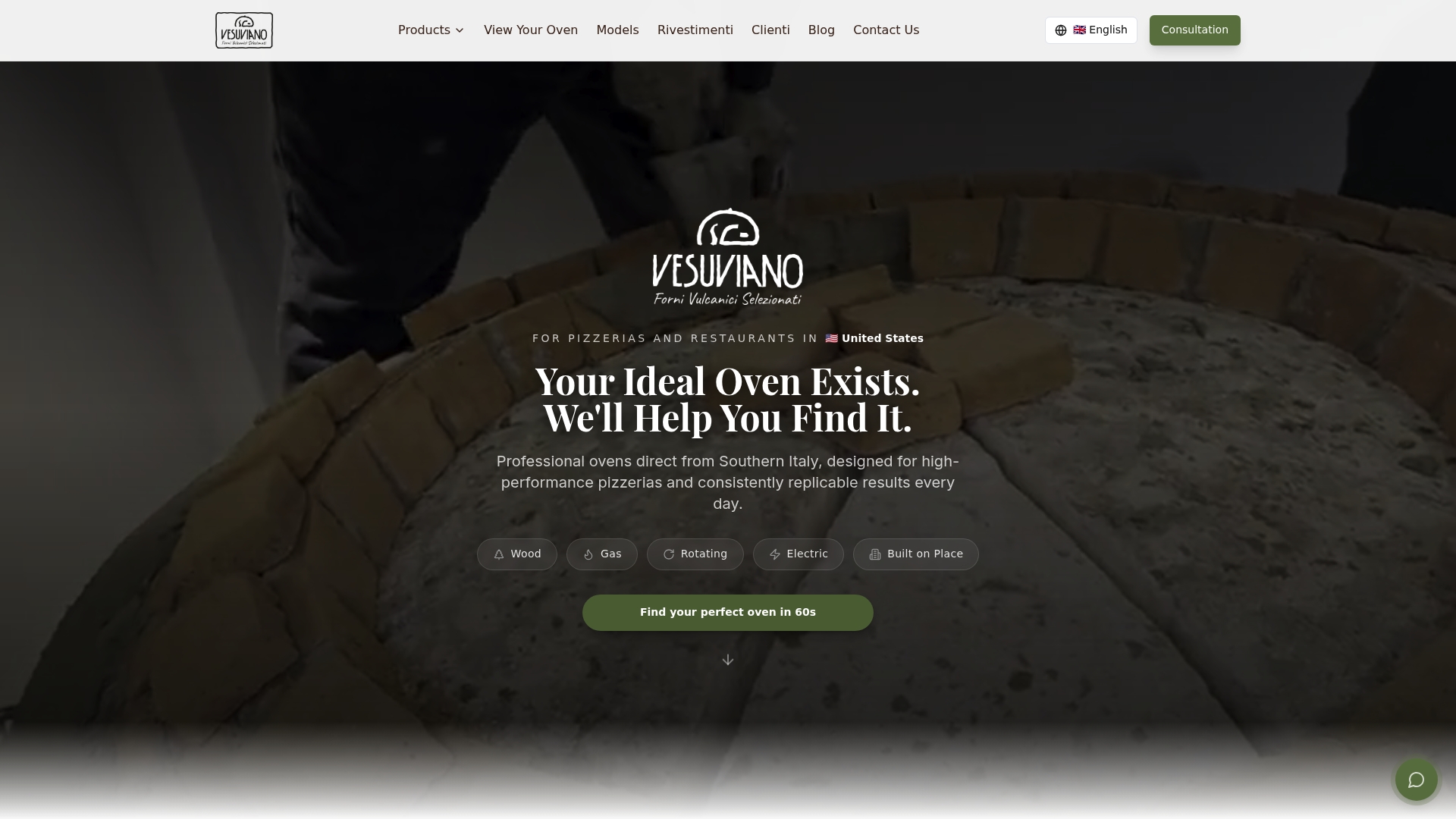
The range covers wood-fired, gas, electric, and rotating pizza ovens, with mosaic and contemporary metal-slat finishes available across the product families. The VesuvioBuono system addresses the specific challenge of smoke management in UK gardens, delivering the flavour and cooking performance of a wood-fired oven with zero black soot emissions. Every project includes technical consultancy, international logistics, on-site installation, and after-sales support, so you are working with a partner rather than simply purchasing a product. For enthusiasts and hospitality professionals who want authentic Neapolitan craftsmanship delivered and installed to a professional standard, Vesuviano Forni is the most complete solution available to UK buyers.
Key takeaways
A custom built outdoor pizza oven succeeds or fails on two decisions: the quality of the refractory insulation beneath the hearth floor and the choice of dome profile for your primary cooking use.
| Point | Details |
|---|---|
| Insulation beneath the floor | Refractory insulation board or perlite-concrete mix under the hearth prevents heat loss and is the most critical build decision. |
| Dome shape and cooking style | Neapolitan domes suit high-heat pizza; Tuscan domes suit roasting and versatile baking. |
| DIY vs artisan build | DIY cob builds can cost under £250 in materials; artisan-built ovens are priced on enquiry and include professional installation. |
| UK safety and regulations | Ovens weigh 1,500–4,000 pounds and need reinforced foundations; wood-fired use in smoke control zones requires an exempt appliance. |
| Vesuviano Forni | Handcrafted Neapolitan ovens with full UK installation support, available in wood-fired, gas, electric, and low-emission configurations. |