How much wood does a pizza oven really use?
How much wood does a pizza oven really use?
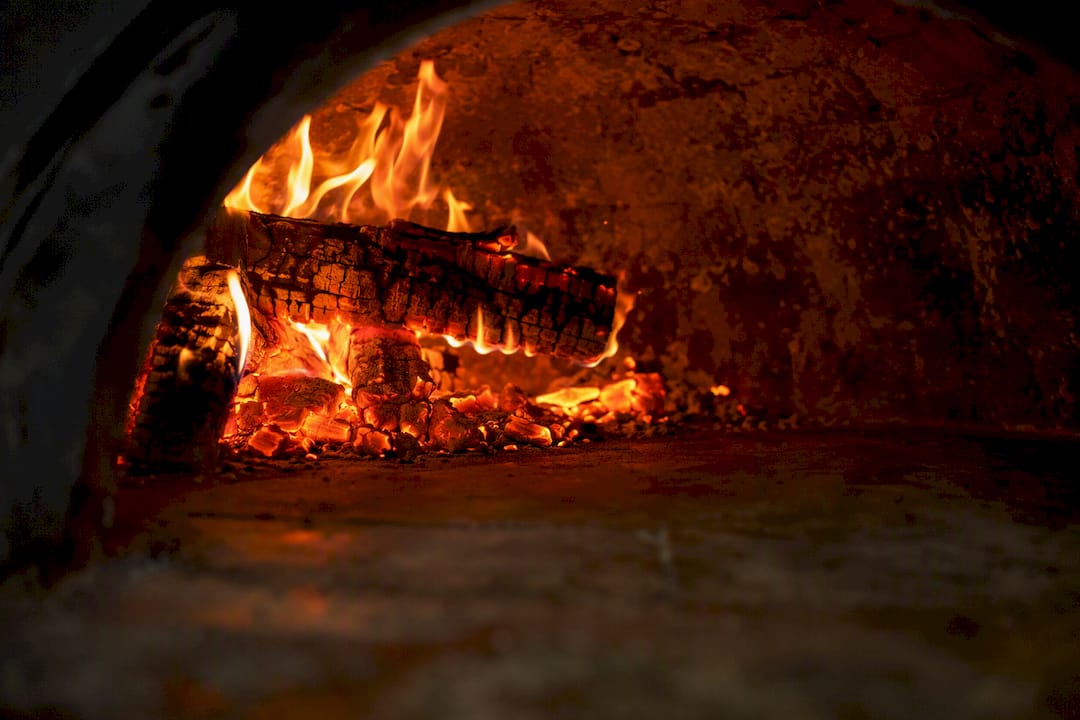
A backyard oven typically burns a moderate amount of seasoned hardwood to reach cooking temperature, then a smaller amount per hour to maintain it, according to The Woodfired Co. A professional oven scales that up considerably, often needing several kilos more at start-up and a steadier hourly feed to survive a busy service.
- Home ovens: a moderate amount to heat, a smaller amount per hour to hold temperature
- Professional ovens: notably more to heat and maintain under service load
- Conversions: 1 kg approximates 2.2 lb; typical seasoned logs have a certain range of weight
The exact figure moves with oven size, insulation, wood type and how well the wood has seasoned. Calorific value and moisture content are the two measurable factors that explain most of the difference between a frugal oven and a hungry one, and Vesuviano Forni builds every oven around getting that balance right from the first firing.
Key Takeaways
Wood consumption in a pizza oven depends primarily on heat-up mass, hourly maintenance rate, insulation quality and wood moisture, and can be calculated reliably once those four figures are known.
| Point | Details |
|---|---|
| Home heat-up range | Backyard ovens typically need 3–6 kg of seasoned hardwood to reach temperature. |
| Professional hourly rate | Commercial ovens often burn 3–6 kg per hour under active service. |
| Moisture is decisive | Wood above 20% moisture wastes energy and pushes every consumption figure higher. |
| Calculate per pizza | Divide hourly wood use by pizzas cooked per hour to get a reliable cost-per-pizza figure. |
| Vesuviano Forni approach | Vesuviano Forni’s insulated commercial ovens and the VesuvioBuono zero-soot system are designed to keep fuel use predictable and emissions lower. |
Table of Contents
- Quick reference: wood consumption pizza oven ranges by scenario
- What actually changes your wood consumption pizza oven figures
- Heating up versus keeping the oven going
- Working out wood use per pizza and per hour
- Which wood gives you the most heat for the least weight
- A worked calculation using Vesuviano Forni oven data
- How to cut wood use without cutting quality
- What most buyers get wrong about fuel planning
- Lower emissions and steadier fuel use with Vesuviano Forni
- Sources
Quick reference: wood consumption pizza oven ranges by scenario
Here’s how the numbers typically break down across common use cases, assuming seasoned hardwood below 20% moisture.
| Scenario | Wood to heat up | Wood per hour (maintenance) |
|---|---|---|
| Home pizza night (2–3 pizzas) | a small to moderate amount | a small to moderate amount |
| Home oven, extended session (bread/roasts) | a moderate amount | a moderate amount |
| Small professional service | a larger amount | a larger maintenance amount |
| Medium commercial shift (6–8 hours) | a considerably larger amount | a steady larger maintenance amount |
A typical medium-sized seasoned log has a certain weight, so a home heat-up corresponds to several pieces, and a commercial start-up to a higher number. These figures assume properly seasoned wood; anything wetter than 20% moisture pushes every number upward, sometimes by a third or more.
What actually changes your wood consumption pizza oven figures
The ranges above are a starting point, not a fixed answer, because several variables push consumption up or down at once.
- Oven size and geometry: a larger dome holds more thermal mass, so it needs more wood to heat but often less per pizza once hot, as covered in our guide to oven dimensions.
- Insulation quality: better-insulated domes retain heat longer, cutting hourly maintenance wood by 20–30% compared with thinner, uninsulated builds.
- Target temperature: Neapolitan-style cooking near 480°C burns noticeably more fuel per hour than a lower, slower roast at 250°C.
- Workload: more pizzas per hour means more door openings and heat loss, which raises hourly consumption even if peak temperature stays constant.
- Wood species and density: denser hardwoods deliver more heat per kilo than softwoods, directly reducing the mass you need to burn.
- Moisture content: wood above 20% moisture wastes energy boiling off water before it burns cleanly.
- Firing technique and airflow: a well-managed fire with good air control burns more efficiently than one left to smoulder.
Pro Tip: Weigh your wood before a few consecutive sessions and log how much you burn per hour against the pizzas or dishes you produce. Three or four runs gives you a site-specific baseline that’s far more useful than any generic range, including the ones in this article.
Heating up versus keeping the oven going
Most of the fuel you burn in any session goes into the first phase, not the cooking itself. Reaching cooking temperature from cold typically demands the bulk of your day’s wood, because you’re heating brick, refractory material and air mass simultaneously rather than just topping up heat that’s already there.
- Heat-up phase: a moderate amount for home ovens, more for professional ovens, burned over a variable period depending on size and insulation.
- Maintenance phase: a smaller amount per hour at home, greater amounts in commercial settings, added steadily once cooking starts.
The first log you throw in does the hardest work of the entire session. Everything after that is just topping up a fire that’s already earned its heat.
Keep a buffer of seasoned wood, dry and stacked under cover, equal to at least one extra heat-up cycle. Running short mid-service is far costlier than storing a little extra.
Working out wood use per pizza and per hour
Once you know your hourly consumption, the maths for cost planning is simple:
- Total wood burned per hour ÷ pizzas cooked per hour = wood per pizza
- Example: a home session burns a moderate amount per hour and produces a handful of pizzas, resulting in a small amount of wood burned per pizza
- Example: a professional oven operating for multiple hours producing many pizzas results in a slightly higher wood usage per pizza and a significant total for the shift
- Peak consumption during a dinner rush can be noticeably higher than average, due to continuous firing with minimal idle time.
- Quieter periods lower the average, so relying on a single busy hour as a planning figure for the entire shift is not reliable.
Pro Tip: Measure consumption across several shifts and use a rolling average rather than trusting one particularly busy or quiet night. A single data point can mislead your ordering by a wide margin.
Which wood gives you the most heat for the least weight
Hardwoods like oak, beech, maple and fruitwoods burn hotter and longer than softwoods such as pine or fir, and Keschenckwrites notes they also produce noticeably less smoke. Softwoods burn fast and resinous, which raises the risk of creosote build-up and shortens the effective heat you get per kilo.
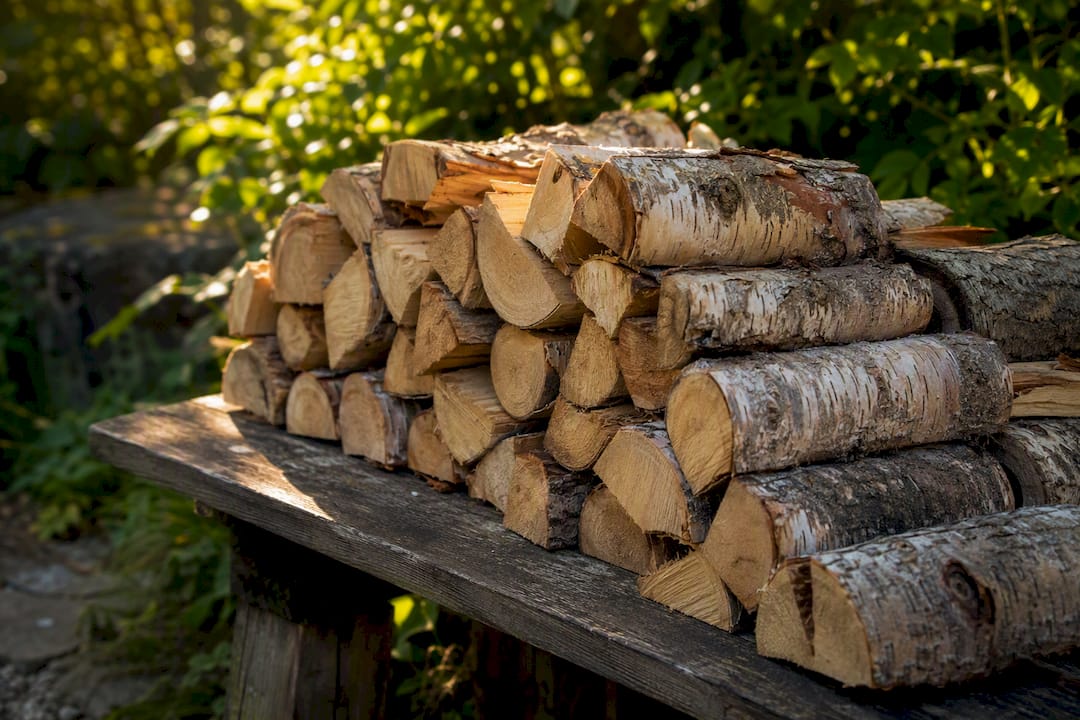
Seasoning below roughly 20% moisture is the single biggest lever on efficiency: wetter wood wastes energy evaporating water rather than heating your dome. A typical backyard heat-up of 3–6 kg can climb considerably higher with unseasoned or wet logs.
Patio & Pizza also flags a health point worth taking seriously: avoid green, resinous or treated wood entirely, since it burns dirty and releases substances you don’t want near food. Kiln-dried hardwood, split and stacked under cover for several months, remains the most reliable choice for both flavour and fuel economy.
A worked calculation using Vesuviano Forni oven data
Vesuviano Forni publishes specification and consumption guidance for its commercial wood-fired ovens, which gives buyers a reproducible starting point rather than a rule of thumb. Here’s how the calculation runs for a mid-size commercial dome with good insulation:
- Initial heat-up: approximately 10 kg (22 lb) of seasoned hardwood over roughly 60–75 minutes to reach service temperature.
- Hourly maintenance: approximately 4 kg (8.8 lb) per hour once the oven is holding temperature under moderate service.
- Example 7-hour shift: 10 kg heat-up + (4 kg × 6 remaining hours) = 34 kg (75 lb) total wood.
- Per-pizza figure: at 100 pizzas across that shift, that works out to roughly 0.34 kg (0.75 lb) per pizza.
- These figures assume seasoned hardwood, consistent staffing and typical service pacing.
- Manufacturer data is a strong starting benchmark, but insulation quality, altitude, ambient temperature and your own firing habits will shift the real number. Measure your own oven over a few shifts to confirm it.
How to cut wood use without cutting quality
Reducing fuel spend doesn’t mean compromising the pizza. Small operational changes add up quickly.
- Choose an oven with strong insulation from the outset. It’s the single biggest lever on hourly consumption.
- Pre-season the dome gradually when new, following the manufacturer’s curing schedule rather than rushing to full temperature.
- Burn denser hardwood rather than softwood wherever it’s available locally.
- Control airflow deliberately. A well-managed fire needs less wood than one left to guess its own draw.
- Cluster your cooking to make use of residual heat rather than letting the oven cool between orders.
- Use a proper oven thermometer and train staff to fire consistently, since guesswork burns more wood than a monitored routine.
Pro Tip: Position your wood store and prep bench so staff open the oven door as few times as possible during service. Every unnecessary opening bleeds heat and forces you to burn more wood to recover it. For firing technique specifics, our practical guide to using a wood-fired oven covers the workflow in more depth.
What most buyers get wrong about fuel planning
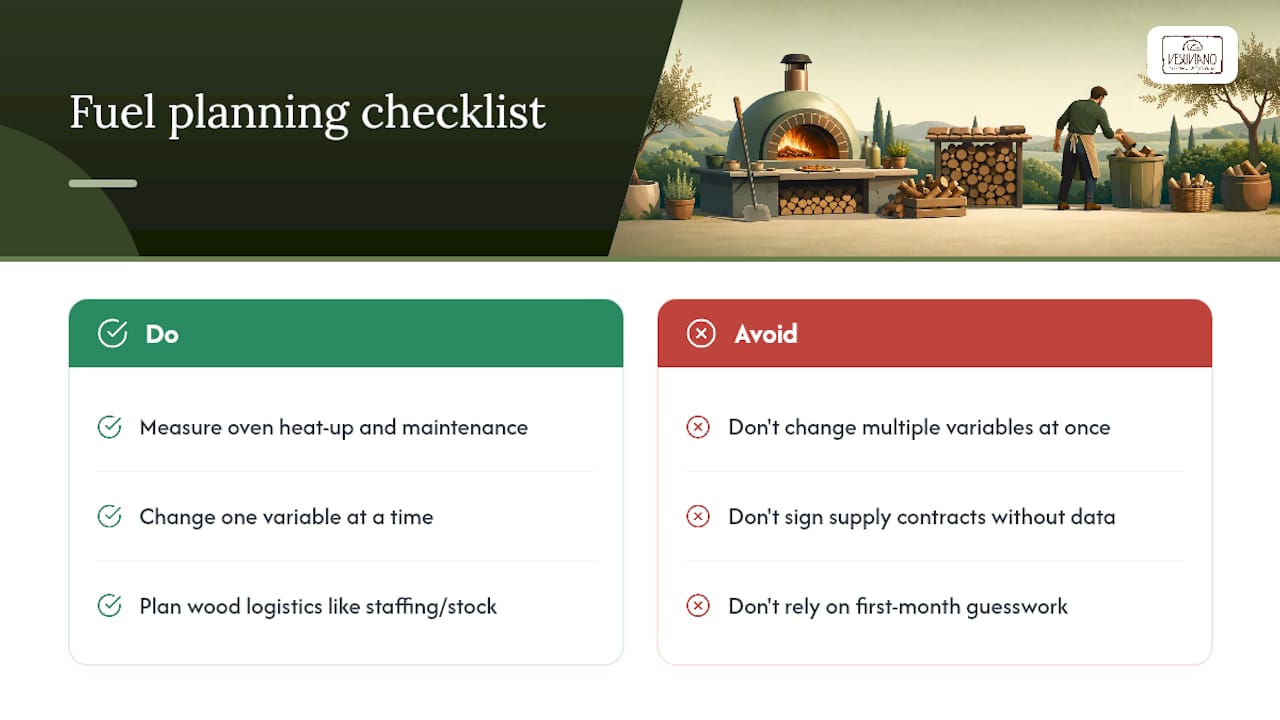
The habit that separates efficient kitchens from wasteful ones isn’t the wood itself. It’s measuring early and changing one variable at a time. Too many operators swap wood species, firing technique and workload all in the same week, then can’t tell which change actually moved the needle.
For commercial buyers, wood logistics deserve the same planning as staffing or stock. Know your oven’s heat-up and maintenance figures before you sign a supply contract, not after a chaotic first month of guesswork.
Lower emissions and steadier fuel use with Vesuviano Forni
Vesuviano Forni builds every commercial oven with insulation and thermal mass calculated to hold temperature efficiently, which is exactly the variable that most affects your hourly wood bill.
For businesses that also want to cut soot and smoke output, the VesuvioBuono system is designed to eliminate black soot emissions from traditional wood-fired cooking while keeping the authentic flavour and flame that define Neapolitan pizza. It’s a practical route to cleaner operation without switching away from wood entirely.
Every site is different, and the ranges in this article are a starting point rather than a guarantee for your kitchen. If you’re specifying a new oven or comparing fuel logistics for a pizzeria, restaurant or hotel kitchen, our team can walk through your expected service volume and recommend the right build. Visit our commercial wood-fired oven page to review specifications or request a technical consultation for a site-specific estimate.
Sources
- How Much Wood Will My Wood Fired Oven Really Use? (And What Does It Cost) - The Woodfired Co
- Fueling Your Feast: How Much Wood Do I Need to Heat a Pizza Oven? - Keschenckwrites
- Best Wood For Pizza Oven | Firewood for your Brick Oven - Patio & Pizza Outdoor Furnishings