Wood fired pizza oven dimensions: the complete guide
Wood fired pizza oven dimensions: the complete guide

Wood fired pizza oven dimensions define how much space an oven occupies, how many pizzas it can cook at once, and whether it will fit safely in your chosen location. Getting these measurements right before you buy or build is the single most important decision in the entire process. Choose too small and you limit your output. Choose too large and you face structural, clearance, and cost problems that are expensive to fix. This guide covers the full range of oven sizes, from compact residential models to large commercial units, and explains exactly what each set of measurements means for your installation and cooking performance.
What are the standard wood fired pizza oven dimensions?
Wood fired pizza oven dimensions are typically described across three measurements: external width, external depth, and overall height. These figures tell you how much floor space and vertical clearance the oven requires. They do not, on their own, tell you how many pizzas you can cook. That depends on the internal cooking surface, which is always smaller than the external footprint.
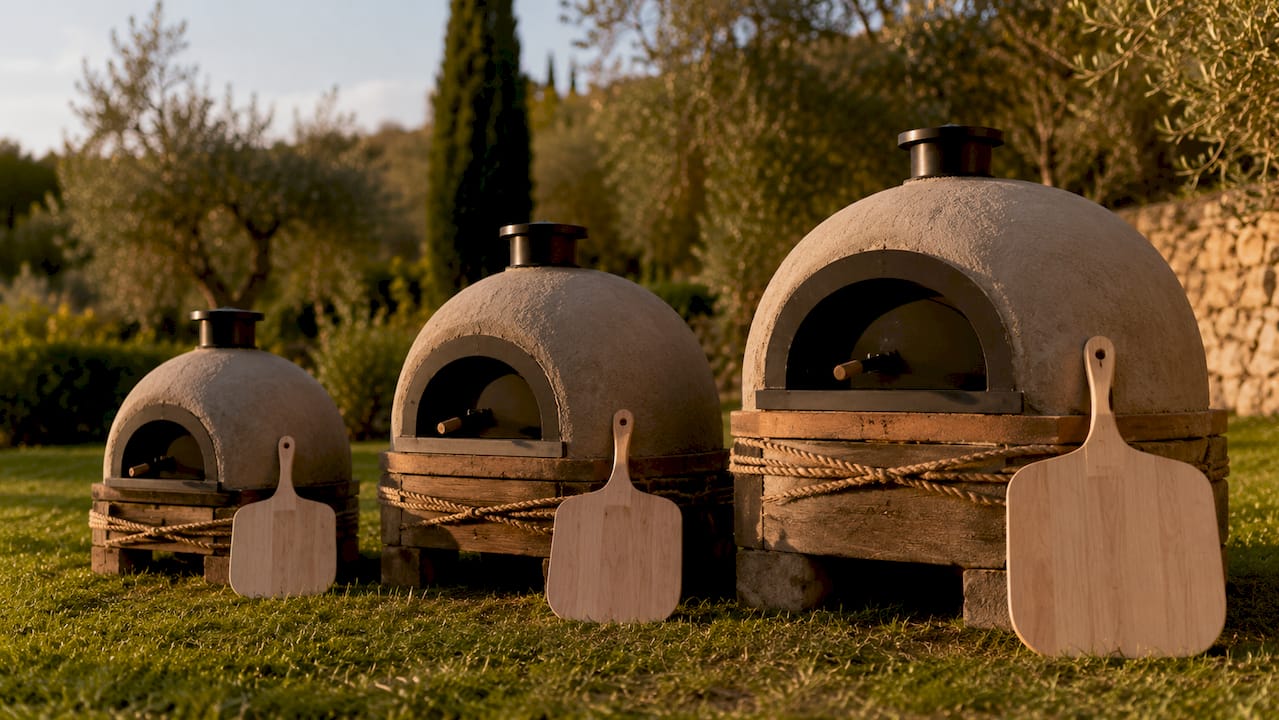
The industry groups ovens into three broad size categories: small, medium, and large. Each category corresponds to a typical output range and a typical user profile.
| Size category | Width | Depth | Simultaneous pizza capacity |
|---|---|---|---|
| Small | 16–32 inches | 16–25 inches | 1 pizza |
| Medium | 33–46 inches | 26–30 inches | 2–4 pizzas |
| Large | 60–70 inches | 40–55 inches | 5+ pizzas |
Small ovens measuring 16–32 inches wide and 16–25 inches deep cook one pizza at a time. That suits a home garden or a small terrace perfectly. Medium ovens in the 33–46 inch width range handle 2–4 pizzas simultaneously, which is the sweet spot for outdoor kitchens and catering operations. Large commercial ovens reach 60–70 inches wide and 40–55 inches deep, producing five or more pizzas at once for high-volume restaurants and food halls.
Height is the measurement most buyers overlook. A medium residential oven typically stands around 41.5 inches tall, with a width of 37.5 inches and a depth of 27.5 inches. That height matters enormously when you are planning an outdoor kitchen canopy, an indoor extraction hood, or a covered terrace installation.
How do oven dimensions affect installation and space planning?
The external footprint of the oven is only the starting point for space planning. Every wood fired oven requires additional clearance around it for safe operation, airflow, and routine maintenance. Foundations must extend beyond the oven base on all sides, and foundation dimensions typically exceed the oven base by several inches on every side. A well-documented standard calls for the foundation to extend at least 4 inches on the sides and back, and 6 inches at the front to allow the cook to work safely at the mouth of the oven.
Key installation factors to plan for:
- Foundation load capacity. Larger ovens are extremely heavy. The base must be engineered to carry the combined weight of the oven, the stand, and any cladding.
- Overhead clearance. The flue and chimney add significant height above the oven dome. Account for this before positioning the oven under a pergola or canopy.
- Side clearance. Allow at least 12 inches on each side for safe heat dissipation and access to the firebox area.
- Front working space. You need a clear, unobstructed area in front of the oven mouth for loading, turning, and removing pizzas. A minimum of 36 inches is the practical standard.
- Access for delivery and assembly. Large commercial ovens may require forklift access or on-site construction. Plan your site access route before ordering.
- Ventilation and smoke extraction. Indoor installations require a certified extraction system sized to the oven’s combustion output.
Larger ovens necessitate substantial foundations and clearance space to support heavy structures safely and allow for maintenance. Underestimating this is the most common and costly mistake buyers make.
Pro Tip: Always draw your installation space to scale on paper before ordering. Mark the oven footprint, the foundation extension, the front working zone, and the chimney height. If everything fits on paper, it will fit on site.
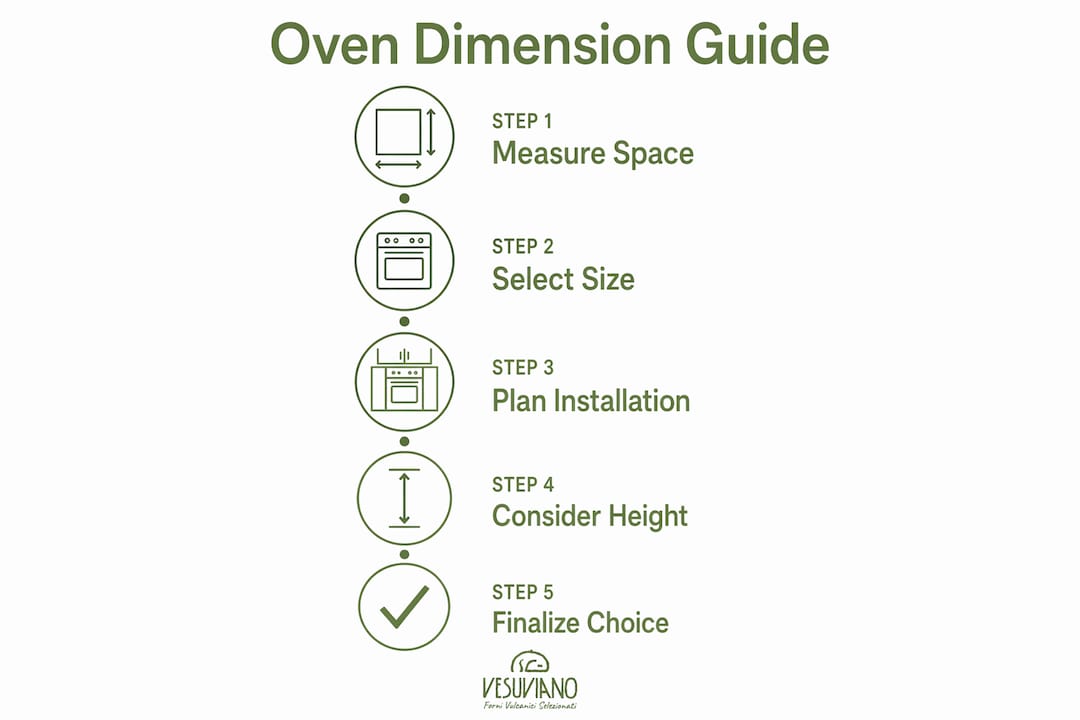
Which oven size suits your setting and output needs?
Selecting the right wood fired pizza oven size is a question of matching output requirements to available space, not simply buying the largest oven that fits. The table below summarises the typical fit between oven size and user context.
| Setting | Recommended size | Width range | Typical output |
|---|---|---|---|
| Home garden or terrace | Small | 16–32 inches | 1 pizza at a time |
| Outdoor kitchen or catering | Medium | 33–46 inches | 2–4 pizzas at a time |
| Pizzeria or restaurant | Large | 60–70 inches | 5+ pizzas at a time |
| High-volume food hall | Large or custom | 60 inches+ | 5+ pizzas, continuous service |
Small ovens deliver all the cooking quality of a wood fired oven without demanding excessive space. For a household cooking one or two pizzas on a weekend evening, a compact unit is the right choice. It heats faster, uses less wood, and fits on a modest patio without structural work.
Medium ovens serve caterers, small restaurants, and serious home entertainers who need to feed a group without a commercial kitchen setup. The 33–46 inch width range gives enough internal cooking surface for two to four pizzas side by side, which translates to a steady service pace for a table of eight to twelve people.
Large commercial ovens are built for continuous, high-volume service. A commercial unit with interior dimensions of 28 by 45 inches can hold up to five pizzas and requires a foundation and structural support matched to its weight and size. This category demands professional installation planning from the outset.
Portability is a separate consideration. Smaller ovens in the 16–32 inch range are sometimes available as freestanding units on wheeled stands, which suits pop-up food businesses and event caterers. Built-in ovens, whether small or large, are permanent structures and should be treated as such during the planning phase.
What factors beyond raw dimensions affect oven performance?
Dimensions set the boundaries of an oven’s performance, but they do not determine it entirely. The internal dome height, door opening size, and material choices all shape how the oven actually cooks.
Dome height is the vertical distance from the cooking floor to the top of the internal arch. A taller dome holds more heat volume but takes longer to reach temperature. A lower dome concentrates radiant heat more directly onto the pizza. For personal-sized ovens, a dome height of approximately 69 cm with a door 50 cm wide and 21 cm high offers an effective balance of cooking space and heat retention. That ratio of door height to dome height, roughly one third, is a well-established principle in traditional Neapolitan oven construction.
Door size controls airflow and heat loss. A door that is too large relative to the dome allows too much heat to escape during cooking. A door that is too small restricts the size of pizzas you can load and makes working at the oven mouth unnecessarily difficult.
Material choice has a direct effect on thermal performance. Fire bricks, the traditional material used in Neapolitan ovens, absorb and radiate heat steadily. They take longer to reach cooking temperature than thinner refractory materials, but they hold that temperature far more consistently. This is why Vesuviano Forni builds its ovens using traditional Neapolitan construction techniques, where the thermal mass of the materials is as deliberate a design choice as the external dimensions.
Airflow interacts with oven size in a way that many buyers do not anticipate. A larger oven with a poorly positioned flue will develop uneven hot spots. A smaller oven with a well-designed chimney draw will maintain a consistent cooking temperature across the entire floor. When comparing oven specifications, always ask about flue diameter and position alongside the external measurements.
Pro Tip: If you are choosing between two oven sizes and are unsure which to pick, choose the one with the larger internal cooking floor rather than the larger external footprint. Internal floor area is what determines your actual output.
Key takeaways
The right wood fired pizza oven dimensions depend on your output requirements, available space, and structural capacity, not on any single measurement in isolation.
| Point | Details |
|---|---|
| Size categories are output-driven | Small ovens cook 1 pizza, medium cook 2–4, and large commercial ovens cook 5 or more simultaneously. |
| Foundation exceeds oven footprint | Plan for the foundation to extend at least 4–6 inches beyond the oven base on all sides. |
| Dome height shapes cooking performance | A dome-to-door height ratio of roughly 3:1 is the standard for consistent heat retention. |
| Internal floor area matters most | External dimensions set the space requirement; internal floor area determines your actual cooking capacity. |
| Custom sizing is available | Manufacturers such as Vesuviano Forni offer bespoke dimensions tailored to specific space and output needs. |
My honest view on choosing oven dimensions
People consistently underestimate how much the installation context shapes the right dimension choice. I have spoken with restaurant owners who ordered a large commercial oven, then discovered their delivery access was too narrow to bring it in assembled. I have also seen home buyers choose a small oven to save space, then regret the limited output within the first season of use.
The dimension question is really two separate questions. The first is: what output do I need now? The second is: what output might I need in two or three years? If you are opening a restaurant and expect to grow your covers, buying an oven at the lower end of the commercial range is a false economy. You will outgrow it faster than you expect, and replacing a built-in oven is a significant project.
My recommendation is always to plan one size category above your current need, provided your space and foundation can support it. The cost difference between a medium and a large oven is far smaller than the cost of a second installation. Consult a manufacturer with genuine technical expertise, not just a sales team, before you commit. Vesuviano Forni provides technical consultancy as part of its service, which means you get dimension advice grounded in decades of oven construction experience rather than a generic size chart.
— Bruno, Key Account & Export Manager
Vesuviano Forni ovens: dimensions built around your operation
Choosing the right oven size is straightforward when you have the right partner behind you. Vesuviano Forni designs and builds commercial wood fired pizza ovens across a full range of dimensions, from compact residential models to large-format restaurant ovens, each built by hand in Naples using traditional Neapolitan techniques.
Every project begins with a technical consultation to match oven dimensions to your available space, output requirements, and structural conditions. For businesses with specific site constraints, Vesuviano Forni also offers on-site custom builds, where the oven is constructed directly in your venue to fit dimensions that no standard model could accommodate. From the first measurement to the final installation, the team manages every stage of the process.
FAQ
What are the standard dimensions of a wood fired pizza oven?
Small ovens measure 16–32 inches wide and 16–25 inches deep. Medium ovens range from 33–46 inches wide and 26–30 inches deep. Large commercial ovens reach 60–70 inches wide and 40–55 inches deep.
How much space do I need around a wood fired pizza oven?
The foundation should extend at least 4 inches beyond the oven base on the sides and back, and 6 inches at the front. Allow a minimum of 36 inches of clear working space in front of the oven mouth.
What internal dimensions do I need for a commercial pizza oven?
A commercial oven capable of holding five pizzas simultaneously typically requires an internal cooking surface of at least 28 by 45 inches, along with a foundation and structural support rated for the oven’s total weight.
Does dome height affect cooking performance?
A dome height of approximately 69 cm with a door opening of 50 cm wide and 21 cm high is considered optimal for personal-sized ovens, balancing heat retention with usable cooking space.
Can wood fired pizza ovens be custom-built to specific dimensions?
Bespoke oven manufacturing enables precise adaptation of dimensions and performance to individual space and output requirements. Manufacturers such as Vesuviano Forni offer custom sizing for both residential and commercial projects.