60 to 90 Second Bakes: Neapolitan Oven Craftsmanship for Restaurants
60 to 90 Second Bakes: Neapolitan Oven Craftsmanship for Restaurants
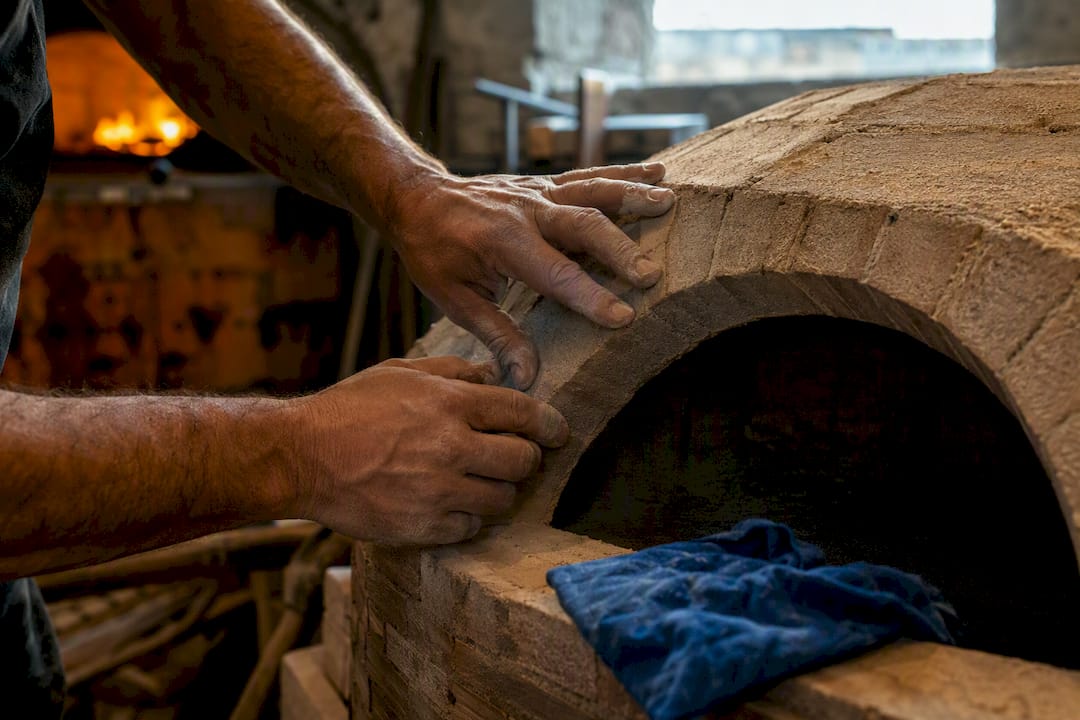
Neapolitan oven craftsmanship means an artisan-built masonry dome fitted over a dense refractory floor, engineered to hold intense, balanced heat for a 60 to 90 second bake. Two signals separate the genuine article from a decorative imitation: recognition from the Associazione Verace Pizza Napoletana (AVPN) and the visible hand of makers such as Vesuviano Forni. Everything that follows explains the materials, techniques, build options and performance figures that determine whether an oven earns that reputation.
TL;DR:
- A genuine Neapolitan oven must have a low, compact dome, a narrow mouth, and a dense refractory hearth to achieve the authentic 60 to 90 second bake.
- Refractory bricks and Biscotto clay are essential materials for professional ovens due to their density and heat retention, unlike less durable domestic options like cordierite stones.
- Craftsmanship relies on apprenticeship and precise construction techniques, with tailored build options including on-site masonry, pre-built units, and modular kits suitable for different business needs.
- To ensure long-term functionality, regular maintenance should focus on gradual heating, cleaning, and avoiding thermal shocks that can cause cracks or damage to refractory components.
- Cost and lead time vary depending on size, fuel type, and finish, with custom designs and site preparations significantly impacting installation schedules and expenses.
Table of Contents
- What defines authentic Neapolitan oven craftsmanship?
- Which materials define a professional-grade Neapolitan oven?
- How do artisans build a handcrafted Neapolitan oven?
- Workshop pre-built, modular or on-site: which build suits your business?
- How is a Neapolitan oven engineered for continuous restaurant service?
- Vesuviano Forni’s approach to traditional and modern craftsmanship
- What do professional Neapolitan ovens cost and how long do they take to install?
- Where does Neapolitan oven craftsmanship come from?
- How do regional Neapolitan oven designs differ?
- How do you maintain a handcrafted Neapolitan oven for the long term?
- Why artisan-built ovens still matter more than convenience
- Ready to commission a handcrafted Neapolitan oven?
- Sources
What defines authentic Neapolitan oven craftsmanship?
An authentic Neapolitan oven is defined by three interlocking features, not one alone. The dome sits low and compact, which keeps internal air volume small so temperatures climb fast and stay high without needing a furnace-sized fire. A wide, tall dome dissipates heat and forces the pizzaiolo to burn more wood for less result.
The mouth, the opening where you load and turn the pizza, is deliberately narrow. A tight mouth traps radiant heat inside the chamber and channels flame and hot gas back across the dome ceiling instead of letting it escape, which is exactly what produces that domed, blistered crust rim.
The hearth matters just as much as the dome above it. A dense refractory floor stores heat and releases it steadily into the base of the dough, rather than spiking and cooling with every load.
- Low, compact dome: fast heat build-up, less fuel burned for the same result
- Narrow mouth: retains radiant heat and recirculates flame across the ceiling
- Dense refractory hearth: steady base heat instead of erratic spikes
- Combined effect: a genuine 60 to 90 second bake with a soft, leopard-spotted crust
Miss any one of these three, and you get an oven that looks Neapolitan but bakes like something else entirely.
Which materials define a professional-grade Neapolitan oven?
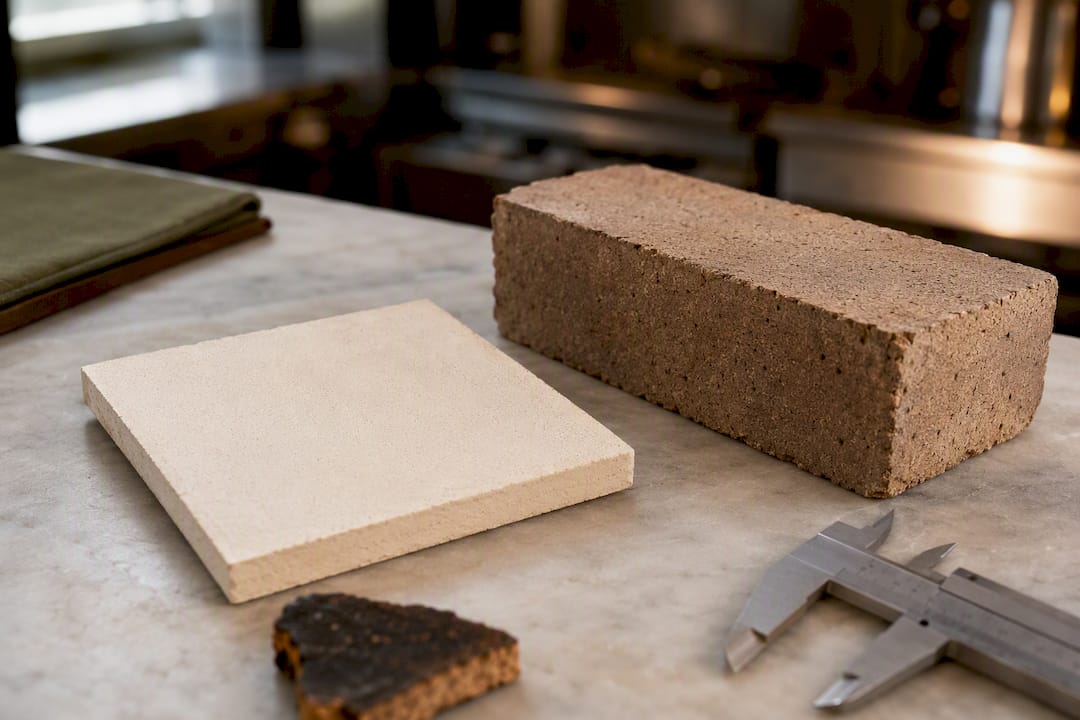
Refractory bricks and Biscotto clay form the backbone of a serious oven, chosen for their density and low porosity. Dense refractory material absorbs enormous heat and then gives it back slowly and evenly, which is precisely the behaviour a pizzeria needs across a busy Friday service, not just for the first ten pizzas.
Insulation is the part diners never see but every pizzaiolo feels. A proper insulating layer, usually a lightweight cement or mineral mix packed between the brick shell and the outer render, stops heat bleeding away and keeps the dome’s internal temperature stable hour after hour.
- Biscotto clay and high-density refractory brick: superior heat retention, low porosity
- Insulating cement mixes: preserve internal temperature across long services
- Consumer-grade cordierite stones: adequate for home ovens, prone to thermal fatigue under daily professional loads
- Sourcing checks: verify brick density, firing quality and supplier provenance before installation
Pro Tip: Ask any supplier for the specific density rating of their refractory brick, not just the phrase “professional grade”. Density is what separates a stone built for occasional home bakes from one built for 200 pizzas a night.
Cordierite stones, common in domestic ovens, simply were not designed for continuous commercial cycling. They work, until the daily thermal stress of a busy kitchen starts to show.
How do artisans build a handcrafted Neapolitan oven?
Neapolitan oven building has survived largely through apprenticeship rather than manuals. Techniques for setting a dome, judging mortar consistency by feel, and reading how a brick sits under load get passed from an experienced builder to a younger pair of hands over years, not weeks. The AVPN treats this lineage as a core marker of authenticity precisely because it cannot be faked with a certificate alone.
The construction sequence follows a logical order:
- Lay the foundation and insulating base layer to stop ground moisture reaching the hearth.
- Set the refractory floor bricks, checked for a level, gap-free surface.
- Build the dome course by course, fitting each brick to leave no measurable gap.
- Apply the insulating render and outer finish.
- Cure and season the oven gradually, raising temperature over several sessions to avoid cracking.
Fitting bricks so tightly that they resist even the smallest shift is a skill in itself; loose joints today become structural movement in a year of daily firing. Builders in the Vesuvian tradition sometimes mark completion with small customs, such as a coin placed beneath the floor. These are cultural gestures tied to the craft’s oral history, not technical requirements, but they say something about how seriously the trade treats the finished oven.
Workshop pre-built, modular or on-site: which build suits your business?
Restaurateurs generally choose between three build routes, and each answers a different operational question.
- Workshop pre-built ovens: constructed and cured under controlled conditions, then shipped as a finished unit. Quality is consistent because the builder controls every variable, and transportable designs often use steel frames and heat-resistant concrete casts around a traditional brick lining to survive the journey intact.
- On-site masonry builds: built brick by brick in the final location, allowing a bespoke fit to unusual kitchen footprints, but requiring longer timelines and careful site preparation before work even begins.
- Modular kits: quicker to assemble than a full masonry build, though some designs show their limits under sustained, heavy continuous service compared with a solid handcrafted shell.
Shipping, customs clearance and local assembly windows are the main variables behind any lead-time estimate, whichever route you choose.
How is a Neapolitan oven engineered for continuous restaurant service?
Peak temperature gets the attention, but recovery is what actually determines whether your kitchen can hold a queue on a Saturday night. A hot dome with a cold stone still burns the crust and leaves the base pale, because the floor temperature and the overhead flame have to stay in balance throughout the bake, not just at the start of service.
Thermal mass has to be sized to the kitchen’s actual throughput. A hearth built too thin will lose heat faster than the fire can replace it once orders start stacking up; one built with adequate mass recovers between bakes and holds a stable stone temperature far more reliably than ambient chamber heat alone.
- Match hearth thickness and mass to expected covers per hour, not just peak capacity
- Balance burner placement and dome shape to avoid scorching the crust before the base cooks through
- Insulate the outer shell to protect surrounding surfaces and staff working close to the oven
- Aim for the dome’s classic domed crust and leopard spotting without sacrificing an evenly cooked base
Independent testing of high-heat ovens has repeatedly found that stone temperature, not ambient air temperature, is the variable that separates a well-built oven from one that just sounds impressive on a spec sheet.
Vesuviano Forni’s approach to traditional and modern craftsmanship
Some artisans from the Vesuvian area with long experience in building professional ovens are organised into three product families. RealBosco covers traditional handcrafted mosaic ovens in wood-fired, gas, electric and rotating versions. Sebastian offers a contemporary metal-slat finish with a similar underlying construction. VesuvioBuono is a low-emission wood-fired system designed to remove black soot while keeping the flavour of a genuine wood fire.
- End-to-end service covering custom design, international logistics, customs clearance and on-site assembly
- After-sales support is available for businesses running ovens across long service hours.
- Technical innovation including a patented brick dome on the electric range, developed alongside engineers rather than instead of the artisan team
- A build process rooted in the same Neapolitan construction techniques described earlier in this article
Any specific technical claim, dome dimensions, thermal ratings, or dome patent detail, is worth confirming directly against the current product specification sheet before you commit to a build.
What do professional Neapolitan ovens cost and how long do they take to install?
Cost and lead time both depend on the same handful of variables: oven size, fuel type, and whether the finish is custom or standard. Wood-fired units tend to sit at a different price point than gas or electric equivalents, and a bespoke design pushes costs and timelines further than a standard configuration.
- Confirm size, fuel type and finish early. These three choices drive most of the price variance between projects.
- Ask about lead-time drivers specifically: design sign-off, manufacturing, shipping, customs clearance and on-site assembly windows all stack up separately.
- Prepare the site before delivery: a reinforced foundation, moisture barrier, ventilation planning, compliant clearances and enough access for delivery equipment.
- Confirm warranty terms, spare parts availability and after-sales response times in writing before signing.
Skipping the site-preparation checklist is the single most common cause of installation delays, far more often than the oven itself being late.
Where does Neapolitan oven craftsmanship come from?
The techniques behind today’s Neapolitan oven trace back to bakers and pizza vendors working in Naples through the eighteenth and nineteenth centuries, long before “Neapolitan pizza” became an international category. Naples sits in the shadow of Vesuvius, and the region’s volcanic geology gave local builders access to clays and stone with exactly the thermal properties a high-heat oven needs. That geographic accident became a craft tradition almost by necessity: builders worked with what the land offered, and generations of trial and error refined dome shape, mouth width and hearth thickness long before anyone wrote the specifications down.
What kept the craft alive wasn’t documentation but apprenticeship. Sons learned from fathers, workshops trained the next generation of bricklayers, and the oven itself became a fixture of Neapolitan street life, the physical centre of the pizzeria rather than a piece of kitchen equipment tucked out of sight. That cultural weight is why AVPN recognition carries genuine authority today: the association was formed specifically to protect a method that had always depended on transmission between people rather than a written standard.
The oven’s role extended beyond pizza-making. In Vesuvian communities, oven builders held a respected trade status alongside stonemasons, and finishing a new oven often carried small rituals, a coin placed beneath the floor, a blessing before the first fire, that marked the oven’s passage into service. Those customs persist in some workshops today, less as superstition than as a nod to a trade that has always taken pride in the object it produces, not just the pizza that comes out of it.
How do regional Neapolitan oven designs differ?
Not every oven built in the Neapolitan tradition looks or performs identically, and the differences usually trace back to fuel source and intended use. Wood-fired ovens remain the reference point, prized for the flavour that comes from live flame and smoke contact, but they demand the most skill from the operator and the most attention from the builder in dome curing.
Gas-fired versions retain the same dome geometry and refractory hearth but swap the wood flame for a controlled burner, which gives restaurateurs steadier day-to-day temperature control at the cost of some of the smoky character. Electric versions push that convenience further still, useful in kitchens where venting a wood or gas flue simply is not possible, while modern engineering, including patented dome designs, tries to recover as much of the traditional bake character as the fuel switch allows.
Rotating ovens represent a different kind of variation, built for throughput rather than fuel type. A rotating hearth turns the pizza automatically during the bake, reducing the skill burden on staff during a packed service without abandoning the dense refractory floor and low dome that define the style. Low-emission wood-fired systems sit somewhere between tradition and innovation again, keeping the live flame but adding combustion controls that cut down the soot output that troubles some urban installations.
Finish varies too, and it is largely cosmetic rather than functional. Traditional mosaic tile exteriors sit alongside more contemporary metal-slat cladding, letting a pizzeria match the oven to its dining room without changing what happens inside the dome.
How do you maintain a handcrafted Neapolitan oven for the long term?
A well-built refractory oven should outlast most other kitchen equipment by decades, but that longevity depends on maintenance habits that are easy to overlook once daily service takes over. The curing process that happens at installation, raising temperature gradually over several sessions, sets the tone: any oven fired too hard, too fast, in its early life risks hairline cracking that never fully heals.
Daily and weekly care matters more than any single dramatic repair. Ash and debris should be cleared from the hearth regularly, since accumulated residue affects how evenly the floor conducts heat. Doors, flue components and any moving parts on rotating models need periodic checks, since mechanical wear shows up faster than masonry wear.
The bigger threat to a handcrafted oven is thermal shock, not gradual ageing. Letting a hot oven cool too quickly, or reheating a cold one too aggressively, stresses the bond between refractory bricks in ways that slow, steady firing never will. Builders who fit bricks tightly during construction are already reducing this risk, but operating habits in the kitchen carry the rest of the responsibility.
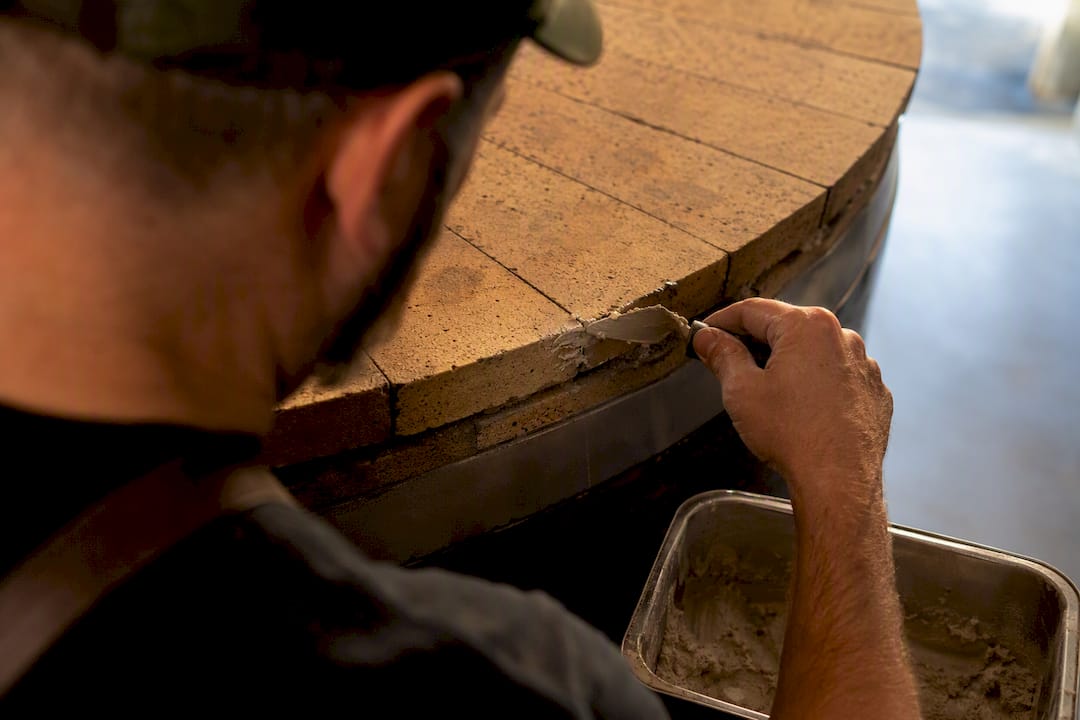
Repairability is where handcrafted construction earns its price. A masonry oven built from individual refractory bricks can usually have a damaged section replaced or repointed without rebuilding the whole structure, something far harder to achieve with a sealed, factory-cast unit. That is arguably the strongest long-term argument for artisan construction: not just how the oven performs on day one, but how serviceable it remains a decade into daily commercial use.
Why artisan-built ovens still matter more than convenience
Mass-produced convenience is easy to sell and hard to defend after year three, when a factory-sealed unit develops a fault no one on-site can fix. Artisan-built ovens cost more attention upfront, but they are built from parts a skilled hand can actually repair, which matters enormously once an oven is running double covers every night.
What I’d tell any restaurateur weighing this decision is simple: prioritise builders who can document their materials and their maintenance record, and who will still answer the phone in year five. That relationship, more than any single spec, is what protects your investment.
— Bruno - Key Account & Export Manager
Ready to commission a handcrafted Neapolitan oven?
If everything above tells you what to look for, the next question is simply who builds it. Vesuviano Forni designs and constructs handcrafted Neapolitan ovens in Naples, drawing on artisans with decades of hands-on experience, then backs each build with custom design consultancy, international logistics and on-site assembly wherever your restaurant is based.
Whether you need a wood-fired RealBosco model, a low-emission VesuvioBuono system, or a high-throughput rotating oven for a busy service line, the right starting point is a technical consultation rather than a catalogue browse. Get in touch to request a site survey or a detailed quote, and talk through fuel type, throughput and finish before committing to a build.