Opening a pizza restaurant: your complete 2026 guide
Opening a pizza restaurant: your complete 2026 guide

Opening a pizza restaurant is defined as the process of establishing a commercial pizzeria, covering concept development, business planning, location selection, permitting, equipment procurement, staffing, and marketing. The global pizza industry remains one of the most resilient sectors in food service, and a well-planned pizzeria can reach profitability within 8–12 months of opening. Success depends on structured execution across every stage, from choosing the right oven to pricing your menu correctly. This guide gives you the practical framework to move from idea to opening day with confidence.
How to develop a pizza restaurant concept that shapes your business
Your concept is the single decision that determines everything else. It sets your equipment needs, your staffing model, your startup costs, and your customer base before you sign a single lease.
The three most common formats are:
- Brick-and-mortar pizzeria. The traditional sit-down or counter-service restaurant. Highest startup cost, highest revenue ceiling, and the most complex to operate.
- Ghost kitchen. A delivery-only operation running from shared commercial kitchen space. Lower overhead, faster to launch, and a practical entry point for first-time operators.
- Mobile pizza truck. A wood-fired or gas oven mounted in a vehicle. Strong for events, markets, and festivals, with lower fixed costs than a permanent site.
Each format demands a different oven type, a different staffing structure, and a different marketing approach. A ghost kitchen suits a high-volume delivery model with a focused menu. A brick-and-mortar suits operators who want to build a local dining brand. A mobile truck suits those who want flexibility and lower financial risk.
Pro Tip: Before committing to a format, spend two weeks visiting local competitors in each category. Count covers, observe peak hours, and speak to customers. Real market data beats any spreadsheet assumption.
What should a pizza restaurant business plan include?
A formal business plan is the dividing line between aspiring operators and those who actually open. Banks, landlords, and equipment suppliers all ask for one. More importantly, writing it forces you to stress-test your assumptions before they cost you money.
A strong pizza restaurant business plan covers these five areas:
- Executive summary. A one-page overview of your concept, target market, and financial goals.
- Market analysis. Local demand, competitor mapping, and your positioning within the market.
- Operations plan. Kitchen layout, staffing structure, supplier relationships, and daily workflow.
- Menu and pricing. Your core offering, food cost targets, and pricing rationale.
- Financial projections. Startup costs, monthly operating expenses, revenue forecasts, and break-even timeline.
Understanding startup costs
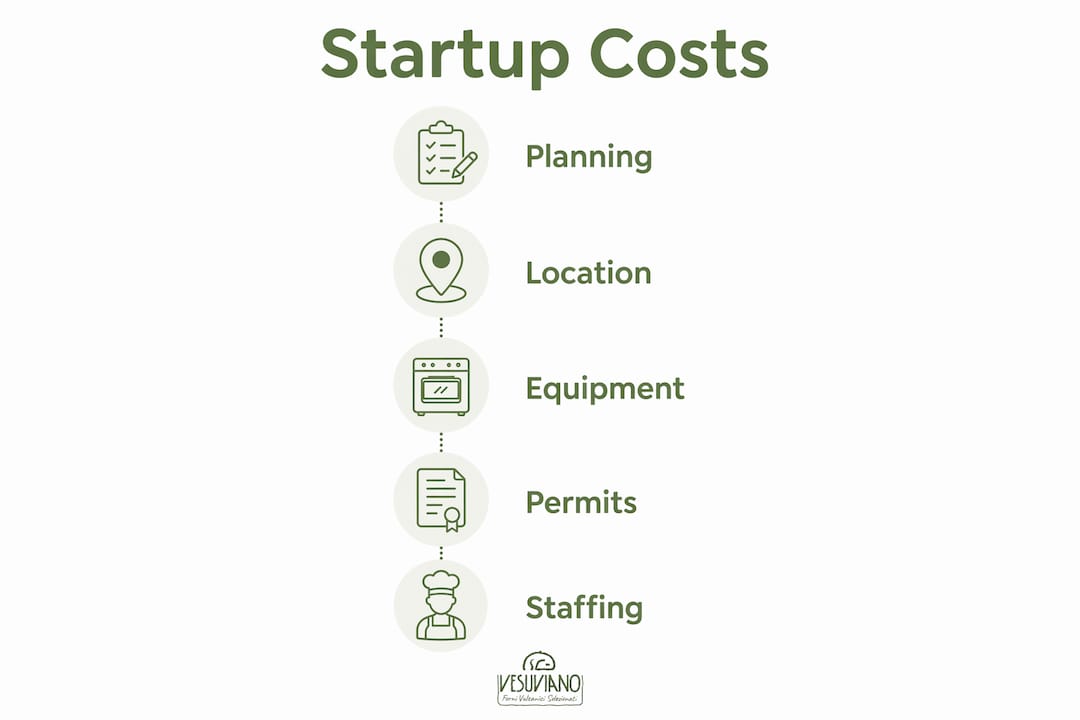
Opening a traditional pizzeria requires an initial investment between £75,000 and £500,000, with the timeline from idea to opening day running 4–18 months. That wide range reflects geography, scale, and equipment quality. Budget for working capital covering at least three months of operating expenses beyond your buildout costs.
| Expense category | Typical cost range |
|---|---|
| Lease deposit and fit-out | £20,000–£150,000 |
| Kitchen equipment (including oven) | £15,000–£80,000 |
| Permits and licences | £200–£1,000 |
| Initial food and supply stock | £3,000–£10,000 |
| Marketing and branding | £2,000–£15,000 |
Pro Tip: Allocate your largest equipment budget to the oven. A quality oven shapes food consistency, staff efficiency, and customer satisfaction more than any other single purchase.
How do you choose a location and secure the right permits?
Location selection and permitting run in parallel, and treating them as sequential steps is one of the most common and costly mistakes new operators make.
Choosing your site
The strongest pizzeria locations share three characteristics: consistent foot traffic during your target meal periods, proximity to your customer demographic, and lease terms that give you room to grow. Negotiate for a rent-free fit-out period, a break clause after year two, and a cap on annual rent increases. A lease with no break clause on a site that underperforms can end a business before it finds its footing.
Navigating permits and licences
Annual health inspections and permits cost between £200 and £1,000 depending on your local authority, and the full permitting process takes 2–6 months. That timeline makes early application non-negotiable.
The core licences you need are:
- Food business registration. Required before trading in the UK; submitted to your local council.
- Food hygiene certification. Mandatory for all food handlers; Level 2 Award in Food Safety is the standard.
- Fire safety compliance. Includes suppression systems for commercial kitchens and a fire risk assessment.
- Premises licence. Required if you plan to serve alcohol or provide regulated entertainment.
- Planning permission. Needed if you are changing the use of a property or making structural alterations.
Permitting is often the longest step in the entire process. Working with a local planning consultant or licensing expediter reduces delays and prevents costly errors in your applications.
Pro Tip: Begin your permit applications before you finalise your lease. Many authorities allow pre-application enquiries, which reveal site-specific requirements before you commit to a building.
What kitchen equipment does a pizza restaurant need?
The kitchen is where your concept becomes a product. Equipment choices directly affect food quality, staff efficiency, and your ability to scale.
Oven selection: the most critical decision
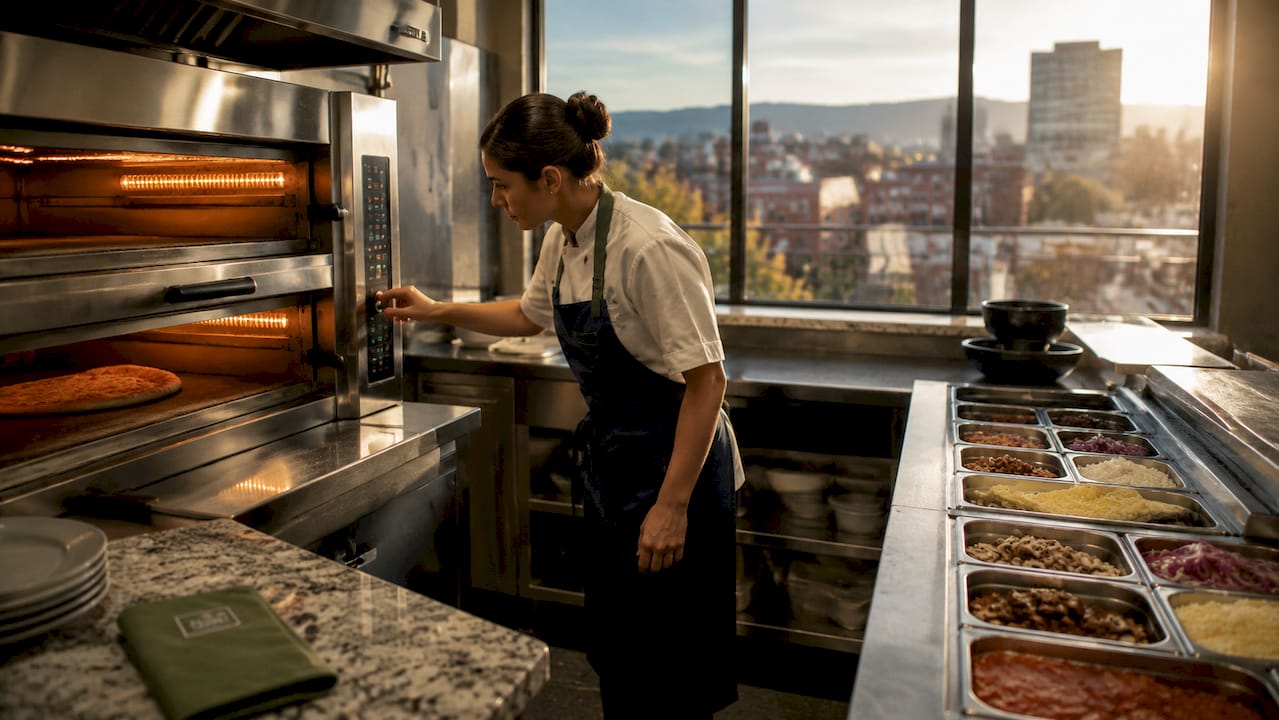
The pizza oven is the largest single equipment expense, ranging from £5,000 to £15,000 depending on type and capacity. That figure alone justifies treating oven selection as a strategic decision rather than a procurement task.
| Oven type | Typical cost | Best suited for |
|---|---|---|
| Deck oven (gas or electric) | £5,000–£10,000 | High-volume, consistent output |
| Wood-fired traditional oven | £8,000–£15,000+ | Neapolitan style, artisanal identity |
| Rotating oven | £8,000–£15,000 | Consistent bake, reduced staff skill dependency |
| Electric Neapolitan oven | £6,000–£14,000 | Urban sites with no gas supply or flue restrictions |
Choosing an oven with high production capacity, even heat distribution, and ease of staff training matters more than the initial purchase price. A cheaper oven that produces inconsistent results costs you in labour, waste, and customer retention over time.
Vesuviano Forni builds handcrafted Neapolitan pizza ovens in Naples, combining traditional artisanal construction with modern performance. Their range covers wood-fired, gas, electric, and rotating models, giving operators the flexibility to match their oven to their concept. For sites where consistent output at volume is the priority, their commercial rotating ovens are worth examining closely.
Supporting equipment
Beyond the oven, a functional pizza kitchen requires a dough mixer, a refrigerated prep table, a dough proofer, a commercial refrigerator, and a full set of smallwares including peels, cutters, and proofing trays. Budget for these as a package rather than purchasing piecemeal, which typically reduces overall cost.
Pro Tip: Buy your oven new and your supporting equipment refurbished where possible. The oven is your revenue engine. Everything else can be sourced second-hand without compromising quality.
How do you build a team and design a profitable menu?
A standard pizza operation runs efficiently with around five team members, typically a manager, a lead pizza maker, a prep cook, and delivery drivers. That lean structure only works when every person is trained to a consistent standard from day one.
Staffing your pizzeria
The key roles to hire first are:
- Pizza maker (pizzaiolo). The person responsible for dough preparation, topping, and baking. Hire for technique and attitude, then train for your specific product.
- Prep cook. Handles ingredient preparation, stock rotation, and kitchen cleanliness. Often the role that determines service speed.
- Delivery drivers. Critical for delivery-focused concepts. Reliability and local knowledge matter more than experience.
- Manager. Oversees daily operations, staff scheduling, and customer relations. In early stages, this is often the owner.
Hands-on training and efficient menus from the outset prevent years of operational troubleshooting. Build a training manual before you open, not after your first difficult service.
Designing a menu that works financially
A focused menu of 8–12 pizzas with a 3–4x multiplier on food cost to selling price achieves target profit margins of 25–33%. That multiplier is your pricing anchor. If a pizza costs £4 in ingredients, it should sell for £12–£16.
Start with your core range and add complementary items such as salads, garlic bread, and soft drinks. Avoid a large menu in your first year. A focused offering reduces ingredient waste, simplifies staff training, and speeds up service.
Pro Tip: Run a soft launch with a reduced menu before your official opening. It gives your team time to build speed and consistency under real conditions, without the pressure of a full launch.
What pizza restaurant marketing strategies actually work?
Your marketing plan needs to be active before you open, not after. Building awareness in the weeks before launch gives you customers on day one rather than month three.
The most effective channels for a new pizzeria are:
- Google Business Profile. Set this up as soon as you have a confirmed address. It is the single most important local search tool for restaurants.
- Instagram and TikTok. Pizza is one of the most photogenic foods in existence. Document your build, your dough process, and your first bakes. Authenticity performs better than polished production.
- Direct online ordering. A website with online ordering reduces your dependency on third-party delivery platforms, which typically charge 25–35% commission. Even a modest shift to direct orders materially improves your margins.
- Email list. Collect emails from day one. A monthly newsletter with promotions and new menu items builds repeat patronage at near-zero cost.
- Local community engagement. Sponsor a local sports team, donate to a school fundraiser, or host a tasting evening for local businesses. Word of mouth in a local market is faster and cheaper than paid advertising.
Key takeaways
Opening a pizza restaurant successfully requires a structured approach across concept, planning, location, equipment, staffing, and marketing, with the oven at the centre of every operational decision.
| Point | Details |
|---|---|
| Concept shapes everything | Choose your format (brick-and-mortar, ghost kitchen, or mobile) before making any other decision. |
| Business plan is non-negotiable | A formal plan secures funding, guides operations, and separates viable ideas from wishful thinking. |
| Permits take longer than expected | Allow 2–6 months and apply early, ideally before your lease is finalised. |
| Oven quality drives profitability | Invest in a high-capacity, even-heating oven; cheaper alternatives increase labour costs and inconsistency. |
| Menu focus protects margins | Start with 8–12 pizzas priced at 3–4x food cost to hit 25–33% profit margins. |
What I have learned from watching operators open pizzerias
From Bruno, Key Account & Export Manager at Vesuviano Forni
The operators who struggle most are not the ones who lack passion. They are the ones who treat the oven as a commodity purchase. I have seen restaurants invest heavily in interior design and marketing, then buy the cheapest oven available to save money at the end of the budget. Within six months, they are dealing with inconsistent bakes, frustrated staff, and customer complaints. The oven is not a line item to cut.
The second pattern I see repeatedly is underestimating the permitting timeline. Operators assume permits take four to six weeks. They often take four to six months. When your buildout is complete and your team is hired but you cannot open because a licence is pending, you are paying rent and wages with zero revenue. Apply for everything on the day you sign your lease, not after.
My honest advice is this: spend more time on your training programme than on your launch party. A polished opening night means nothing if your team cannot replicate the product consistently on a Tuesday in month three. Consistency is what builds a loyal customer base. Everything else is theatre.
The operators I have seen succeed long-term share one trait. They treat the pizzeria as a system, not a passion project. They document every process, train every person to a standard, and measure their food costs weekly. The craft matters enormously. But the business discipline is what keeps the doors open.
— Bruno, Key Account & Export Manager
Professional pizza ovens for your new restaurant
The oven you choose will define your product, your workflow, and your kitchen culture for years.
Vesuviano Forni designs and builds professional pizza ovens in Naples, drawing on over 50 years of Neapolitan artisanal expertise. The range covers wood-fired ovens for operators who want authentic flavour and identity, electric Neapolitan ovens for urban sites with installation constraints, and rotating ovens for businesses that need consistent, high-volume output with reduced reliance on individual staff skill. Every oven is handcrafted and backed by full international logistics, installation, and after-sales support. Speak to the Vesuviano Forni team to find the right oven for your concept.
FAQ
How much does it cost to open a pizza restaurant?
Opening a traditional pizzeria costs between £75,000 and £500,000 depending on location, scale, and equipment quality. Ghost kitchen and mobile formats offer lower entry points for operators with limited capital.
How long does it take to open a pizza restaurant?
The process typically takes 4–18 months from initial planning to opening day. Permitting alone can take 2–6 months, making early application the single most important timeline decision.
What licences do I need to open a pizzeria in the UK?
You need food business registration with your local council, food hygiene certification for all food handlers, fire safety compliance, and a premises licence if you serve alcohol. Planning permission is required for change of use or structural alterations.
How many staff does a pizza restaurant need?
A standard pizza operation runs efficiently with around five team members: a manager, a lead pizza maker, a prep cook, and delivery drivers. Staffing grows with volume and concept complexity.
What is the best oven for a new pizza restaurant?
The best oven depends on your concept, site constraints, and volume targets. Wood-fired ovens suit artisanal Neapolitan concepts; rotating ovens suit high-volume operations; electric ovens suit urban sites without gas supply or flue access. Prioritise heat distribution, production capacity, and ease of staff training over purchase price alone.