Type 1 vs type 2 hood: what commercial pizza ovens need
Type 1 vs type 2 hood: what commercial pizza ovens need
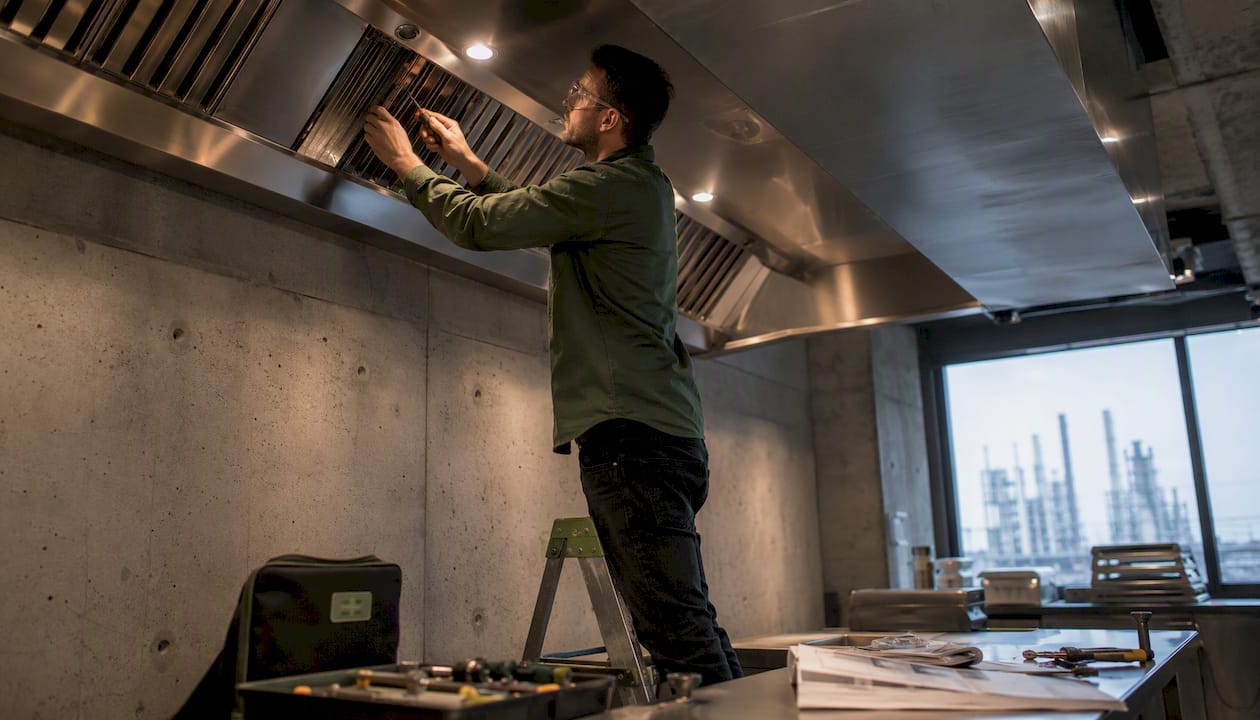
For most commercial Neapolitan pizza ovens in the United States, a Type 1 hood is the default requirement. The International Mechanical Code (IMC) defines Type 1 hoods for appliances that produce grease-laden vapours or smoke, and wood-fired pizza ovens fall squarely into that category. Three reasons drive this classification:
- IMC definitions: Under IMC Sections 507.2 and 507.3, any appliance generating grease-laden vapours requires a Type 1 hood. Combustion by-products from wood or gas firing are treated as grease-producing by most inspectors.
- Exhaust temperatures: Many wood-fired Neapolitan ovens produce exhaust temperatures well above 550°F. Local authorities, including county building departments, frequently cite high duct temperatures and fire-rating requirements as grounds for mandating Type 1 classification.
- Inspector defaults: Because pizza ovens sit in a grey zone between pure heat appliances and grease-producing cooking equipment, inspectors routinely apply a Type 1 default rather than risk under-specifying.
Before purchasing or ordering a hood, obtain written confirmation from your Authority Having Jurisdiction (AHJ). No manufacturer specification, including Vesuviano Forni’s own technical documentation, substitutes for that written determination.
Table of Contents
- How do Type 1 and Type 2 hoods compare for pizza ovens?
- What does the IMC say, and why does your local AHJ have the final word?
- How do you confirm which hood type your project actually needs?
- What does Type 1 versus Type 2 mean for your installation budget and timeline?
- How do Vesuviano Forni ovens interact with hood requirements?
- Key takeaways
- The detail most buyers miss until it is too late
- Vesuviano Forni’s permitting and specification support for your project
How do Type 1 and Type 2 hoods compare for pizza ovens?
The core distinction is straightforward: Type 1 handles grease and fire risk; Type 2 handles heat, steam, and moisture where grease is not present. For pizza ovens, the choice between them shapes your entire installation budget and permitting timeline.
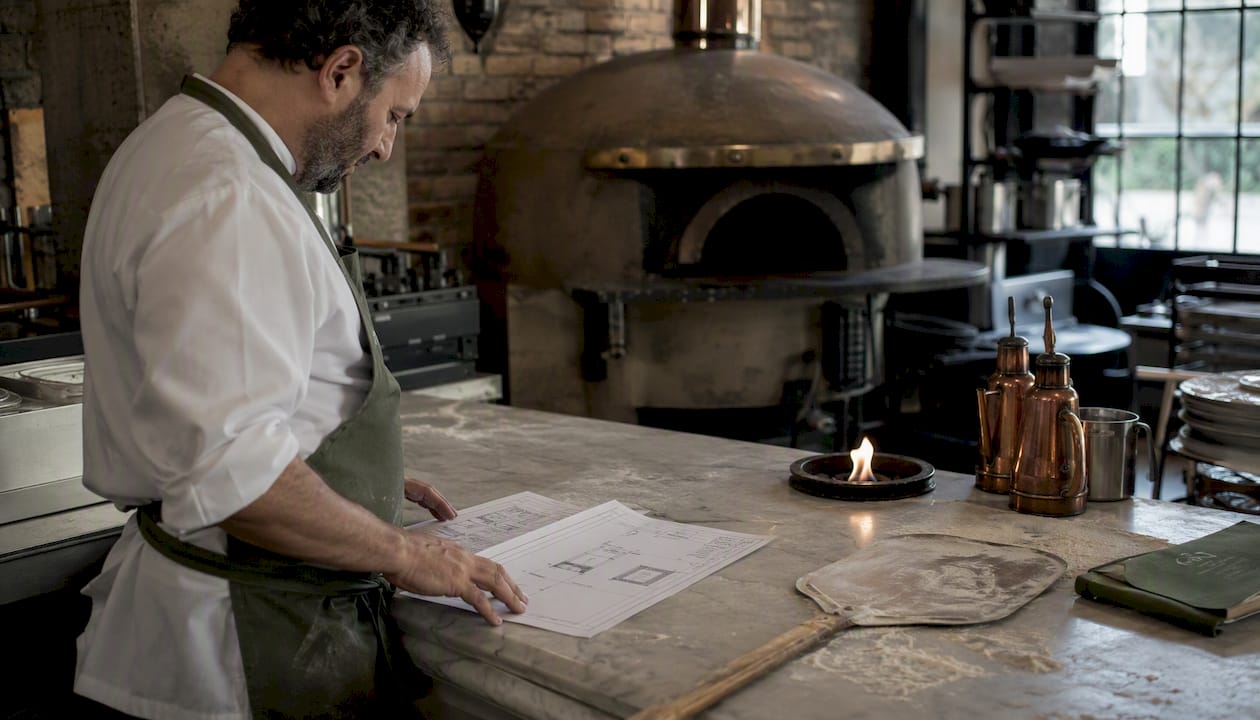
| Dimension | Type 1 hood | Type 2 hood |
|---|---|---|
| Contaminants handled | Grease-laden vapours, smoke, combustion by-products | Heat, steam, condensate, odour — no grease |
| Safety features | Grease filters, fire-suppression integration | Condensate gutters and drains; no suppression system |
| Typical appliances | Wood-fired pizza oven, charbroilers, fryers, gas ranges | Dishwashers, steamers, some electric deck ovens |
| Wood-fired pizza oven | Required in most US jurisdictions | Not permitted without written AHJ approval |
| Electric deck oven | May apply if grease output is significant | Possible if AHJ confirms no grease-laden vapours |
| Installation complexity | Custom fabrication, grease duct, fire-rated materials, make-up air | Lighter ducting; condensate drainage required |
| Inspection and permitting risk | Well-understood path; inspectors familiar with requirements | Higher risk of reclassification to Type 1 at inspection |
| Cost and timeline impact | Higher upfront cost; longer permitting and coordination | Lower cost, but rework risk if misclassified |
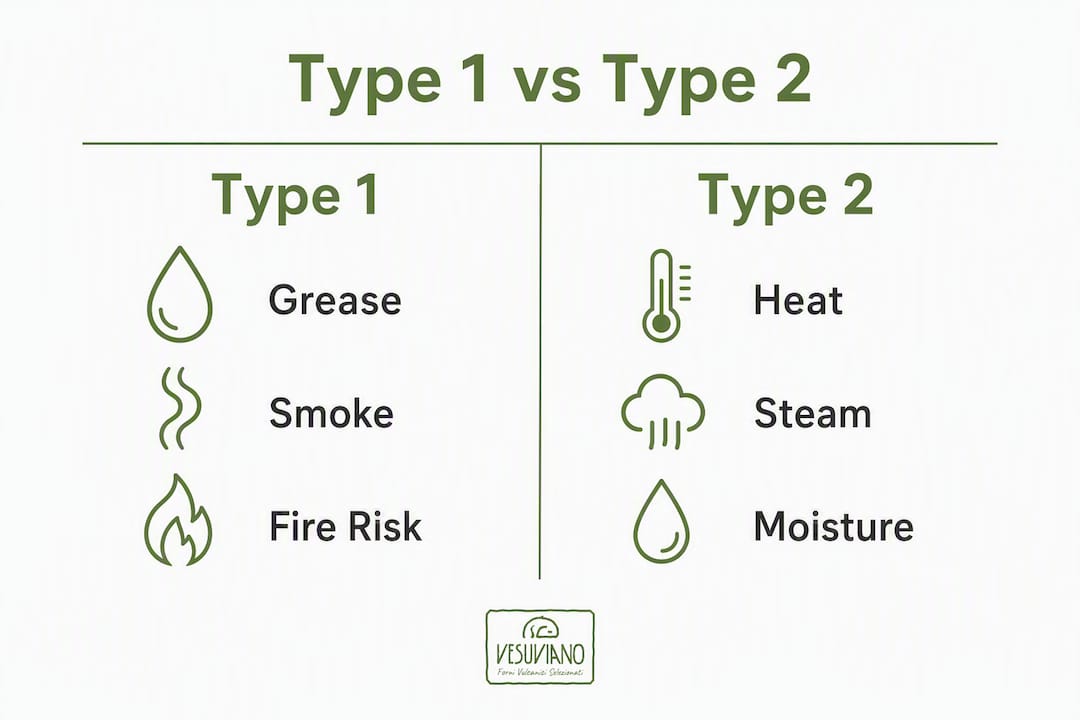
Type 2 hoods are designed for condensate removal and ventilation, not fire suppression. Attempting to use one over a wood-fired oven without AHJ sign-off is the single most common cause of costly rework on pizza oven projects.
What does the IMC say, and why does your local AHJ have the final word?
The IMC provides the national baseline. Section 507.2 defines Type 1 hoods as required for commercial cooking appliances that produce grease-laden vapours or smoke, while Section 507.3 covers Type 2 hoods for appliances generating heat, steam, or moisture without grease. That distinction sounds clean on paper, but pizza ovens complicate it.
Wood-fired Neapolitan ovens produce combustion gases, soot particles, and varying levels of aerosolised grease depending on toppings and throughput. Many jurisdictions treat pizza ovens as requiring Type 1 hoods because of high exhaust temperatures and potential combustion by-products, even when the oven manufacturer’s data suggests low grease output. There is no single, universally applied practice across the United States.
The AHJ, typically your local building or fire department, interprets the IMC for your specific installation. Their determination governs. A written AHJ decision before hood procurement prevents the scenario where an inspector reclassifies your hood type mid-project, triggering fabrication changes, suppression redesign, and schedule delays that can run into thousands of dollars.
Pro Tip: Request the AHJ’s written determination on a letterhead or official form, not just a verbal confirmation at a pre-application meeting. That document protects your project if there is a personnel change at the inspections office.
How do you confirm which hood type your project actually needs?
Follow these steps before placing any hood order.
- Collect the oven specification sheet. Obtain the full technical spec from your oven supplier, including combustion type, fuel, dome temperature, and exhaust outlet temperature. For commercial pizza ovens, exhaust temperatures vary significantly between wood-fired, gas, and electric models.
- Request a manufacturer statement on grease and soot output. Ask your oven supplier for a letter confirming measured or tested exhaust characteristics. If the oven has been tested for direct venting, request the ETL or UL test report. A manufacturer-supplied direct-vent test letter materially reduces AHJ friction when present.
- Assess your menu and throughput. Ovens cooking high-fat toppings at volume generate more grease-laden vapour than a low-throughput artisan operation. Your intended menu affects classification.
- Prepare HVAC and engineer calculations. A licensed mechanical engineer should calculate make-up air requirements, duct sizing, and clearances before submission. For Type 1, fire-suppression layout drawings are also required.
- Submit to the AHJ with labelled drawings. Your submission package should include: oven technical spec, combustion or emissions test data (if available), manufacturer letter for direct venting (if applicable), proposed hood drawing with dimensions and clearances, make-up air strategy, and fire-suppression layout for Type 1.
- Obtain written AHJ determination. Receive and file the written classification decision before ordering the hood. Direct venting may be permitted in some jurisdictions, but only with AHJ written approval.
What does Type 1 versus Type 2 mean for your installation budget and timeline?
Choosing the wrong hood type does not just create a compliance problem. It reshapes your entire kitchen build schedule and cost structure.
Type 1 installation drivers:
- Custom hood fabrication sized to cover the full cooking line, including any built-on-site masonry oven footprint
- Grease duct construction using fire-rated materials and sealed joints throughout
- Integrated fire-suppression system, requiring a licensed suppression contractor and separate inspection
- Make-up air system, almost always mandatory with Type 1 to replace exhausted air and maintain kitchen pressure
- Structural supports and roof or wall penetrations for the duct run
- Duct insulation rated for high exhaust temperatures
Type 2 considerations:
- Lighter ducting and simpler penetrations, but condensate gutters and reliable drainage are mandatory to prevent standing water and staff safety hazards
- No suppression system required, which removes one contractor coordination layer
- Still requires correct clearances and professional installation to pass inspection
On timeline, Type 1 projects typically involve permitting lead time, custom hood manufacture and delivery, suppression contractor scheduling, make-up air commissioning, and a final combined inspection. Each stage adds weeks. Starting the AHJ process and engaging a hood fabricator early, before the oven arrives, is the single most effective way to protect your opening date. Commercial buying guides consistently note that Type 1 hoods require professional installation and coordination across multiple trades.
How do Vesuviano Forni ovens interact with hood requirements?
Vesuviano Forni supplies a technical permitting package with every oven project, covering the documentation AHJs most commonly request.
For wood-fired models, including the RealBosco and Sebastian lines, the package includes full technical specification sheets, exhaust outlet temperature data, combustion characteristics, and dimensional drawings. For built-on-site ovens, bespoke hood-coordination drawings are prepared to match the final oven position and adjacent prep stations, since a custom masonry oven cannot be repositioned after construction.
The VesuvioBuono system deserves a specific note. Its low-emission design eliminates visible black soot, which is a genuine operational and environmental advantage. However, reduced soot output does not automatically secure a Type 2 classification. The AHJ will still assess exhaust temperature, combustion by-products, and local code interpretation. Buyers should present the VesuvioBuono emissions data to the AHJ as supporting evidence, not as a substitute for the written determination.
For electric Neapolitan ovens, the absence of combustion simplifies the conversation. Many AHJs will accept Type 2 for a well-documented electric pizza oven installation, but written confirmation remains the only safe basis for proceeding.
Key takeaways
For commercial Neapolitan pizza ovens in the United States, assume Type 1 is required, collect full oven documentation early, and secure written AHJ confirmation before ordering any hood.
| Point | Details |
|---|---|
| Default to Type 1 | Assume Type 1 unless the AHJ confirms otherwise in writing before procurement. |
| Collect oven documentation early | Gather exhaust temperature data, manufacturer statements, and any direct-vent test reports before AHJ submission. |
| Coordinate suppression and make-up air | Type 1 installations require both; engage licensed contractors before the oven arrives to protect your timeline. |
| Budget for custom fabrication | Type 1 hoods are typically custom-built; factor fabrication, fire-rated duct, and suppression into your project budget. |
| Vesuviano Forni permitting support | Vesuviano Forni supplies technical spec packages, emissions data, and bespoke drawings to support AHJ submissions for all oven families. |
The detail most buyers miss until it is too late
There is a pattern that appears repeatedly on pizza oven projects: the buyer specifies a Type 2 hood based on the oven manufacturer’s low-emission claims, the hood is fabricated and delivered, and then the inspector arrives and reclassifies the installation as Type 1. At that point, the project faces a complete hood replacement, suppression system addition, and revised duct construction. The schedule slips by weeks, and the cost impact is significant.
What makes this frustrating is that it is entirely avoidable. The oven’s emission performance is genuinely relevant to the AHJ conversation, but it is one input among several. Exhaust temperature, fuel type, local fire code interpretation, and the inspector’s own risk tolerance all factor into the final decision. Presenting a strong technical package, including exhaust temperature data, a manufacturer statement, and a proposed suppression layout even if you believe Type 2 applies, signals to the inspector that the project is professionally managed. That often matters more than the data itself.
The other thing worth saying plainly: the AHJ determination is not a bureaucratic formality. It is the document that protects your investment. Get it in writing, get it early, and build your hood procurement timeline around it, not the other way around.
Vesuviano Forni’s permitting and specification support for your project
Specifying the correct hood for a handcrafted Neapolitan pizza oven is a technical process, and the documentation you present to the AHJ directly affects your permitting outcome. Vesuviano Forni’s project team provides the full specification package commercial buyers need: technical data sheets, exhaust temperature and combustion data, direct-vent test letters where available, bespoke hood-coordination drawings for built-on-site ovens, and coordination support with your suppression and HVAC contractors.
Whether you are planning a wood-fired Neapolitan oven for a high-volume pizzeria or a rotating model for a hotel kitchen, the permitting process starts with the right documentation. Contact Vesuviano Forni’s project team to request a permitting pack and installation consultancy before your hood procurement begins. Specification packs are typically turned around within a few working days of your project enquiry.