Commercial pizza oven temp: the complete 2026 guide
Commercial pizza oven temp: the complete 2026 guide
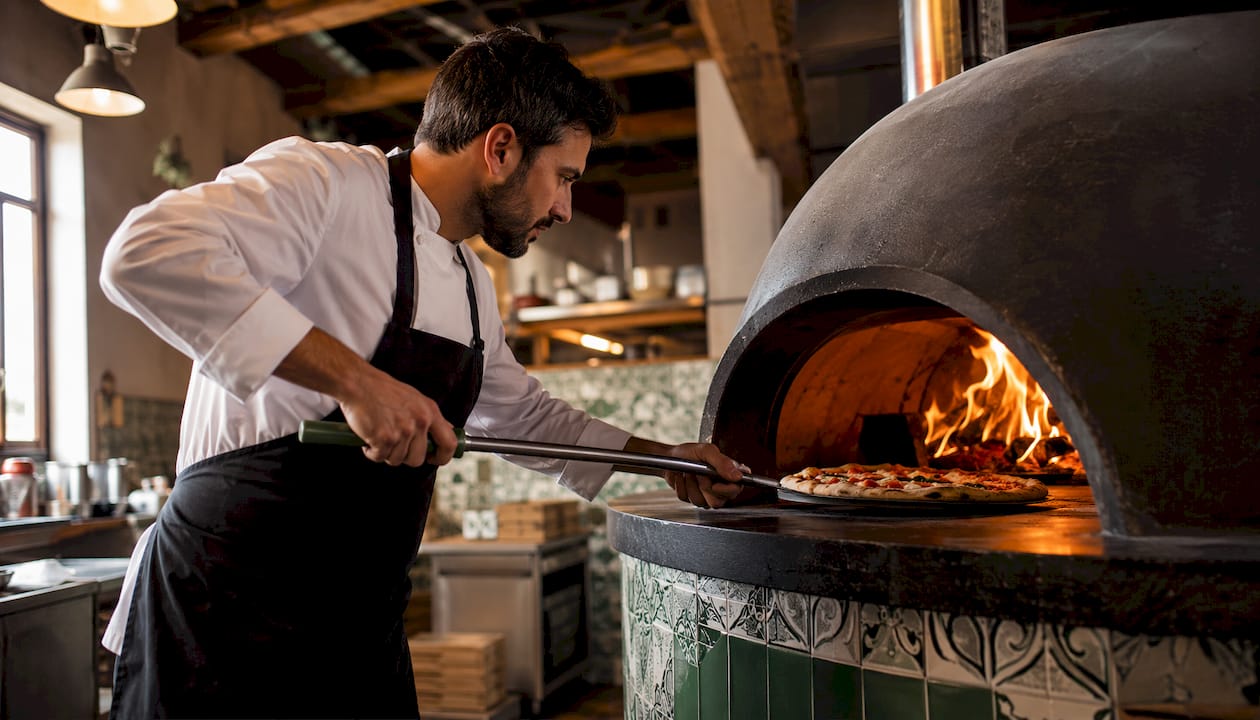
The ideal commercial pizza oven temperature depends entirely on the style of pizza you are making. Neapolitan pizza demands high temperatures at the cooking surface, enabling a rapid bake with the characteristic leopard-spotted char. Deck ovens typically operate across a wide temperature range, while conveyor ovens suit volume operations at moderate temperatures. Getting this right is not a matter of preference; it is the difference between a pizza that sells and one that does not.
Key temperature bands at a glance:
- Neapolitan style: 350–500°C+ (wood-fired or high-temperature gas dome)
- New York style: 275–290°C (deck oven with strong top heat)
- Sicilian and Detroit styles: around 260°C (pan, longer bake)
- Artisan and Roman styles: 230–290°C (electric or gas deck)
- Conveyor and frozen pizza: 180–320°C (fully automated throughput)
Cooking durations track directly with temperature. At around 400°C, an artisan pizza is done in 3–5 minutes. Drop to lower temperatures and a frozen pizza requires longer cooking times. The higher the temperature, the faster the cook, and the more critical precise control becomes.
Why controlling oven temperature is critical for pizza quality and kitchen efficiency
Temperature is the single variable that determines whether a pizza crust is crisp, airy, and lightly charred, or pale, dense, and disappointing. At sufficiently high heat, the dough undergoes rapid oven spring, the base crisps on contact with the hot deck, and the toppings cook simultaneously rather than in sequence. Drop the temperature too low and the sequence breaks: cheese overcooks before the dough sets, the base stays soft, and the structural rise never happens.
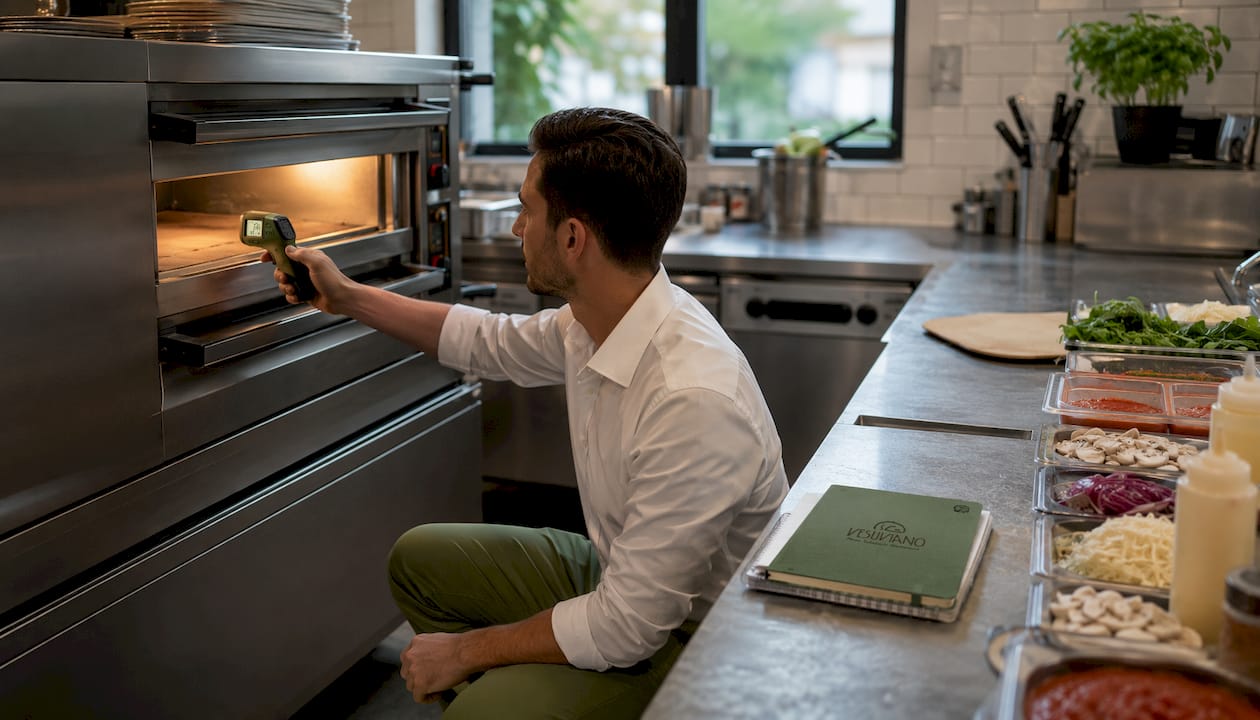
Beyond flavour and texture, temperature directly affects your kitchen’s throughput. A short bake at high temperature means you can turn a table of four in the time it would take a lower-temperature oven to produce a single pizza. That speed reduces labour costs and keeps service flowing during peak hours.
The consequences of poor temperature management are practical and costly:
- Uneven cooking: hot spots and cold zones produce inconsistent results across a service
- Longer bake times: lower-than-optimal temperatures extend cook times, reducing throughput
- Increased waste: undercooked or burnt pizzas that cannot be served represent direct financial loss
- Higher energy consumption: an oven cycling between too hot and too cool uses more energy than one held at a stable target temperature
- Customer dissatisfaction: inconsistency is the fastest way to lose repeat business
Cooking consistency is the primary goal of temperature control in any commercial pizza kitchen. Every other benefit follows from that.
What temperature ranges do different commercial pizza ovens reach?
The oven type determines the temperature ceiling, the heat source shapes the cooking character, and the construction materials govern how well that heat is retained. Here is how the main commercial oven categories compare:
| Oven type | Temperature range | Best suited for |
|---|---|---|
| Wood-fired dome ovens operate at very high temperatures suitable for specialty pizzas | Neapolitan, artisan, high-theatre service | |
| Gas dome and high-temp gas ovens operate across a high temperature range | Neapolitan-style, fast casual | |
| Electric deck ovens can operate across a wide temperature range | New York, Roman, artisan, bakery | |
| Gas deck ovens cover a broad temperature range | New York, volume pizza, bakery crossover | |
| Conveyor ovens operate at moderate temperatures | Frozen pizza, fast food, consistent volume | |
| Convection ovens work well at moderate temperatures | Pan pizza, calzone, sides |
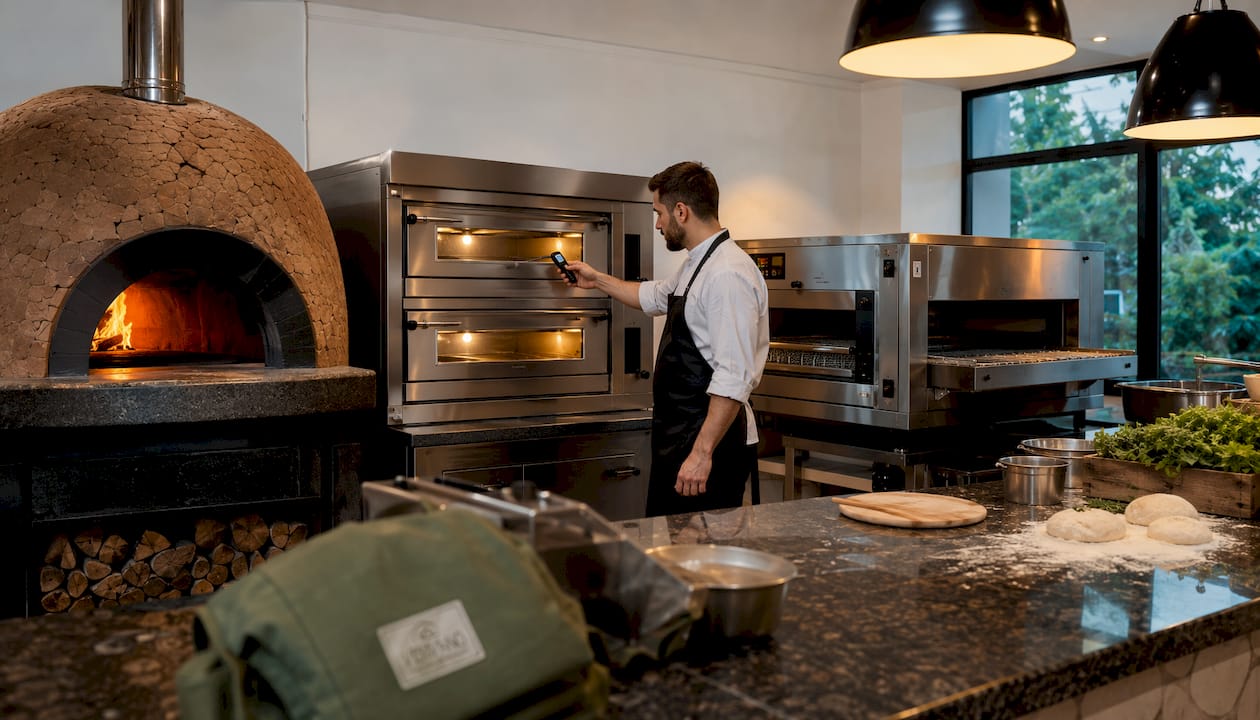
Wood-fired ovens achieve floor temperatures that enable the 60–90 second Neapolitan bake, driven by radiant heat from the dome and conductive heat from the refractory stone floor. Gas dome ovens replicate much of that performance with greater consistency, since the flame is adjustable and does not depend on the skill of a wood-fire manager.
Electric and gas deck ovens offer excellent temperature control across a broad range, making them well suited to medium and high-volume operations where repeatability matters more than theatre. Conveyor ovens sacrifice the stone deck entirely in favour of a mesh belt, which suits frozen and fast-food pizza but cannot replicate the base texture of a deck-baked artisan pizza.
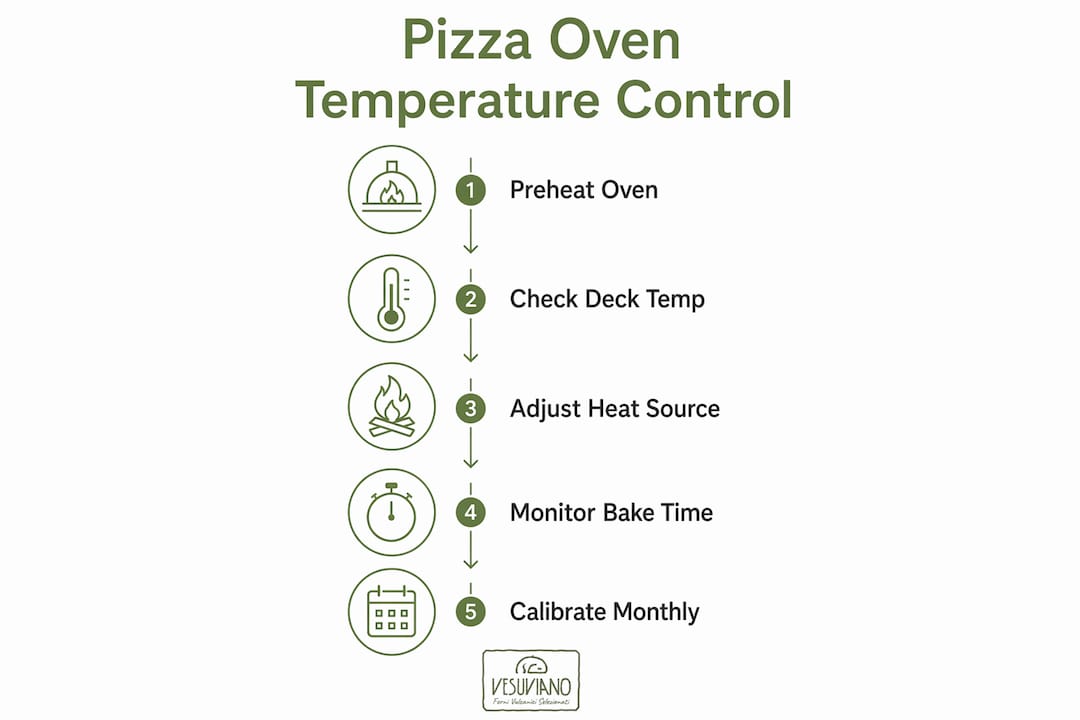
One detail that catches many operators out: your oven’s temperature readout shows the air temperature, not the cooking surface temperature. The deck or stone is what actually cooks the pizza, and it can lag the air temperature significantly during preheat.
How do you control and maintain the temperature of a commercial pizza oven?
Precise temperature management requires both the right equipment and the right operating habits. The following practices make the most material difference in a commercial kitchen:
- Independent thermostats: ovens fitted with dual or multiple thermostats allow you to balance top and bottom heat separately, which is critical for achieving a crisp base without burning the toppings. Multiple thermostats give you fine-grained control that a single-dial oven simply cannot match.
- Full deck preheat: the thermal mass of a refractory stone or ceramic deck stores heat and releases it into the pizza base on contact. If the deck has not reached operating temperature, the base will be undercooked regardless of what the air temperature reads. Allow adequate preheat time before the first pizza goes in.
- Infrared thermometer checks: an infrared thermometer pointed at the cooking surface gives you the real number. Thermostat calibration and infrared verification significantly reduce cooking inconsistencies in commercial settings.
- Thermostat calibration: temperature drift is a known consequence of thermal cycling. Test your oven’s thermostat against a calibrated reference monthly to catch drift before it affects your product.
- Insulation and door design: quality thermal insulation shortens preheat times and keeps the kitchen cooler. Heat-resistant coatings and insulation on frames and doors reduce surface temperatures outside the oven, improving both safety and heat retention.
- Refractory fire bricks: built-in refractory bricks absorb moisture from the dough and retain heat evenly, preventing the hot spots and cold zones that produce inconsistent results.
Pizza cooking times at different oven temperatures
Temperature and time are two sides of the same equation. Raise one and you lower the other; get the balance wrong and the pizza suffers. Here is how cooking times map to temperature across the main pizza styles:
- 60–90 seconds at 450–500°C: authentic Neapolitan. The high floor temperature sets the base instantly while the dome heat cooks the toppings. Any longer at this temperature and the crust dries out.
- 3–5 minutes at ~400°C: artisan pizza on a deck oven. This is the commercial sweet spot for most UK pizzerias, delivering a crisp base and evenly melted toppings without the skill demands of a wood-fired oven.
- 6–10 minutes at 275–290°C: New York style. The longer bake at lower heat allows the thicker dough to cook through while the top heat crisps the cheese.
- 12–22 minutes at ~260°C: Sicilian and Detroit styles. Thicker pan doughs need sustained lower heat so the interior cooks through before the top burns.
- 8–14 minutes at 220–250°C: frozen or commercial conveyor pizza. Conveyor speed adjustment is often more precise than temperature adjustment for this category.
Temperature deviations can cause longer bake times or burnt crusts depending on the direction of the deviation and softens the base. Running 30°C above risks burning the base before the toppings are ready. If pizzas are consistently coming out undercooked on the base but correctly cooked on top, the deck has not reached operating temperature. If the base is burning while the toppings are underdone, top heat is too high relative to the deck.
Pro Tip: Use an infrared thermometer to check the deck temperature before every service, not just at initial preheat. Repeated door openings during a busy service can drop the deck temperature faster than the thermostat compensates.
How Vesuviano Forni approaches temperature control in professional ovens
Vesuviano Forni brings together Neapolitan oven artisans with over 50 years of craftsmanship from the Vesuvian area, combining that generational knowledge with modern engineering to produce ovens that hold temperature with genuine precision. The artisans behind each oven have been building professional pizza ovens for generations; the result is a product where the construction itself serves temperature performance, not just aesthetics.
Every Vesuviano Forni oven is built with refractory stone floors that store and release heat evenly across the cooking surface, eliminating the cold spots that undermine base quality. Thermal insulation is integral to the build, reducing preheat times and keeping heat where it belongs: inside the oven. The oven range spans the RealBosco models (traditional handcrafted mosaic ovens in wood-fired, gas, electric, and rotating versions), the Sebastian models (contemporary metal-slat finish, available in wood-fired, gas, and electric), and the VesuvioBuono models, which use a low-emission system that eliminates black soot while retaining the flavour character of a traditional wood-fired oven.
Pro Tip: Calibrate your oven’s thermostat monthly. Temperature drift from thermal cycling is one of the most common causes of inconsistent pizza quality in busy commercial kitchens, and it is entirely preventable with a simple monthly check.
Beyond the ovens themselves, Vesuviano Forni provides technical consultancy, custom oven design, international logistics, on-site assembly, and after-sales support. For UK operators, that means a single point of contact from initial specification through to installation and beyond. You can explore the full range of Neapolitan pizza ovens or the rotating pizza oven range, which delivers consistent heat distribution across every pizza without manual rotation.
Common temperature-related issues and how to troubleshoot them
Most temperature problems in commercial pizza ovens fall into a small number of recognisable patterns. Knowing what to look for saves time and product.
- Pale, soft base with correctly cooked toppings: the deck has not reached operating temperature. Extend preheat time and verify deck temperature with an infrared thermometer before service.
- Burnt base, undercooked toppings: bottom heat is too high relative to top heat. On ovens with independent thermostats, reduce the lower element setting and increase the upper.
- Inconsistent results across a service: the oven is losing deck temperature through repeated door openings. Allow recovery time between batches, or reduce batch size during peak periods.
- Temperature reading drift over time: thermostat calibration has slipped. Test against a calibrated reference and recalibrate monthly.
- Uneven cooking across the deck: hot spots caused by uneven refractory stone wear or element degradation. Rotate pizzas halfway through the bake and schedule a maintenance inspection.
Note that temperatures above approximately 500°C are excessive for standard pizza and risk burning the product before the dough is cooked through. Specialised Neapolitan ovens are engineered for the upper end of the temperature range; standard deck and conveyor ovens are not.
Safety considerations when operating commercial pizza ovens at high temperatures
High-temperature commercial ovens require careful safety practices to manage risks, but they are manageable with the right equipment and procedures.
- Personal protective equipment: heat-resistant gloves and long-handled peels are non-negotiable when working at 400°C+. Burns from brief contact with oven surfaces at these temperatures are severe.
- Ventilation: commercial pizza ovens produce significant heat output. Adequate extraction and kitchen ventilation prevent heat accumulation that affects both staff welfare and oven performance.
- Surface temperature of oven exteriors: quality insulation and heat-resistant door coatings keep exterior surfaces at safer temperatures, but operators should still treat all oven surfaces as potentially hot.
- Fire safety: wood-fired ovens require particular attention to ember management and chimney maintenance. Creosote build-up in flues is a fire risk that regular cleaning prevents.
- Food safety at high temperatures: while oven temperatures well above 75°C destroy pathogens in pizza toppings, proper food safety handling of raw ingredients before they enter the oven remains a separate and equally important obligation.
- Gas safety: gas-fired ovens must be installed and maintained by Gas Safe registered engineers in the UK. Annual servicing is a legal requirement, not a recommendation.
Key takeaways
The ideal commercial pizza oven temperature is not a single number; it is a range matched to the pizza style, oven type, and desired cook time, with precise control being the factor that determines consistency.
| Point | Details |
|---|---|
| Temperature varies by style | Neapolitan needs 350–500°C+; deck ovens cover 230–290°C; conveyor ovens run at 180–320°C. |
| Surface temperature is the real number | The deck or stone temperature drives cooking quality, not the air temperature the dial reports. |
| Cooking time tracks with temperature | At ~400°C, artisan pizza bakes in 3–5 minutes; lower temperatures extend times and risk quality loss. |
| Monthly calibration prevents drift | Thermostat drift from thermal cycling is a leading cause of inconsistent results in busy kitchens. |
| Insulation and refractory materials matter | Refractory stone floors and quality thermal insulation are what allow ovens to hold temperature under service pressure. |