Commercial wood fired pizza oven UK: restaurant guide
Commercial wood fired pizza oven UK: restaurant guide
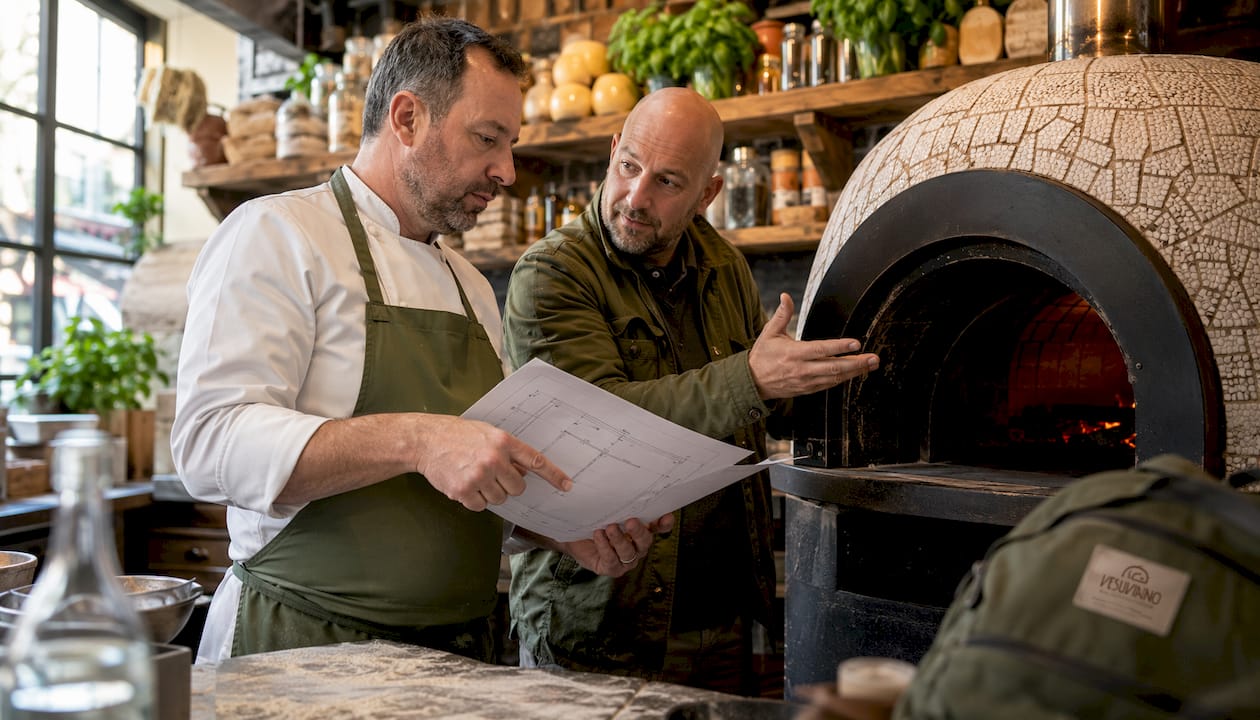
For most UK restaurants and caterers, the VesuvioBuono family from Vesuviano Forni is the recommended starting point: it delivers authentic Neapolitan wood-fired performance with a low-emission system that addresses indoor smoke-control requirements, backed by end-to-end UK installation support from a team with over 50 years of Neapolitan oven-building heritage.
- Small venues and pop-ups (up to 40 covers/service): RealBosco or Sebastian wood-fired models offer the right cooking area, traditional craftsmanship, and manageable footprint.
- Mid-size restaurants (40–80 covers/service): VesuvioBuono models combine throughput with low-soot emissions, making indoor siting more straightforward under UK smoke-control rules.
- High-throughput operations (80+ covers/service or 120+ pizzas/hour): Vesuviano’s rotating commercial ovens are purpose-built for continuous-rotation workflows and maximum output.
Pro Tip: Request a technical consultation before you commit to a model. Vesuviano Forni’s team will assess your kitchen dimensions, ventilation route, and expected throughput before recommending a specific configuration.
Table of Contents
- Which Vesuviano oven family suits your commercial kitchen?
- How to choose the right commercial wood-fired oven for your operation
- What UK operators must check for compliance and installation
- What does a commercial wood-fired oven cost to buy and run in the UK?
- What do the technical specifications actually mean in service?
- Why Vesuviano Forni is built for UK commercial buyers
- What are the practical next steps for UK buyers?
- Key takeaways
- A note from the Vesuviano Forni team
- Ready to get a quote for your UK restaurant?
- Useful sources for UK buyers
Which Vesuviano oven family suits your commercial kitchen?
Vesuviano Forni builds three core product families, each with a distinct commercial profile, plus rotating models for the highest-volume sites.
RealBosco ovens are the most traditional expression of Neapolitan craftsmanship: handcrafted mosaic construction, available in wood-fired, gas, electric, and rotating configurations. They suit operators who want visible artisan character as part of the dining experience, and they perform reliably across long service shifts.
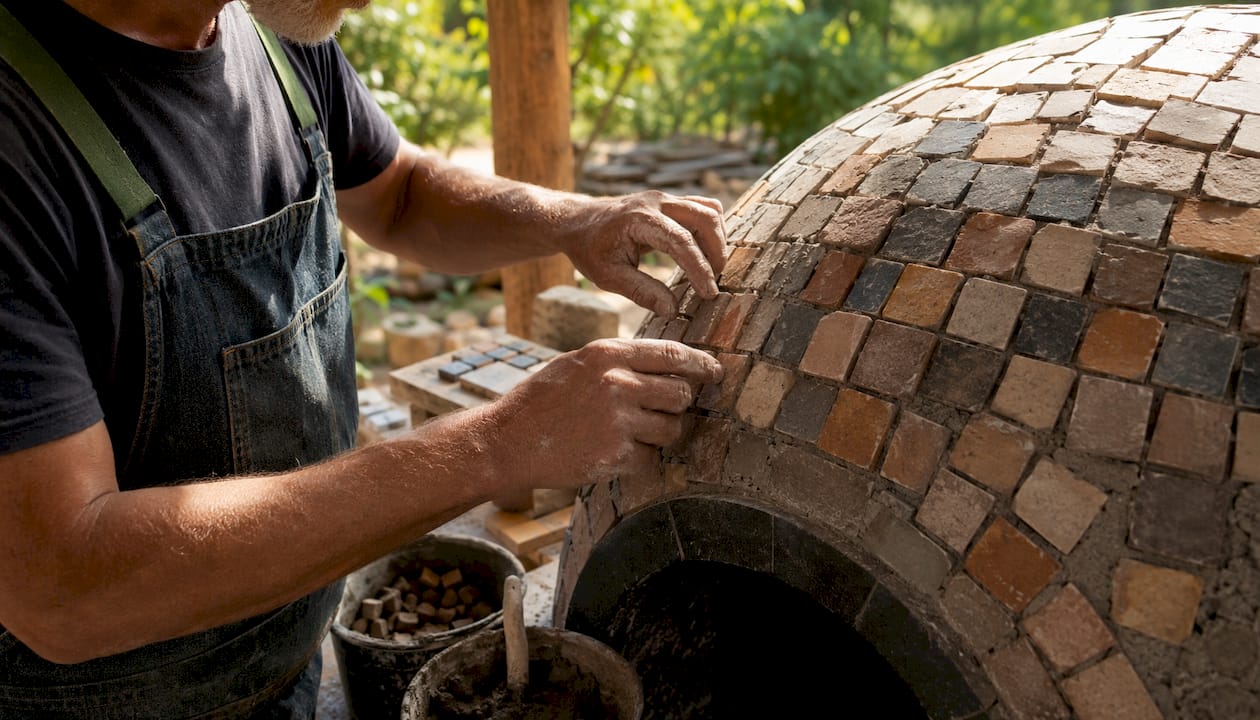
Sebastian ovens share the same handcrafted Neapolitan construction but carry a contemporary metal-slat exterior. For restaurants with a modern interior design, Sebastian delivers the same cooking performance without the traditional mosaic aesthetic. Available in wood-fired, gas, and electric versions.
VesuvioBuono is Vesuviano’s low-emission wood-fired system, engineered to reduce particulate output and eliminate black soot. It is the natural choice for indoor installations where local authority or building regulations impose stricter emissions controls, and it removes much of the planning friction that can delay a wood-fired project.
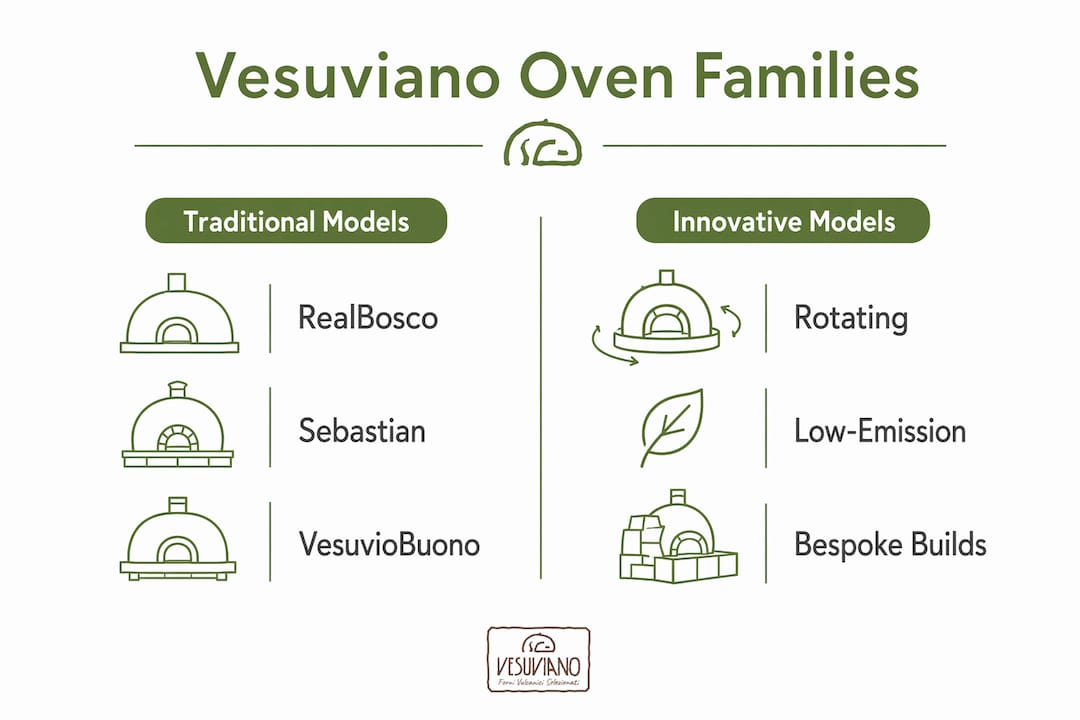
Rotating ovens change the operational model entirely. Rather than a pizzaiolo managing the oven manually, the rotating hearth keeps every pizza at a consistent distance from the flame, maximising throughput with less operator intervention. Vesuviano’s commercial rotating range is designed specifically for high-volume environments.
| Evaluation dimension | RealBosco | Sebastian | VesuvioBuono | Rotating models |
|---|---|---|---|---|
| Best business size | Small to mid-size | Small to mid-size | Mid-size, indoor-focused | High-volume, 120+ pizzas/hour |
| Cooking area / simultaneous pizzas | Multiple sizes; up to 5 pizzas | Multiple sizes; up to 5 pizzas | Multiple sizes; up to 5 pizzas | High-capacity continuous load |
| Indoor / DEFRA suitability | Outdoor or ventilated indoor | Outdoor or ventilated indoor | Best option for indoor low-emission sites | Dependent on model; low-emission variants available |
| Materials & insulation | Refractory brick dome, ceramic mosaic, multi-layer insulation | Refractory brick dome, metal-slat finish, multi-layer insulation | Refractory brick dome, soot-reduction combustion system | Refractory hearth, rotating mechanism, insulated chamber |
| Warranty & installation support | Full end-to-end Vesuviano service | Full end-to-end Vesuviano service | Full end-to-end Vesuviano service | Full end-to-end Vesuviano service |
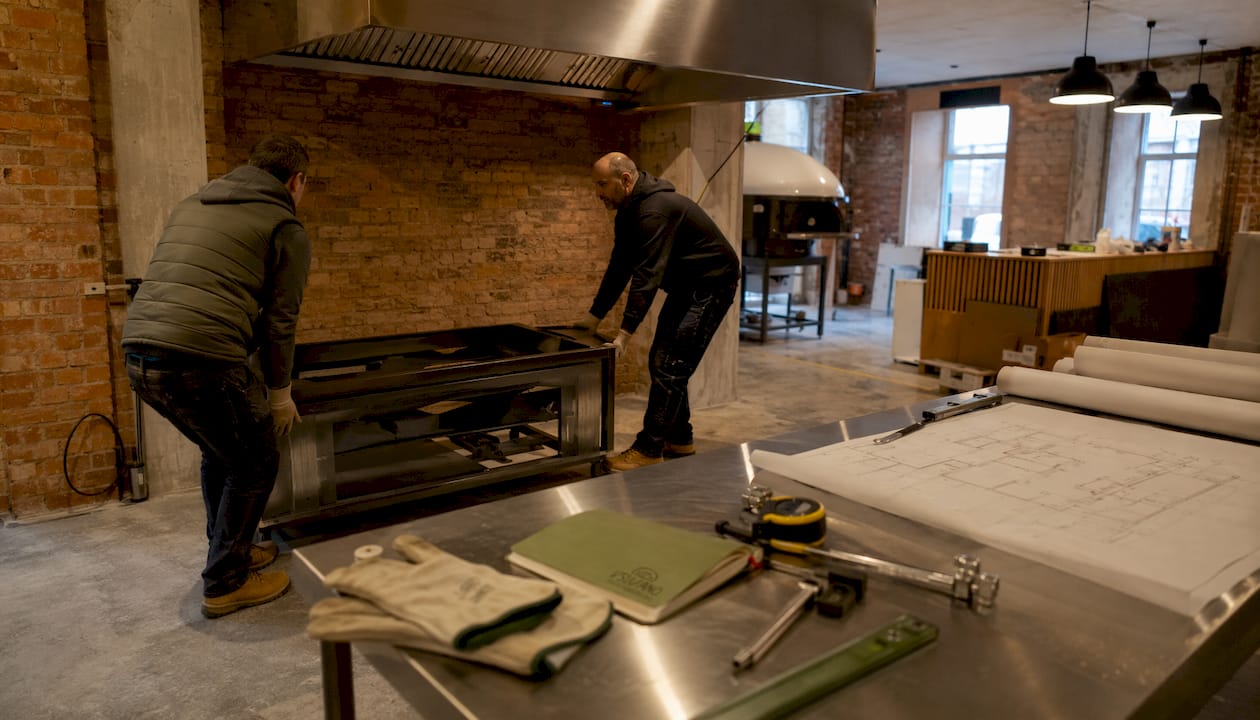
Pro Tip: If your site requires the oven to be built in place rather than delivered as a finished unit, Vesuviano Forni offers on-site construction for permanent installations. This is worth discussing early, as it affects lead time and site-access planning.
How to choose the right commercial wood-fired oven for your operation
The decision comes down to six practical variables. Get these right and the model selection becomes straightforward.
Core selection checklist:
- Expected covers per hour and peak-service duration: a 60-cover dinner service is a very different load from a 200-cover festival pitch running eight hours straight.
- Continuous-use capability: confirm the oven is rated for commercial daily use, not domestic or occasional catering.
- Available footprint: measure the installation space carefully, including clearance for the flue route, door swing, and operator movement. The complete guide to oven dimensions is a useful reference before you finalise a site plan.
- Indoor vs outdoor siting: indoor installations require a compliant flue, canopy extraction, and, for wood-fired models, a credible emissions solution.
- Fuel supply and storage: kiln-dried hardwood must be stored dry and close to the kitchen. Factor in delivery frequency and storage space.
- Total installed cost: the oven price is only part of the budget. Add ducting, canopy fabrication, structural reinforcement if needed, commissioning, and training.
Questions to ask any supplier before you sign:
- Can you provide a full technical spec sheet, including cooking area, hearth material, dome construction, heat-up time, and insulation specification?
- What is your DEFRA approval status for indoor wood-fired use, or what low-emission option do you offer?
- Do you carry out a pre-installation site survey, and is that included in the project cost?
- What does your warranty cover for commercial daily use, and what is your UK response time for parts and service?
- Who manages installation: your own team, a UK partner, or the buyer?
Red flags to watch for:
- Warranties that exclude commercial use or cap hours per week.
- No clear answer on emissions compliance or DEFRA approval for indoor models.
- Missing or incomplete technical spec sheets.
- No UK-based installation or after-sales contact.
What UK operators must check for compliance and installation
Wood-fired ovens in commercial kitchens sit at the intersection of building regulations, environmental health, and fire safety. The compliance picture is manageable, but it requires attention before you order.
DEFRA and smoke control. The UK’s smoke-control legislation restricts the burning of wood in designated smoke-control areas unless the appliance is DEFRA-exempt or the fuel is an approved smokeless fuel. For indoor commercial installations, this is a material consideration: a standard wood-fired oven without an approved low-emission system may not be permissible in a smoke-control zone. The VesuvioBuono low-emission system is engineered to reduce particulate and soot output, which can materially reduce planning friction and support the case for indoor installation where stricter rules apply.
Key compliance point: Always confirm with your local authority environmental health team whether your premises fall within a smoke-control area before purchasing a wood-fired oven. This single check can save months of delay.
Ventilation and chimney checklist:
- Confirm the flue route from oven to external termination point, including any bends, length, and clearance from combustibles.
- Size the canopy extraction to match the oven’s thermal output. For bespoke canopy and ductwork fabrication, specialist firms such as JIENCO supply food-grade stainless-steel canopy integration for commercial kitchen installations.
- Plan for condensate and soot management: the flue must be accessible for regular cleaning, and a soot trap or condensate drain is standard practice.
- Obtain commissioning paperwork from your installer confirming the flue draw and extraction performance.
Site-preparation checklist:
- Verify the structural floor loading capacity, particularly for large refractory ovens, which can be substantial in weight.
- Measure all doorway and corridor widths on the delivery route. Some factory-built ovens cannot be moved through a standard commercial kitchen doorway in one piece; on-site construction removes this constraint entirely.
- Check whether planning permission is required, particularly for external flue terminations on listed buildings or in conservation areas.
- Confirm your local authority’s environmental health requirements for commercial solid-fuel cooking appliances.
What does a commercial wood-fired oven cost to buy and run in the UK?
Purchase prices for commercial wood-fired ovens in the UK span a wide range, reflecting differences in construction quality, cooking area, and the level of service included.
| Category | Typical oven price (ex. installation) | Estimated installed cost | Notes |
|---|---|---|---|
| Entry-level commercial steel ovens | £1,549–£1,695 | Add £500 for canopy/flue | Small cooking floor; suits low-volume catering |
| Mid-range handcrafted refractory ovens | — | Add £2,000 for installation | Larger cooking area; suitable for restaurant daily use |
| High-capacity handcrafted brick/ceramic ovens | — | Add £3,000 for on-site build | Full commercial throughput; long heat retention; multi-use capability |
Entry-level figures are drawn from UK retail listings for commercial-grade steel ovens, which are priced around £1,549–£1,695. Mid-range and high-capacity figures reflect the handcrafted refractory segment where Vesuviano Forni operates; installed costs vary significantly by site complexity.
Running costs to plan for:
- A typical commercial service will consume 15–25 kg of kiln-dried hardwood per session, depending on oven size, ambient temperature, and how long the oven is held at temperature.
- Kiln-dried hardwood in the UK currently retails at approximately £5–£8 per 10 kg bag from commercial suppliers, though bulk delivery pricing is considerably lower.
- Refractory hearth bricks have a long service life under normal use but will eventually require replacement; factor this into a five-year maintenance budget.
- Flue cleaning for a commercial wood-fired oven should be scheduled at least twice per year, more frequently in high-volume operations.
Pro Tip: Large refractory ovens retain heat for 24 hours or more after a single firing. Scheduling bread baking, slow-roasting, or staff meals into the cool-down phase turns a fuel cost into a menu asset.
What do the technical specifications actually mean in service?
Spec sheets for commercial ovens can feel abstract. Here is what the key numbers mean for your daily operation.
-
Cooking area and simultaneous capacity. The cooking area (stated in mm, e.g. 1,000×1,200 mm) determines how many pizzas you can load at once. A 1,000×1,200 mm hearth accommodates up to five 12" pizzas simultaneously. Divide your peak hourly cover target by the number of pizzas per table, then work backwards to the cooking area you need.
-
Hearth material. Refractory brick hearths absorb and radiate heat evenly, producing the characteristic leopard-spotted base of a Neapolitan pizza. Steel hearths heat faster but retain less thermal mass, which can cause temperature fluctuations during a busy service. For authentic Neapolitan results and sustained throughput, refractory brick is the professional standard.
-
Dome construction and insulation. A well-insulated dome holds temperature through the loading and unloading cycle. Multiple insulation layers reduce fuel consumption and maintain consistent cooking conditions across a long service. Vesuviano Forni’s handcrafted domes are built using traditional Neapolitan techniques with engineered insulation specifications.
-
Heat-up time and throughput calculation. Most commercial refractory ovens reach cooking temperature in 60–120 minutes. At a cooking temperature of around 450–500°C, a Neapolitan pizza cooks in 60–90 seconds. With a five-pizza hearth and a 75-second cook time, the theoretical maximum is around 240 pizzas per hour, though realistic throughput accounting for loading, turning, and service flow is typically 60–80% of that figure.
-
Serviceability. Check whether hearth bricks are individually replaceable, whether the flue connection is accessible for cleaning, and whether the manufacturer holds spares in Europe or the UK. A warranty that covers commercial daily use, not just domestic occasional use, is the baseline expectation.
Pro Tip: Ask for the oven’s thermal mass specification alongside the cooking area. A larger thermal mass means the oven recovers temperature faster after each pizza is loaded, which is what separates a genuinely commercial oven from a catering-grade unit dressed up as one.
Why Vesuviano Forni is built for UK commercial buyers
Vesuviano Forni’s commercial wood-fired range is built by artisans from the Vesuvian area whose families have been constructing professional pizza ovens for generations. That provenance is not marketing copy: the construction techniques, the refractory materials, and the dome geometry are the same ones that have produced the ovens in Naples’ most respected pizzerias for decades.
For UK buyers specifically, Vesuviano Forni manages the full project lifecycle: technical consultancy, bespoke design, international logistics, customs clearance, transport to site, installation, commissioning, operator training, and after-sales support. The VesuvioBuono low-emission system addresses the indoor compliance question directly. Rotating models serve the highest-throughput venues. And for permanent installations where the oven cannot be delivered as a finished unit, on-site construction is available.
What are the practical next steps for UK buyers?
Before you contact any supplier, have the following information ready. It will accelerate the consultation and produce a more accurate quote.
Pre-purchase checklist:
- Kitchen floor plan with dimensions and the proposed oven location marked.
- Estimated covers per service and peak pizzas-per-hour target.
- Confirmed indoor or outdoor siting, and whether the site falls within a smoke-control area.
- Flue route sketch: from oven position to external termination, noting any obstacles.
- Structural floor-loading information if the installation is above ground level.
- Budget range, including installation and ventilation.
Once you have this information, request a technical survey from Vesuviano Forni. The team will review your site, recommend the appropriate model family, and provide a project plan covering lead times, delivery logistics, and installation scope.
Quick wins to consider now:
- If your site has emissions restrictions, specify VesuvioBuono from the outset rather than retrofitting later.
- If your throughput target exceeds 120 pizzas per hour, rotating ovens should be on the shortlist from day one.
- If you are evaluating a permanent installation, ask about on-site construction early: it affects the project timeline by several weeks.
Pro Tip: Lead times for handcrafted Neapolitan ovens are longer than for factory-produced units. Build at least 8–12 weeks into your project plan from order confirmation to installation readiness, and confirm the exact timeline with Vesuviano Forni at the point of enquiry.
Key takeaways
For UK restaurants and caterers, the right commercial wood-fired oven comes down to matching throughput, emissions compliance, and total installed cost to your specific operation — and choosing a supplier who can deliver the full project, not just the oven.
| Point | Details |
|---|---|
| Match oven family to throughput | RealBosco/Sebastian for smaller venues; VesuvioBuono for indoor/low-emission sites; rotating models for 120+ pizzas/hour. |
| Budget for total installed cost | Oven price is only part of the spend; add canopy, flue, structural work, and commissioning. |
| Confirm smoke-control status early | Check with your local authority whether your premises fall within a smoke-control area before ordering. |
| Refractory hearth is the commercial standard | Refractory brick retains thermal mass through a busy service; steel hearths are better suited to lower-volume use. |
| Vesuviano Forni covers the full project | From site survey and bespoke design to installation, commissioning, and after-sales support across all three model families. |
A note from the Vesuviano Forni team
UK restaurant operators ask us the same question at the start of almost every project: “How do I know the oven will perform in a real commercial kitchen, not just in a showroom?” The honest answer is that our ovens are built by the same artisans who supply the pizzerias in Naples that run 300-cover services every night of the week. The construction is not adapted for commercial use; it was designed for it from the beginning.
What we find with UK projects specifically is that the compliance and installation questions are often the ones that cause the most uncertainty. That is precisely why our team manages the full process: we have handled the logistics, customs, and installation for projects across Europe, and we apply that same rigour to every UK enquiry. Bruno’s full biography and verified case studies from UK installations will be published here as they become available.
Ready to get a quote for your UK restaurant?
Vesuviano Forni offers UK restaurants and caterers something most wood-fired oven suppliers cannot: a handcrafted Neapolitan oven with a complete project service behind it, from the first site survey through to commissioning and ongoing support. The difference is not just in the oven; it is in the confidence that the installation will be done correctly, compliantly, and on time.
Whether you need a traditional RealBosco for a neighbourhood pizzeria, a VesuvioBuono for an indoor site with emissions restrictions, or a high-capacity rotating oven for a food hall or high-volume restaurant, Vesuviano Forni will scope the right solution for your operation.
What is included when you work with Vesuviano Forni:
- Pre-order site survey and technical consultancy.
- Bespoke oven design and configuration.
- Factory delivery or on-site construction, depending on site requirements.
- International logistics, customs clearance, and transport to site.
- Installation, commissioning, and operator training.
- Warranty and spare-parts support.
- VesuvioBuono low-emission option for compliance-sensitive sites.
Request a quote or schedule a technical consultation via the Vesuviano commercial enquiries page. Have your kitchen dimensions and throughput targets ready, and the team will come back with a project plan, not just a price list.
Useful sources for UK buyers
Before you finalise your purchase, consult these primary resources alongside your supplier’s documentation.
- DEFRA smoke-control guidance: check GOV.UK for the current list of DEFRA-exempt appliances and approved fuels, and confirm your premises’ smoke-control area status with your local authority.
- Vesuviano Forni commercial product pages: full technical specifications for each model family, including cooking area, insulation, and service options.
- VesuvioBuono system page: detailed information on the low-emission combustion system, relevant for any indoor installation or smoke-control area application.
- Oven dimensions guide: technical reference for footprint planning and site preparation.
- JIENCO stainless-steel fabrication: UK-based commercial kitchen fabrication for canopy integration and bespoke ductwork.
Documents to request from any supplier before you sign:
- Full technical spec sheet: cooking area (mm), hearth material, dome construction, insulation specification, heat-up time, and maximum operating temperature.
- DEFRA approval statement or low-emission system documentation for indoor models.
- Installation method statement, including structural load data and flue specification.
- Warranty terms confirming coverage for commercial daily use.