Food Hall Pizza Ovens: Hit 40–250 Pizzas an Hour Without a Hood
Food Hall Pizza Ovens: Hit 40–250 Pizzas an Hour Without a Hood
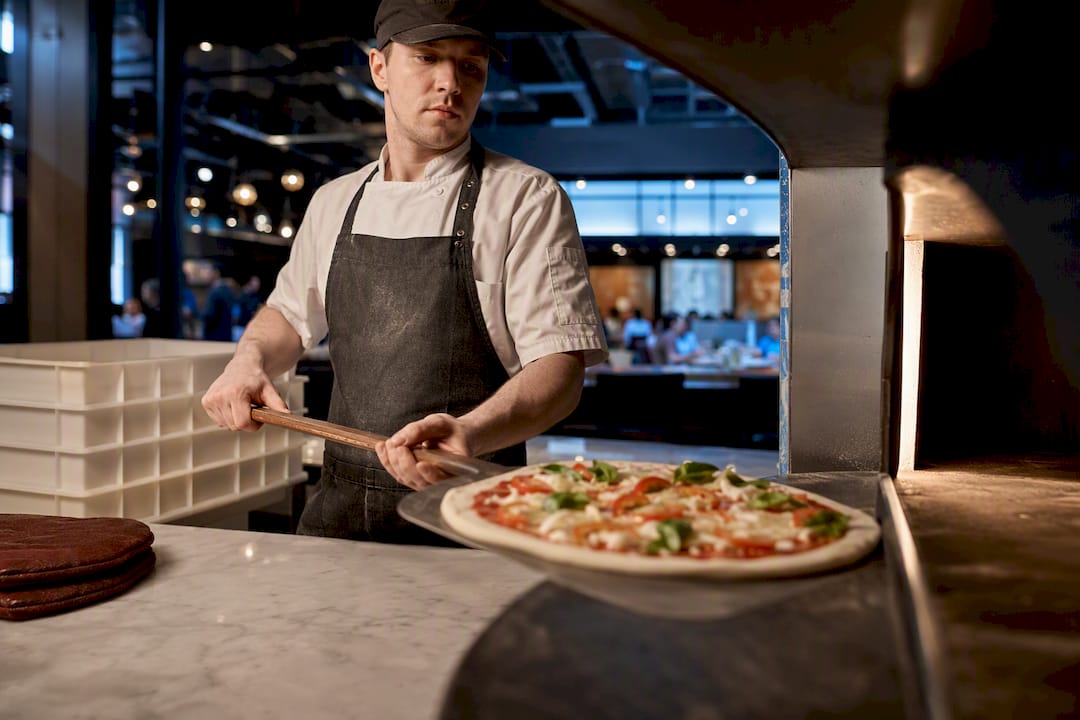
For most food-hall stalls, a high-capacity electric or rotating deck oven with ventless or scrubber extraction offers the best balance of throughput and site compatibility. A wood-fired oven still makes sense where flame theatre and Neapolitan authenticity drive footfall, but it demands hood access and a longer install. Before signing anything, run a simple pizzas-per-hour test against your menu and peak-hour targets.
TL;DR:
- Rotating ovens offer the highest throughput, with some models reaching up to 250 pizzas per hour, suitable for space and staff constraints.
- Deck ovens are reliable for fast-casual setups, producing 40 to 80 pizzas per hour with minimal training and consistent results.
- Ventless systems and stackable countertop models can help comply with site restrictions, provided the existing extraction capacity and local regulations permit.
- Achieving the desired bake quality relies mostly on oven temperature stability and recovery time, making these specifications crucial in vendor selection.
- Fuel costs per pizza are relatively close across main types, and durability exceeds a decade with proper maintenance, but throughput and site compatibility are decisive factors.
Table of Contents
- What oven type suits a food hall pizza oven setup?
- What technical specs actually predict throughput?
- Do shared food-hall spaces allow ventless pizza ovens?
- What does a food hall pizza oven cost to run and how long does it last?
- How do you choose the right oven and vendor for your stall?
- What Vesuviano Forni tells food-hall clients before they order
- A publisher’s note on budgeting realistically
- How Vesuviano Forni fits into your food-hall project
- Sources
What oven type suits a food hall pizza oven setup?
Deck ovens remain the workhorse of fast-casual pizza, typically producing 40 to 80 pizzas an hour per deck depending on operator skill and pizza size. They demand minimal training but reward consistency once staff learn hot spots and rotation timing.
Rotating ovens, including brick rotator designs, automate the turning cycle, and some manufacturer product pages cite throughput as high as 250 pizzas per hour for large units, making them a strong fit where space allows a bigger footprint but staff hours are tight. Conveyor ovens trade artisan character for total consistency and near zero-skill operation, useful for menus built around volume rather than showmanship.
Wood-fired ovens deliver the visual draw and authentic char that food-hall diners associate with Neapolitan pizza, but they carry the slowest start-up and the most demanding extraction needs. Gas and electric models split the difference: faster to fire, easier to vent, and increasingly capable of matching wood-fired results.
- Deck: reliable, moderate speed, low training burden
- Rotating: highest throughput, larger footprint, less hands-on labour
- Conveyor: fastest consistency, limited visual theatre
- Wood-fired: strongest brand appeal, slowest recovery, heaviest venting needs
- Gas/electric: flexible, often ventless-compatible, closer control over heat
Commercial catalogues also list ventless and stackable countertop models for kiosks where floor space is the binding constraint.
What technical specs actually predict throughput?
Temperature range matters more than most buyers assume. Neapolitan-style pizza needs dome temperatures near 480 to 500°C and floor temperatures around 450°C to hit a 60 to 90 second bake, figures confirmed in performance testing of traditional wood-fired ovens. Electric and gas ovens engineered with separate dome and floor elements can replicate those numbers, and the AVPN standard permits certified gas or electric ovens when wood isn’t practical in a shared space.
Heat recovery, meaning how fast the deck returns to bake temperature after each pizza comes out, decides your real hourly capacity far more than the marketed maximum bake time. Ask for time-to-next-pizza figures, not just peak temperature claims.
- Deck size and simultaneous pizza count under realistic (not maximum) loading
- Digital or manual controls, and how much temperature drift they tolerate
- Recovery time between bakes at full service pace
Pro Tip: Ask any vendor for their spec sheet’s tested recovery time under continuous service, not just the single-bake figure used in marketing photos. That gap is where throughput promises usually fall apart.
Do shared food-hall spaces allow ventless pizza ovens?
Most landlords and fire authorities require a full hood and ducting for wood-fired and high-output gas ovens, but ventless or internal-scrubber systems can open up units that would otherwise be rejected outright. Confirming what’s acceptable is the first job of any site survey, well before you commit to a specific oven family.
- Request the food hall’s existing extraction capacity and shared duct routing before quoting any oven.
- Check local fire code and health department rules for ventless or scrubber-equipped models, since acceptance varies by jurisdiction.
- Confirm utility access: gas line capacity, three-phase power for electric ovens, and water if a scrubber system needs it.
- Ask about roof or shaft access if a prebuilt brick oven needs crane or hoist delivery, which can add weeks to the installation timeline.
Modular electric and rotating units generally install faster than a masonry build, a point worth raising early with your landlord’s facilities team.
What does a food hall pizza oven cost to run and how long does it last?
Fuel-per-pizza differences across mainstream oven types are smaller than most buyers expect, ranging from roughly 1.7 cents to 10.6 cents per pizza. At food-hall volumes, that gap rarely repays a cheaper oven’s shortfall in throughput or consistency, and it typically does not justify choosing a harder-to-vent fuel type purely for marginal fuel cost savings.
Refractory material, burner assemblies and rotation motors are the parts that wear fastest. Well-built commercial ovens can run for over a decade with proper maintenance, though usage intensity in a busy food hall accelerates wear on moving parts.
- Ask for warranty length on the refractory dome versus mechanical components separately
- Confirm spare-parts lead time, especially for imported or handcrafted units
- Budget an annual service visit rather than waiting for a breakdown
How do you choose the right oven and vendor for your stall?
Work through footprint, utilities and venting before you fall in love with a specific oven’s looks. Sequence matters more than most first-time operators expect.
- Set a realistic pizzas-per-hour target based on seating, queue tolerance and peak-hour projections.
- Measure your actual footprint, including clearance for staff movement and any required fire-rated surrounds.
- Confirm what venting your landlord already supports, or whether ventless is viable.
- Shortlist oven families that meet both the throughput and venting constraints.
- Request full spec sheets, including tested recovery time, not marketing maximums.
- Confirm lead time from order to on-site operational readiness, including customs if importing.
Pro Tip: Ask every vendor the same question: “What’s your realistic lead time from deposit to first pizza served?” Vague answers here almost always predict installation delays later.
Reject any quote that omits recovery time, installation responsibility, or spare-parts availability. Those three gaps cause most food-hall oven regrets.
What Vesuviano Forni tells food-hall clients before they order
Vesuviano Forni builds Neapolitan-style ovens across wood-fired, gas, electric, and rotating lines, alongside the VesuvioBuono low-emission system for operators who want traditional flame without the soot output. The company’s representative walks food-hall clients through a site survey covering utility capacity, extraction limits and shaft access before any design work begins.
Prefabrication often shortens on-site build time considerably compared with a full masonry construction, though exact lead times depend on customisation and shipping distance. Case study data and throughput figures specific to recent food-hall installations will be added here as projects complete.
A publisher’s note on budgeting realistically
Most underbudgeting we see relates more to extraction and installation costs operators assumed would be minor rather than the oven itself. Prioritise consistent heat, proven throughput and a supplier who answers the phone after the sale over marginal fuel-savings claims that rarely move the needle at food-hall volume.
— Bruno - Key Account & Export Manager
How Vesuviano Forni fits into your food-hall project
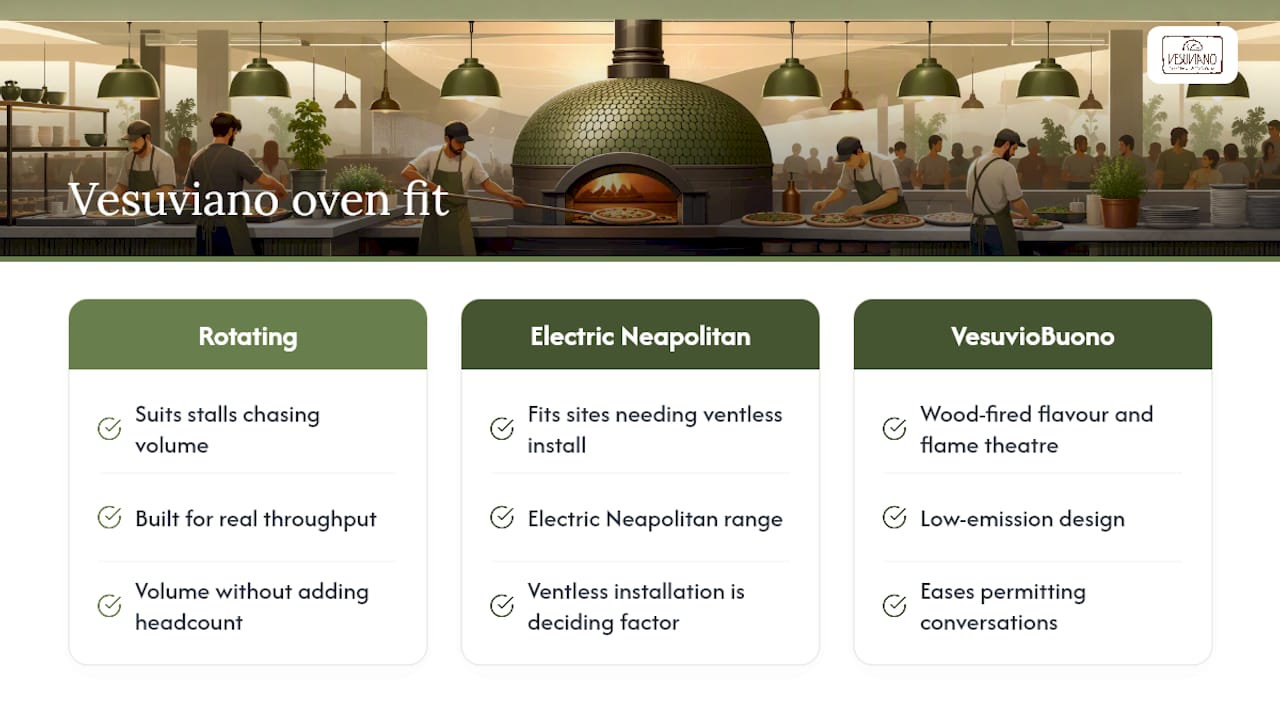
Vesuviano Forni gives food-hall operators a direct route to a handcrafted oven built for real throughput, not just a catalogue photo. The rotating oven line suits stalls chasing volume without adding kitchen headcount, while the electric Neapolitan range fits sites where ventless installation is the deciding factor. The VesuvioBuono system keeps the wood-fired flavour and flame theatre diners want, with a low-emission design that eases permitting conversations with landlords and fire authorities.
Quotes typically cover oven specification, shipping and customs handling, and on-site assembly, helping clients understand total project cost before committing to a footprint. Facilities checklists like this restaurant operations checklist are reviewed with clients setting up shared-space service for the first time. Start with a site survey request through the rotating pizza oven page; the provider will scope your extraction, utilities and timeline before you finalise a footprint.
Sources
- Performance characterization of a traditional wood‐fired pizza oven
- Pizza Oven Running Costs: Real Cost Per Pizza (2026 data) | Pizza Oven Review
- Commercial pizza ovens: electric & gas pizza ovens (WebstaurantStore)