Protect Staff and Ovens: NFPA 96 Makeup Air for Pizza Kitchens
Protect Staff and Ovens: NFPA 96 Makeup Air for Pizza Kitchens
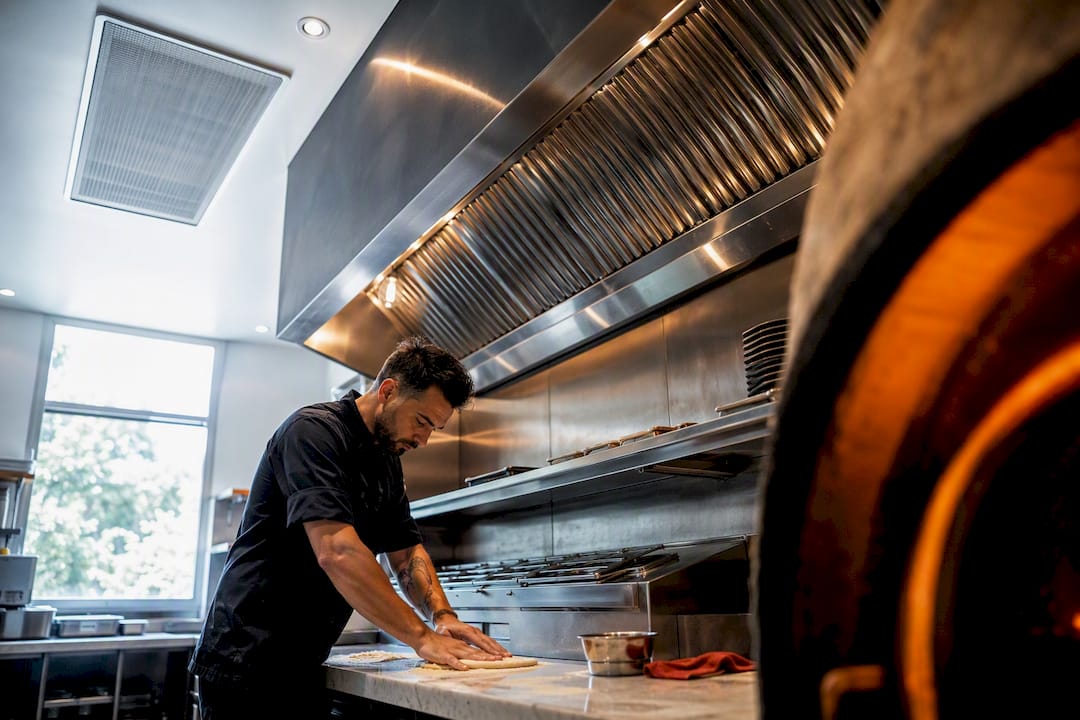
Yes, almost every commercial pizza oven installation needs make-up air once the exhaust hood reaches typical commercial capacity. NFPA 96 requires make-up air to be supplied whenever a commercial cooking exhaust system is operating, and pizza hoods routinely exceed the 800 CFM threshold where a dedicated makeup air unit becomes standard practice. Confirm the exact figures with your local authority having jurisdiction and an HVAC engineer before finalising your design.
TL;DR:
- Make-up air systems are required once exhaust hoods exceed roughly 800 CFM, with pizza ovens often surpassing this threshold and needing dedicated solutions.
- Proper ventilation balance prevents negative pressure, backdrafting, and inconsistent oven performance, especially for high-capacity pizza ovens.
- The most common make-up air options include passive intake, active tempered units, compensating hoods, and energy recovery ventilators, with costs increasing with complexity.
- Final sizing should involve an HVAC engineer and the local authority having jurisdiction to ensure compliance and proper operation.
- Early coordination between oven selection, ventilation design, and AHJ approval saves time, reduces redesigns, and improves safety and efficiency.
Table of Contents
- Make up air pizza oven basics: why ventilation balance matters
- When make-up air becomes mandatory: codes, thresholds and your AHJ
- Types of make-up air solutions for pizza kitchens
- Sizing your system: CFM rules of thumb and worked examples
- Installation, controls and commissioning: getting the balance right
- Common pitfalls, maintenance and typical costs
- Publisher perspective: what installations actually teach you about make-up air
- Planning your oven purchase around ventilation from day one
- Sources
- FAQ
Make up air pizza oven basics: why ventilation balance matters
A pizza oven hood pulls air out of the kitchen constantly. Without an equal volume of air coming back in, the kitchen falls into negative pressure, and that is when things go wrong. Doors become hard to open, the exhaust fan struggles to draw properly, and worst of all, combustion gases from a gas or wood-fired oven can backdraft into the room instead of exiting through the flue. The NFPA’s guidance on commercial kitchen ventilation is explicit that improper makeup air creates exactly this negative pressure and backdraft risk, including carbon monoxide exposure.
For pizza ovens specifically, the stakes are higher than for a standard fryer or griddle line. A deck oven or rotating oven needs steady combustion air to maintain its dome temperature, and starving it of air does not just create a safety issue, it also produces inconsistent bakes, longer recovery times between pizzas, and a hood that never quite clears smoke on a busy service.
The knock-on effects show up in day-to-day operations:
- Doors that slam shut or resist opening as negative pressure builds
- Pilot lights or burners that struggle to ignite consistently
- Smoke lingering near the hood instead of exhausting cleanly
- Staff discomfort from draughts pulled in through every gap in the building envelope
- Inconsistent oven floor and dome temperatures during peak service
When make-up air becomes mandatory: codes, thresholds and your AHJ
NFPA 96 does not hand out a single universal CFM number that triggers a makeup air requirement. Instead, it requires makeup air to be supplied “during the operation of the exhaust system” for commercial cooking equipment, which in practice means almost any hood system serving a commercial pizza oven needs a compensating supply. Your local fire marshal and building department (collectively, the authority having jurisdiction, or AHJ) interpret and enforce that requirement, and their sign-off is what actually gets your kitchen open.
Industry practice gives you useful reference points even though they are not codified as a single national number:
- Greenheck’s guidance notes that exhaust systems above roughly 800 CFM commonly prompt a dedicated, interlocked makeup air unit.
- Pizza-specific installations often exceed 1,000 CFM once you include a full hood over a deck or rotating oven, well past that common threshold.
- Practical ventilation guidance for pizza ovens puts gas-fired ovens at 600 to 900 CFM ducted exhaust, while indoor wood-fired ovens frequently need around 1,200 CFM under NFPA 96.
- Residential-adjacent equipment sometimes references a lower 400 CFM trigger point, which is not the figure commercial kitchen designers should be working from.
Because thresholds genuinely vary by jurisdiction, oven type and hood configuration, involve your AHJ and a licensed HVAC engineer at the concept stage, not after equipment has already been ordered. Our guide to NFPA 96 and AHJ sign off walks through what inspectors typically ask for during permitting.
Types of make-up air solutions for pizza kitchens
Not every kitchen needs the same answer, and the right choice depends on climate, oven type and how tightly your building envelope is sealed. Four approaches cover most pizza oven installations:
- Passive intake. Air enters through a simple louvre or duct with no fan or tempering. It is the cheapest option to install, but it delivers untempered outdoor air straight into the kitchen, which means cold draughts in winter and humidity problems in summer. It rarely satisfies code on its own for a full-capacity pizza hood.
- Active tempered make-up air units. A dedicated fan heats or cools incoming air before it reaches the kitchen floor, keeping staff comfortable and giving you far more control over balance. This is the standard answer for busy pizza lines, though it carries a higher upfront and running cost than passive intake.
- Compensating or short-cycle hoods. These introduce supply air directly into the hood canopy rather than the room, replacing exhausted air without dumping cold or hot outdoor air onto the cook line. Manufacturer guidance on pizza hood systems points to this as a common, practical fit for pizza ovens because it avoids chilling staff working right next to the oven mouth.
- Energy recovery ventilators (ERVs) and demand-control ventilation. ERVs recapture heat or coolness from exhaust air and transfer it to incoming supply air, cutting the energy penalty of constant makeup air. Demand-control ventilation adjusts fan speed to actual cooking load, which suits sites where energy costs are a bigger design driver than raw simplicity.
Pro Tip: If your kitchen runs a high-output rotating oven alongside a deck oven, don’t size your makeup air around the deck oven alone. Combined loads add up fast, and undersizing here is one of the most common commissioning failures.
Sizing your system: CFM rules of thumb and worked examples
Final sizing always belongs to a licensed mechanical engineer, but you can sanity-check a proposal or brief a contractor using a few widely cited rules of thumb.
- A common shortcut is roughly 1 CFM of combustion air per 1,000 BTU of appliance input, though this varies by appliance type and local code interpretation.
- Gas-fired pizza ovens typically need 600 to 900 CFM of ducted exhaust, while indoor wood-fired ovens often require around 1,200 CFM.
- Makeup air is generally specified as a percentage of total exhaust, commonly 80 to 100%, with the balance made up through infiltration or transfer air from other zones.
Take a 90,000 BTU gas deck oven paired with a hood rated at 900 CFM exhaust. In a kitchen running both a deck oven and a rotating oven under separate hood sections, exhaust totals can climb past 1,800 CFM combined, and your makeup air budget needs to reflect the whole kitchen’s simultaneous demand, not just one appliance in isolation.
Installation, controls and commissioning: getting the balance right
A makeup air system that looks correct on paper can still fail in practice if it is not commissioned properly. Interlocks matter here: the makeup air fan should ramp up and down in sequence with the exhaust fan, often through variable frequency drives (VFDs) and modulating dampers, so the two systems track each other rather than fighting for balance.
Commissioning is where many installations reveal problems that a design drawing never caught. Technical guidance on venting indoor pizza ovens stresses that test and balance procedures must happen with every other exhaust device and HVAC system running simultaneously, because a kitchen that balances fine with the dining room doors propped open can fail completely once the building is sealed and every fan is live.
A solid commissioning checklist includes:
- Smoke and draft testing at the hood face under full operating load
- Balancing airflow with all competing exhaust fans and rooftop units switched on
- Written documentation of measured CFM figures for the AHJ’s records
- Carbon monoxide detection and interlocked combustion safeguards as a backstop against partial-draft events
- A final sign-off walkthrough with the installing contractor and the AHJ
Common pitfalls, maintenance and typical costs
The single most common failure is commissioning a system with doors or windows open, which masks a negative pressure problem that only appears once the building is sealed for winter. Close behind that is ignoring competing exhaust loads, restrooms, dryers, other cooking lines, that quietly eat into the makeup air budget you thought you had.
Ongoing maintenance keeps a compliant system compliant:
- Replace or clean intake filters on a set schedule, particularly in urban sites with heavier particulate loads
- Inspect and lubricate dampers so they modulate freely rather than sticking open or shut
- Recalibrate control sequences annually, especially after any hood or oven replacement
- Verify interlocks still fire correctly whenever new equipment is added to the line
On cost, industry pricing patterns show passive intake as the cheapest option to install, while active tempered units often start in the low thousands of dollars and rise sharply with capacity and tempering requirements. Compensating hoods and ERVs sit at the higher end of the range because of the added ductwork and heat exchange equipment involved. Treat any online figure as a rough planning number. Get a site-specific quote before you budget a project.
Publisher perspective: what installations actually teach you about make-up air
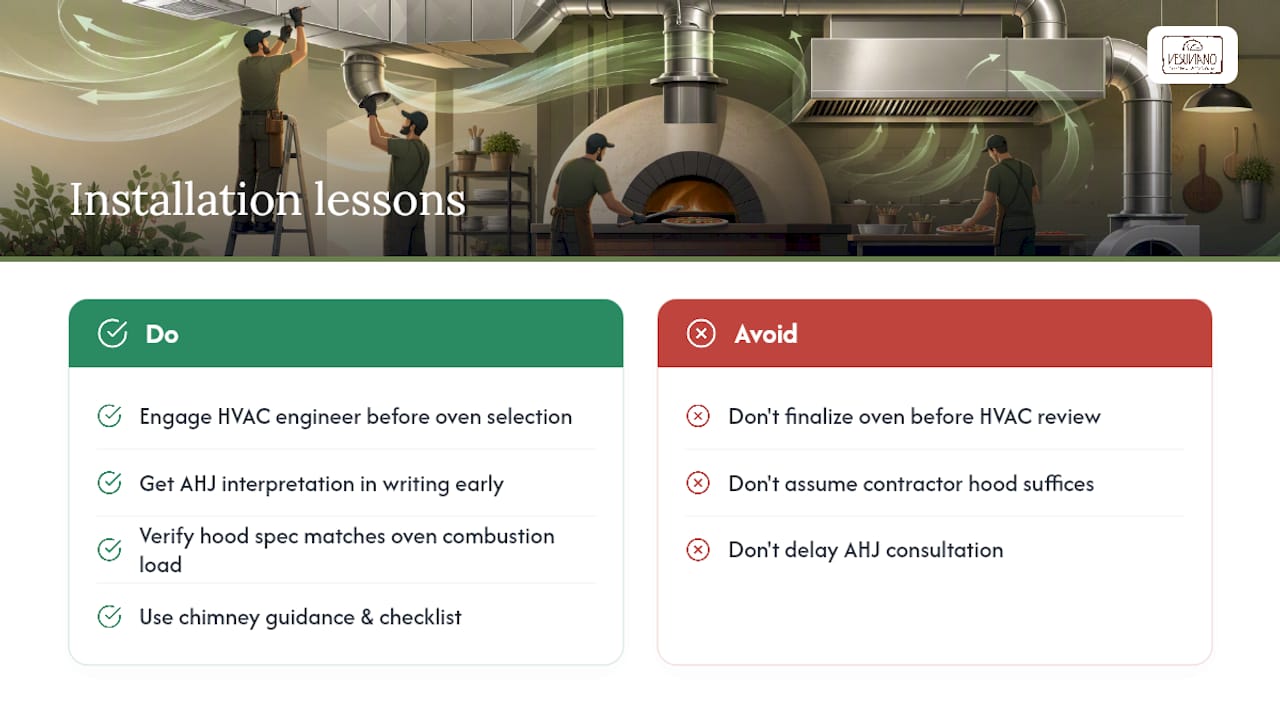
An experienced industry representative has seen the same pattern repeat across export projects: kitchens designed around the oven first and the ventilation second. That order causes redesigns. Bringing an HVAC engineer in before the oven is finalised, not after, is the single change that saves the most time and money on site.
His advice to operators is blunt: get your AHJ’s specific interpretation in writing early, because thresholds genuinely differ between jurisdictions, and never assume a contractor’s default hood spec accounts for your oven’s actual combustion load. For deeper technical reading, our chimney height guidance and installation requirements checklist cover the coordination points most projects miss.
— Bruno - Key Account & Export Manager
Planning your oven purchase around ventilation from day one
Choosing the oven before the ventilation plan is settled is exactly the sequencing mistake that causes redesigns and delayed openings. Some companies provide technical consultancy alongside the oven build itself, so combustion load, hood requirements and makeup air sizing get discussed while the oven specification is still on the drawing board, not after it has landed on site.
Whether you are specifying a wood-fired oven, an electric model, or a high-output rotating oven, our team can talk through combustion air needs and coordinate with your HVAC contractor and AHJ before equipment is ordered. If you are weighing oven types for a new build, this is worth doing while dimensions and BTU ratings are still flexible. If you are working with a mechanical contractor already, pairing them with a partner checklist like this restaurant kitchen cleaning and safety checklist helps keep ventilation maintenance on the same schedule as everything else in the kitchen.
Get in touch with our Neapolitan oven range to start that conversation, and bring your hood and HVAC contractor into the discussion from the first call.
Sources
- When is make-up air required for kitchens (Greenheck)
- 10 key ventilation tips for indoor pizza ovens (PizzaOvenWorld)
- Pizza hood systems and short-cycle makeup-air (HoodMart product page)
- How to vent an indoor pizza oven safely (Forno Nardona)
FAQ
At what CFM do you need make-up air?
Many jurisdictions reference 800 CFM as a common trigger point for a dedicated makeup air unit, though pizza hood installations frequently exceed 1,000 CFM and always need AHJ confirmation.
How much does make-up air cost?
Passive intake is the lowest-cost option, while active tempered units often start in the low thousands of dollars and rise with capacity, and compensating hoods or ERVs sit higher still due to added ductwork and heat exchange equipment.
What is the difference between an air handler and a make-up air unit?
An air handler conditions and circulates air for general comfort heating and cooling, while a make-up air unit specifically replaces air pulled out by kitchen exhaust, often with dedicated tempering to offset the kitchen’s own hood loads.
What is make-up air in a restaurant?
It is the supply air brought into a restaurant kitchen to replace the volume being pulled out by the exhaust hood, preventing negative pressure, backdrafting and the carbon monoxide risk that comes with unbalanced combustion appliances.
Do wood-fired pizza ovens need more make-up air than gas ovens?
Yes, indoor wood-fired ovens often require around 1,200 CFM of ducted exhaust under NFPA 96, noticeably higher than the 600 to 900 CFM typical of gas-fired models.