How long does a pizza oven take to heat up?
How long does a pizza oven take to heat up?
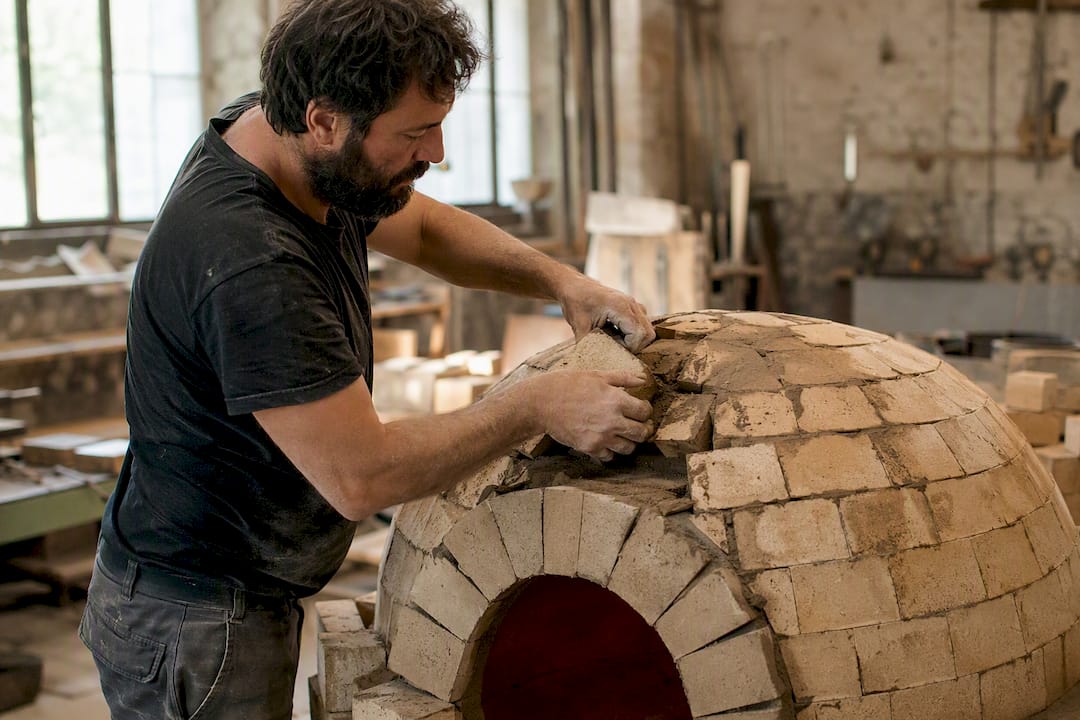
Wood-fired ovens need 45 minutes to 1.5 hours, gas and propane units reach cooking temperature in 15–30 minutes, and electric commercial ovens typically take 15–45 minutes depending on stone mass. Whatever the fuel source, you’re aiming for a stone centre temperature of roughly 750–850°F (400–450°C) for high-heat Neapolitan pizza, with the dome usually running hotter still.
Do this before your first pizza:
- Light the oven before you stretch the dough, not after.
- Check both sides of the stone, not just the centre.
- Wait for the stone, not just the air gauge, to hit temperature.
Pro Tip: An infrared thermometer gives you a far more honest reading than any built-in dial. Point it at the stone, not the flame.
Key Takeaways
Pizza oven heat-up time depends on fuel type and thermal mass, but readiness is always confirmed at the stone, not the air gauge, at 750–850°F.
| Point | Details |
|---|---|
| Fuel dictates speed | Wood needs 45 minutes to 1.5 hours; gas and propane reach temperature in 15–30 minutes. |
| Stone temperature is the real signal | Target 750–850°F at the centre, checked with an infrared thermometer, not the built-in gauge. |
| No thermometer, no problem | The flour test chars in 2–3 seconds on a properly hot stone as a rough backup check. |
| Expect a drop after each pizza | Stone temperature falls 50–100°F per pizza; allow 2–5 minutes recovery between launches. |
| Match temperature to style | Neapolitan wants 800°F and a fast cook; thicker styles do better at a lower, steadier heat. |
Table of Contents
- Why pizza oven heat-up time varies so much
- How long do wood-fired ovens take to heat up?
- How fast do gas and propane pizza ovens heat up?
- What about electric and heavy-mass commercial ovens?
- How do you know when the stone is actually ready?
- Why do you need to wait between pizzas?
- Quick preheat checklist before your first pizza
- Common preheat problems and how to fix them
- What professional operators do differently on preheat
- Matching preheat to your pizza style
- Frequently asked questions
- Sources
Why pizza oven heat-up time varies so much
Thermal mass is the biggest variable. A thick brick or stone floor absorbs heat slowly and holds it for hours; a thin steel plate heats fast and cools just as quickly. Insulation matters just as much: a well-insulated dome traps heat where you need it, while a poorly insulated shell haemorrhages it into the surrounding air.
Fuel type sets the pace too. Solid wood builds heat gradually as coals develop; propane delivers a controllable, instant flame; electric elements heat in a straight, predictable line. Add in ambient temperature and wind (a blustery evening will slow any outdoor oven), and you can see why manufacturers publish ranges rather than fixed minutes.
- Larger ovens hold more mass, so they take longer to heat but hold temperature longer once there.
- Cold, windy conditions can add 10–15 minutes to any outdoor unit’s preheat.
Pro Tip: Start your oven the moment you begin prepping dough and toppings. By the time you’ve shaped your bases, the stone has had a real head start.
How long do wood-fired ovens take to heat up?
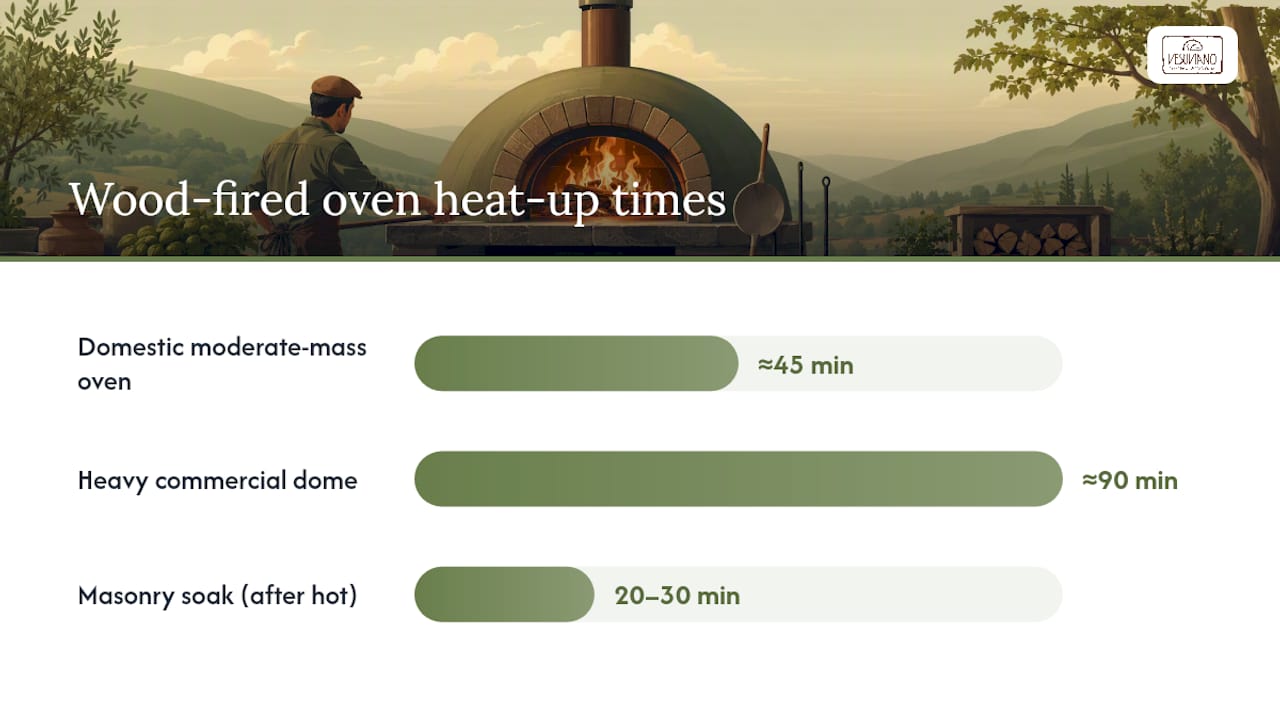
Wood-fired and masonry ovens are the slowest to fire but the most forgiving once they’re up to temperature. Expect 45 minutes to 1.5 hours depending on how heavy the dome is and how well it’s insulated. A domestic-scale wood oven with moderate mass sits at the shorter end; a heavy commercial dome can genuinely need the full 90 minutes to saturate.
Staging the fire properly speeds things up considerably. Build a small, hot initial burn, then progressively roll the flame around the dome so heat spreads evenly rather than scorching one spot while the rest lags behind.
- Start with kindling and small splits, not one large log.
- Once the dome reads hot, bank the coals to one side and keep flame licking across the roof.
- Give heavy masonry an extra 20–30 minutes after it first hits target temperature, so the stone catches up with the dome.
Pro Tip: Feed small amounts of wood regularly rather than one big load. Consistent, moderate fuelling gives you steadier heat than a single bonfire that spikes and dies.
How fast do gas and propane pizza ovens heat up?
Gas and propane models, including popular portable units like the Ooni Koda, are built for speed. Most reach cooking stone temperature in around 15–30 minutes, a fraction of what solid wood demands.
There’s a catch, though. The air inside can read scorching hot within minutes while the stone itself lags well behind, because stone absorbs heat far more slowly than the air surrounding it. Launching a pizza too early, when the air gauge looks promising but the stone hasn’t caught up, is the single most common cause of a pale, undercooked base.
- Once the stone is ready, back off the flame slightly before your first launch. Full blast can cook a base in under a minute; a reduced flame stretches that window to 75–90 seconds, giving you a far more forgiving cook.
- Light the oven as you begin stretching dough, so preheat and prep run in parallel.
Pro Tip: If your base is charring before the top has coloured, you’ve launched on flame that’s too aggressive. Turn it down, not off.
What about electric and heavy-mass commercial ovens?
Electric and larger commercial ovens, including designs like the Ooni Karu, typically need 15–45 minutes to preheat, with heavier stone floors sitting at the longer end. Some heavy-mass commercial domes need 40–55 minutes to reach full saturation around 850–900°F, though usable Neapolitan results can appear closer to the 40–45 minute mark.
The trade-off works in your favour over a long service. Heavy stone floors take longer to reach temperature initially but hold it steadily and recover faster between pizzas once you’re rolling.
- A lower setpoint suits thicker, slower-cooked styles and shortens the wait to your first pizza.
- A higher setpoint suits fast Neapolitan cooking but demands the full preheat window.
Pro Tip: For multi-hour service, a longer, fuller preheat pays for itself in consistency across dozens of pizzas rather than just the first three.
How do you know when the stone is actually ready?
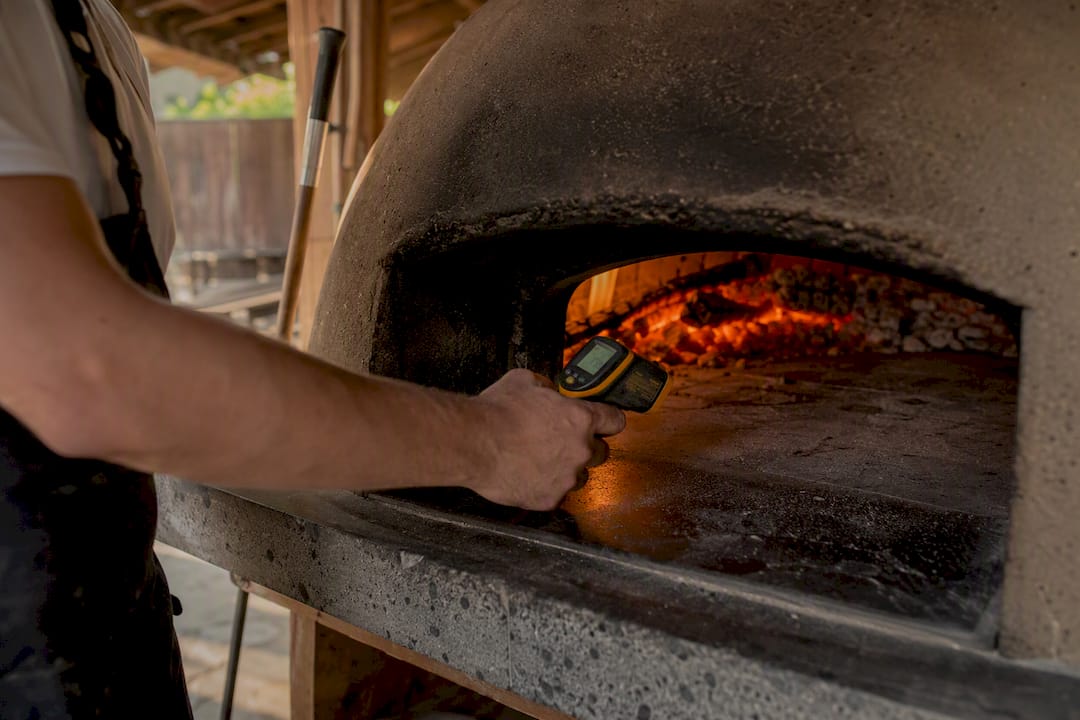
The stone temperature, not the built-in air gauge, tells you when to launch. Aim for 750–850°F (400–450°C) at the centre, with both edges reading within roughly 50°F (10–15°C) of that centre point.
An infrared thermometer is the most reliable tool for this. Point it at the centre of the stone first, then check both sides; a big gap between zones means your fire or flame needs redistributing before you cook. If you don’t own one, the flour test works as a rough field check: a small pinch of flour should char in about 2–3 seconds on a properly hot stone. It’s less precise than a proper reading, but it beats guessing.
| Test method | What it measures | Pass threshold |
|---|---|---|
| Infrared thermometer | Stone surface temp, centre and edges | 750–850°F, within ~50°F across zones |
| Flour/char test | Rough surface heat | Chars in 2–3 seconds |
Pro Tip: Check stone temperature again after your first pizza; it commonly drops 50–100°F, so plan a short recharge before the next one.
Why do you need to wait between pizzas?
The first pizza pulls a surprising amount of heat out of the stone. Expect a 50–100°F drop immediately after launch, which is why your second pizza can cook noticeably slower than your first if you rush it.
Recovery typically takes 2–5 minutes, and larger stones bounce back quicker thanks to greater thermal inertia; a 16-inch floor recovers faster than a 12-inch one for exactly this reason. A brief flame increase, or resting a bit longer between bases, does the job just as well.
- Build a rhythm when cooking for a group: launch, rest, recheck, repeat.
- Increase flame briefly between pizzas rather than leaving it on full throughout.
Pro Tip: If you’re feeding a crowd, stage your dough balls so there’s always one ready the moment the stone recovers.
Quick preheat checklist before your first pizza
- Light or switch on the oven as soon as you start prepping dough (0 minutes).
- Let it warm through for the appropriate range for your fuel type (15–90 minutes).
- Check the stone with an infrared thermometer or the flour test.
- Adjust the flame or fire if readings are uneven across zones.
- Launch your first pizza once the centre reads 750–850°F.
- Keep your dough and toppings ready before step one, not step four.
- Recheck the stone if more than 10 minutes pass between checking and launching.
Common preheat problems and how to fix them
A raw or pale base almost always means the stone hasn’t caught up with the air, even if the dome feels hot. Wait longer or add fuel before trying again. A charred top with an undercooked base usually points to flame set too high; back it off rather than pulling the pizza early. A long cook time (well beyond 90 seconds at high heat) suggests the stone is underheated or your setpoint is too conservative for the style you’re cooking.
- Full blast for a minute, then recheck the stone, if temperature has stalled.
- Note down what you changed each time; it’s the fastest way to learn your own oven’s habits.
Pro Tip: If the top is colouring perfectly but the base stays pale, the problem is almost always the stone, not the flame above it.
What professional operators do differently on preheat
Commercial kitchens don’t treat preheat as a one-off event before dinner service; they treat it as part of the day’s schedule. Vesuviano Forni builds ovens for pizzerias and hospitality groups running multi-hour sessions, where the oven is fired well before doors open and never fully cools between shifts. Installation quality, insulation and proper commissioning by a qualified technician all shift the numbers a home cook would expect.
Start your preheat while you’re still prepping dough and toppings, and always confirm stone temperature before the first pizza goes in. Air gauges tell you the room is warm; only the stone tells you it’s ready to cook.
For a handcrafted Neapolitan oven, proper commissioning at installation sets the baseline for every preheat that follows.
Pro Tip: If you’re installing a commercial oven, have it commissioned and tuned on-site rather than relying on generic manufacturer timings alone.
Matching preheat to your pizza style
Your target stone temperature should follow the style you’re cooking, not the other way round.
- Neapolitan: 800°F or higher, 60–90 second cook.
- New York style: lower stone temperature, longer cook window, more tolerant of small drops.
- Thick or crispy bases: lower setpoint, extended cook time, forgiving of an underheated stone.
Treat your first pizza as a test. Measure the stone before and after, then adjust flame or resting time based on what you see, not what the dial says.
Frequently asked questions
How long does a pizza oven take to heat up on average? It depends entirely on fuel type. Gas and propane ovens typically need 15–30 minutes, while wood-fired ovens usually take 45 minutes to 1.5 hours.
What is the ideal temperature for a pizza oven? Aim for a stone centre temperature of 750–850°F (400–450°C) for Neapolitan-style pizza, with the dome typically reading hotter still.
Why does my pizza oven feel hot but still cook slowly? The air heats faster than the stone. A hot air gauge doesn’t mean the stone has caught up, so always check the stone directly before launching.
What’s the fastest way to heat up a pizza oven? Gas and propane units are the quickest, often reaching cooking temperature in 15–30 minutes. Starting the oven before you prep dough overlaps the wait with useful time.
How do I check pizza oven temperature without a thermometer? Use the flour test: a small pinch should char in 2–3 seconds on a properly hot stone. It’s a useful rough check, though less precise than an infrared reading.
Sources
For deeper detail on stone temperatures and their effect on your bake, see the complete guide to Neapolitan pizza oven temperature. Businesses managing longer service windows may find the commercial pizza oven temperature guide useful for planning throughput.
- How to Use a Pizza Oven | CookedOutdoors
- How Long Does a Pizza Oven Take to Heat Up? (It Depends…) — Pro Pizza Ovens
- How to test temperature in a pizza oven — Tasting Table